What a suspension trainer does at home
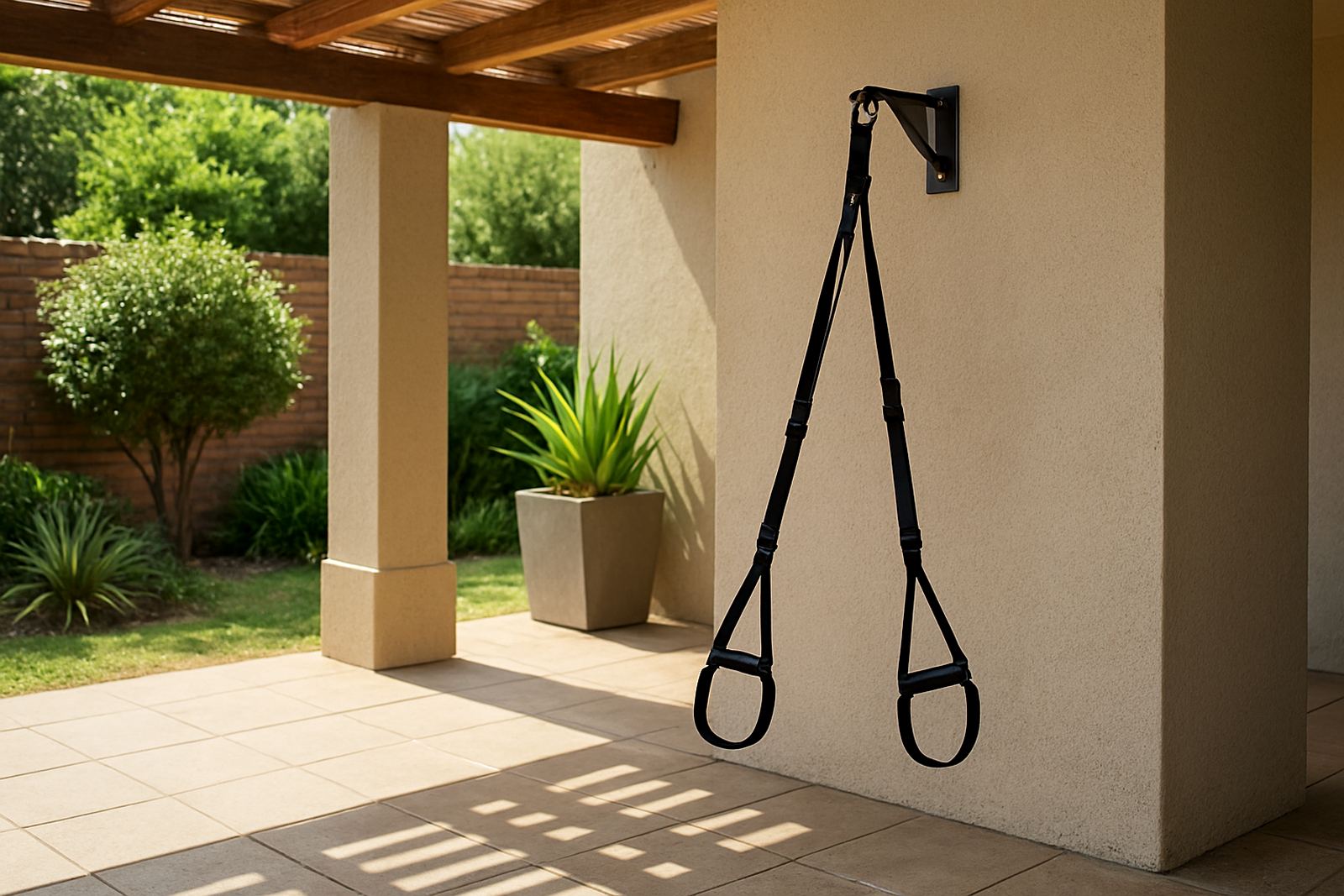
A suspension trainer uses two adjustable straps and handles to let you work against your own bodyweight. By changing your body angle, you can make each movement easier or harder without needing plates, cables or a large machine. It is a good fit for apartments, spare rooms, garages and patios in Johannesburg, Pretoria and other towns where space is limited.
Most users start with rows, chest presses, assisted squats, hamstring curls and planks. The same set can also support mobility work and warm-ups before running, cycling or gym sessions. Because the kit is light and easy to pack away, it suits people who want one piece of equipment that can handle both strength and conditioning.
- Uses bodyweight for upper, lower and core training
- Fits into small home training spaces
- No electricity, batteries or water connection required
- Can be stored in a cupboard or sports bag after use
Sizes, strap lengths and options to look at
When you order, check the strap length, grip style and anchor setup. Some sets are better for door use, while others are made for ceiling anchors, wall anchors or an outdoor beam. If you plan to train in a double garage or on a covered stoep, a longer strap gives you more room to adjust your angle. For many users, a standard set is enough, but taller users often prefer extra length.
Grip comfort matters more than many people expect. Foam handles are light and easy to hold, while rubberised handles can feel more secure during sweaty sessions. If you train often, look for stitching that is neat and webbing that does not twist too easily. Small details make a difference over time, especially in humid coastal areas or garages that get warm in summer.
- Standard strap sets for general home use
- Extended straps for taller users or higher anchors
- Door anchors for easy indoor setup
- Wall or ceiling anchor options for fixed installation
Best spots for a suspension trainer in South African homes
A suspension trainer works well where floor space is tight and you still want a proper session. It suits homes in Fourways, Sandton, Midrand, Randburg, Roodepoort and Pretoria East, as well as nationwide for people who want a portable training option. In a flat, it can be used with a sturdy door anchor. In a house, many customers mount it to a ceiling joist, strong beam or a purpose-made wall point.
It is also useful for outdoor training if you have a shaded area with a reliable anchor point. People doing home gym planning often pair it with a mat, adjustable dumbbells or a kettlebell so they can switch from strength to core work without clutter. For families, it is handy because the exercise angle can be changed for different fitness levels, so one kit can suit more than one user.
- Suitable for flats, garages, spare rooms and patios
- Good for beginners, active parents and experienced users
- Works for short sessions when time is tight
- Handy for travel or holiday training
Installation, anchor points and power needs
Most suspension trainers need a secure anchor point, not power or gas. That means there is no setup tied to load-shedding and no running costs once it is in place. If you are using a door anchor, make sure the door closes away from you and has solid hinges. For wall or ceiling mounting, fix into a load-bearing structure only, not plasterboard alone.
If you are unsure about the right point to use, our team can help with Equipment Onboarding and home gym planning. Michael Petersen can assist with installation questions, while Irfaan Bhamjee can advise on the technical side of the product. We always recommend checking the anchor surface before first use, because a bad fixing can lead to wobble or wear over time. A little care up front saves trouble later.
- No electricity, batteries or gas required
- Door anchor, wall anchor or ceiling anchor may be used
- Check the structure can take bodyweight movement safely
- Leave clear floor space for full range of motion
Care, cleaning and servicing over time
Keep the straps dry and wipe them down after sweaty sessions. If you train in a humid area near the coast, let the set air out before packing it away. Sand, dust and moisture can shorten the life of the webbing and clips if they are left dirty. A quick rinse is not needed every time, but a damp cloth and mild soap work well when the handles start to feel sticky.
Check the stitching, buckles and anchor hardware every few weeks, especially if you use the trainer four or five times a week. If anything frays, cracks or slips, stop using it until it is inspected. There is usually no special servicing needed, just steady care and sensible storage. Keep it out of direct sun for long periods, as strong heat can affect the webbing over time.
- Wipe after use and air dry before storage
- Inspect stitching, carabiners and anchor points regularly
- Keep it off wet floors and out of harsh direct sun
- Replace worn parts before they fail
What to check before you order
Before placing your order, check the maximum user weight, strap length, anchor type and grip style. Make sure the set suits your training space and the movement you want to do most. If you are focusing on rows and core work, most standard sets will do the job. If you are planning assisted pull patterns or want more adjustment room, a longer set is often better.
It helps to measure the available anchor height and the distance from the anchor to the floor. That way you can see whether the trainer will give you enough movement without the handles hitting the ground. If you want help choosing, Christo Brits and Siyanda Ntanzi can guide you on the best fit for your home setup. For family use or a starter programme, it is worth confirming whether more than one user will train with the same set, as that can affect the length and handle choice.
- Check max user weight and anchor rating
- Confirm strap length for your ceiling or door height
- Choose the right handle feel for your grip preference
- Measure the space where the trainer will be used
Key facts
| Training type | Bodyweight suspension training for upper body, lower body and core |
|---|---|
| Main uses | Rows, presses, squats, lunges, planks, hamstring curls and mobility work |
| Strap adjustment | Adjustable length for different body angles and exercise variations |
| Installation | Door, wall, ceiling or beam anchor depending on the setup |
| Power or gas needed | None |
| Typical home use | Singles, couples, families and small-space training |