Start with a routine that fits your week
Most beginners do best with a plan that is short, clear, and easy to repeat. If you are coming back after time off, or you are training for the first time, the goal is not to do everything at once. It is to build a habit you can keep, even on busy weeks, load-shedding evenings, or after a long day in traffic from Fourways, Sandton or Midrand.
A good starter routine uses a few pieces of equipment, enough space to move, and simple targets you can track. That might mean 20 to 30 minute sessions three times a week, with walking or light cardio on the other days. For many homes, this is easier to manage than joining a crowded gym and trying to work around travel time.
We often suggest beginners think in terms of movement patterns rather than a long list of exercises. Push, pull, squat, hinge and carry. Once those basics are covered, it becomes much easier to choose what to buy and how to use it properly.
Typical starter equipment for home use
A beginner bundle should feel useful from day one, not sit in the corner. For most homes, the best starting setup is compact and versatile. You do not need large machines to begin making progress. You need tools that support full body training and can be stored without fuss.
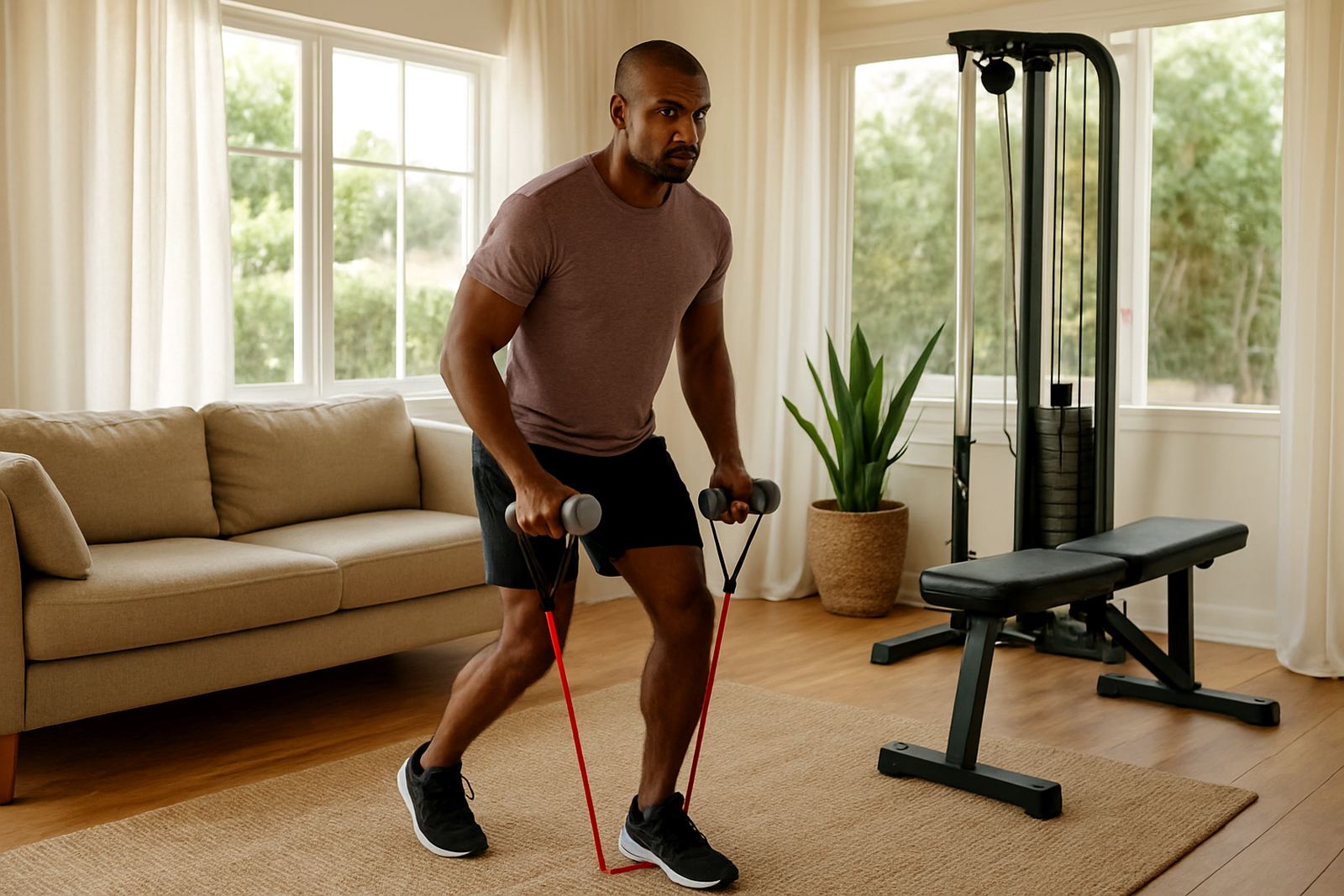
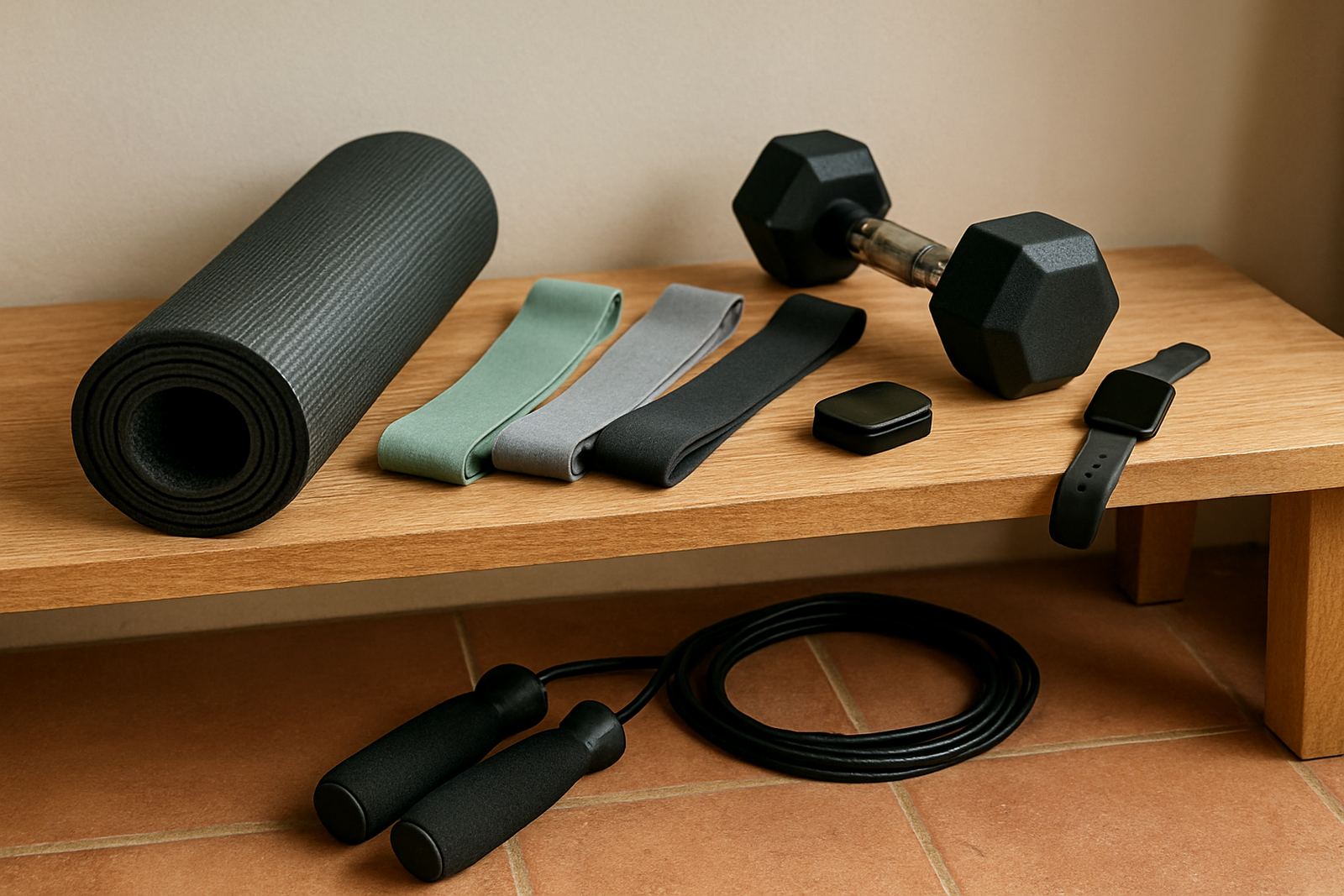
- A set of resistance bands for warm ups, assisted movement and light strength work
- A pair of adjustable dumbbells or a few fixed pairs in light to moderate weights
- A yoga mat or training mat for floor work and mobility
- A skipping rope or compact cardio tool for short conditioning sessions
- A smart fitness tracker to monitor steps, heart rate, sleep and workout time
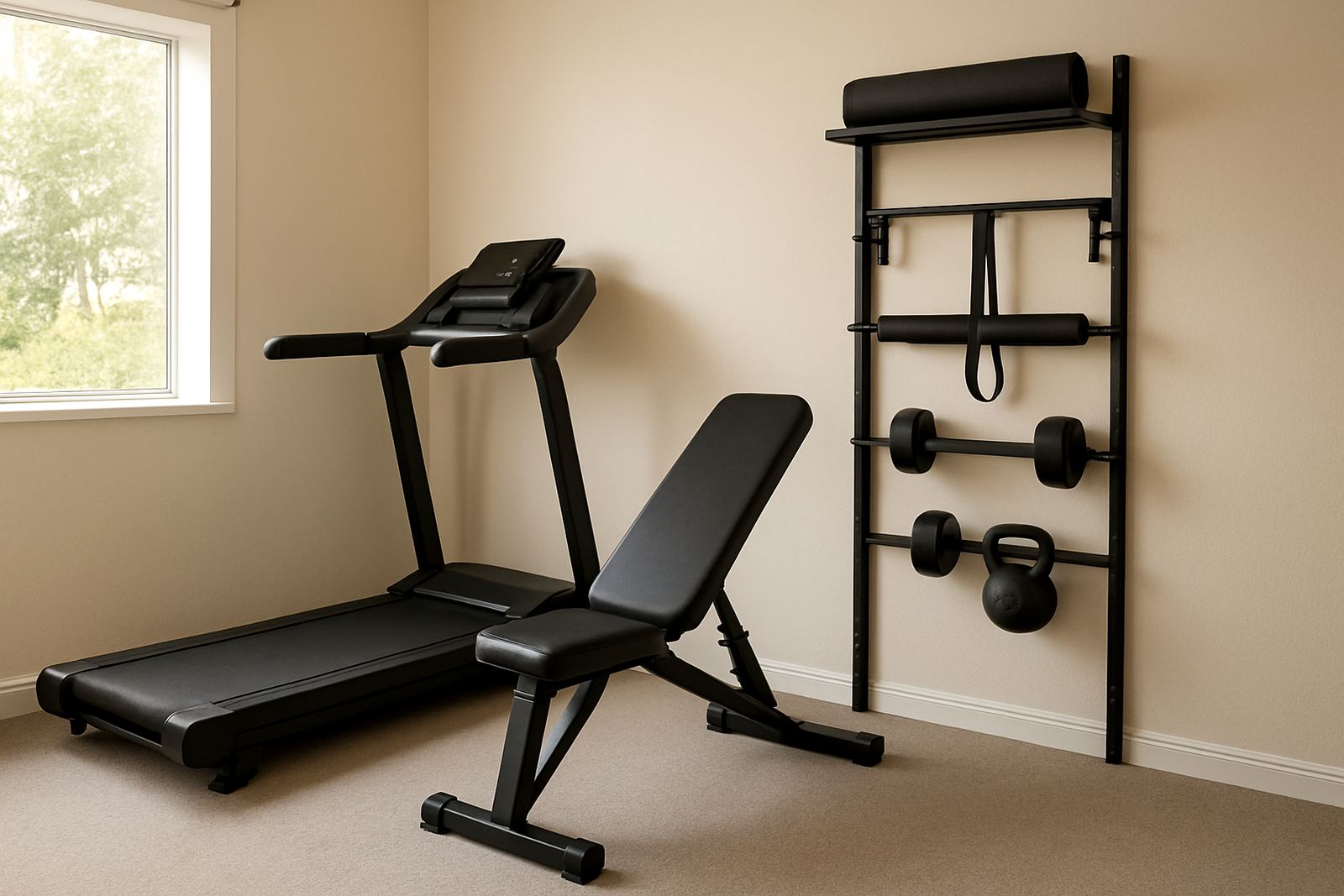
Some beginners also add a stability ball, a push up bar set, or a compact bench if space allows. In apartments or townhouses in Randburg, Roodepoort or Pretoria East, storage matters just as much as exercise variety. Foldable or stackable pieces usually work better than oversized gear.
How to map out floor space for home gym gear before buying
A small training area can work well if it is planned properly. Measure the floor space first. A clear area of around 2 m by 2 m is enough for mat work, bands, bodyweight drills and light dumbbell sessions. If you want a bench or step platform, allow more room on the sides so you can move safely.
Look at the floor surface too. Tiles can be slippery, especially in homes near the coast with more humidity, and some laminate floors are not ideal for heavy impact. A rubber mat or interlocking floor tiles can help protect both the floor and your joints. If your home gets strong afternoon sun, keep equipment away from direct heat to protect grips, straps and electronic trackers.
For shared spaces, a tidy setup makes all the difference. A basket for bands, a rack for dumbbells and a charging point for your tracker help keep the area ready to use. In homes with children or pets, storing smaller items after each session reduces wear and keeps the space safer.
What beginners often get wrong
The most common mistake is buying too much equipment too early. A full home gym can feel exciting, but if you are unsure what you will use, it quickly becomes expensive clutter. Start with a small set of items that match your current fitness level and your available space.
Another common issue is choosing weights that are either too light or too heavy. Beginners sometimes buy one fixed weight and outgrow it fast, or they choose something too heavy and avoid using it. Adjustable weights can save money and allow gradual progression.
People also underestimate recovery. If you train hard every day without rest, progress slows and motivation drops. A sensible starter plan should include lighter days, mobility work and at least one proper rest day each week.
- Do not skip a warm up, even for short sessions
- Do not buy large machines before you know your routine
- Do not ignore tracker setup if you want accurate readings
- Do not train on a slippery floor without proper grip
- Do not expect fast results if sleep, food and consistency are not part of the plan
Budget ranges for beginner home training
Budget depends on how complete you want the first setup to be. A very simple starter pack for bodyweight work, bands and a mat may start from about R800 to R1 500. This suits someone testing the routine before adding more pieces.
A more practical beginner bundle with bands, dumbbells, a mat and a tracker often sits between R2 500 and R6 000, depending on weights and tracking features. For a small home gym with a bench, added weight options and a few accessories, many households plan in the R6 500 to R12 000 range.
If you are setting up for two people or for a family that wants to share the space, it can make sense to buy once and buy better. A clear plan often saves more than chasing specials on random items. We help clients across Johannesburg, Pretoria East and nationwide choose equipment that suits the room, the user and the budget, without overbuying.
Support with setup, guidance and staying on track
Beginners usually need more than a box of equipment. They need a simple way to start and keep going. That is why setup help matters. We assist with equipment onboarding, tracker setup help and home gym planning so your first week is not confusing. If you need a Starter Programme, Weight Loss Coaching, Strength Programme or Cardio Programme, we can point you toward the right structure for your goals.
Virtual check ins can also help when motivation drops, especially during winter mornings or when load-shedding changes your routine. For some households, Family Fitness Plans work well because everyone uses the same space at different times. If your main goal is mobility or getting active again after injury or time away, a mobility-focused approach is usually the safest place to begin.
FitSmart is based in Fourways, Johannesburg and delivers nationwide, with support for customers in Fourways, Sandton, Midrand, Randburg, Roodepoort and Pretoria East. If you are not sure what to start with, a short conversation can save a lot of trial and error.