
When a small room has to do the job
Compact home gyms are usually needed in flats, townhouse lofts, spare bedrooms and converted garages where every square metre counts. In Johannesburg, many customers want a setup that can fit beside a laundry area, under a staircase or in a room that also serves as a study or playroom. The aim is not to cram in every machine available, but to choose equipment that gets used three or four times a week, even during load-shedding and winter mornings when leaving the house is less appealing.
Our clients often start with a simple brief: a safe place to train, enough room to move, and equipment that can handle regular use. For that kind of space, compact does not mean limited. It means making sure each item has a clear purpose and can be packed away, folded down or stored neatly when the session is over. That approach suits busy families in Sandton, young professionals in Randburg and homeowners in Pretoria East who want convenience without clutter.
- Flat, townhouse, and spare room setups
- Training spaces from about 2 m x 2 m to 3 m x 4 m
- Good for strength work, cardio, mobility and recovery
A practical equipment set for compact training
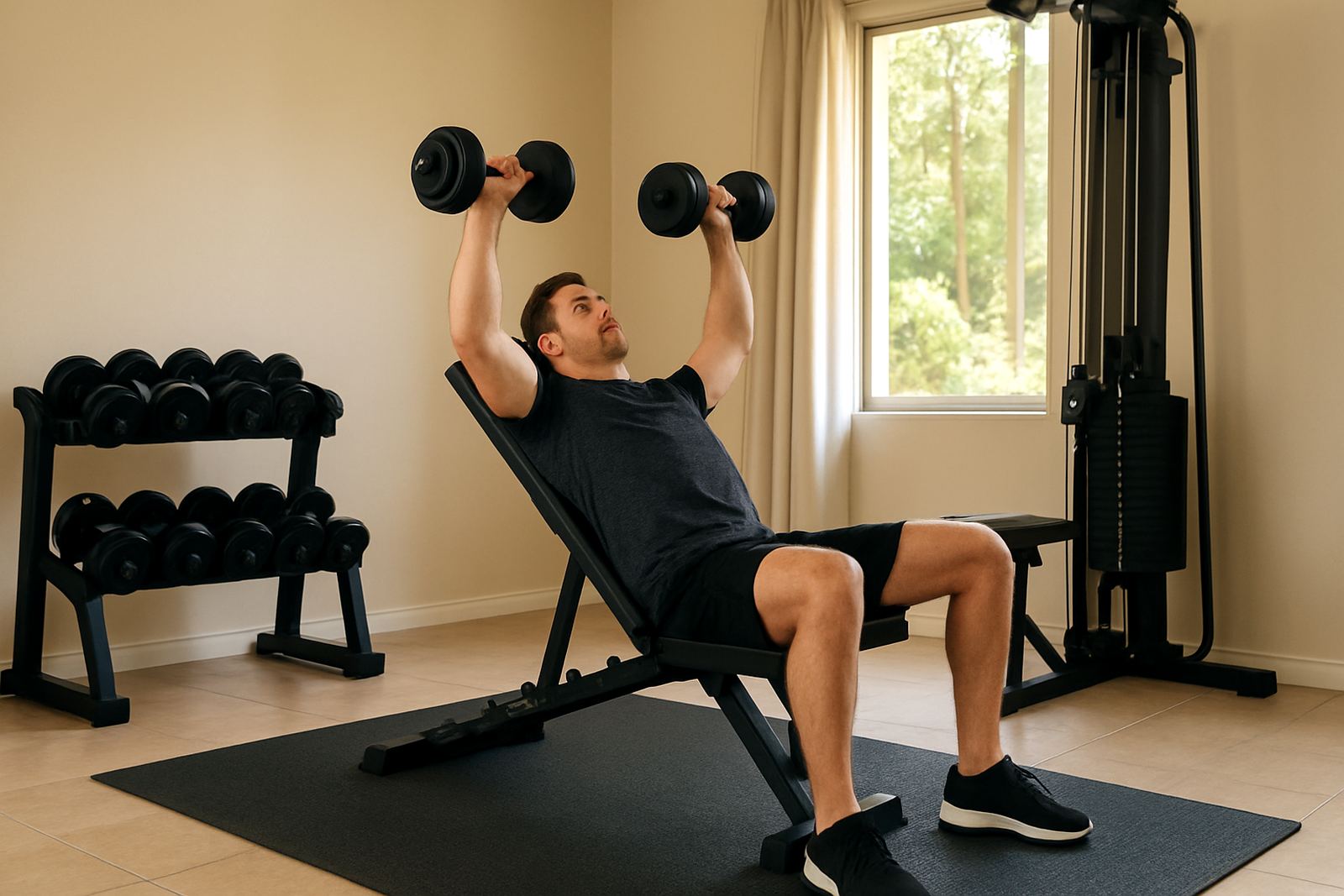
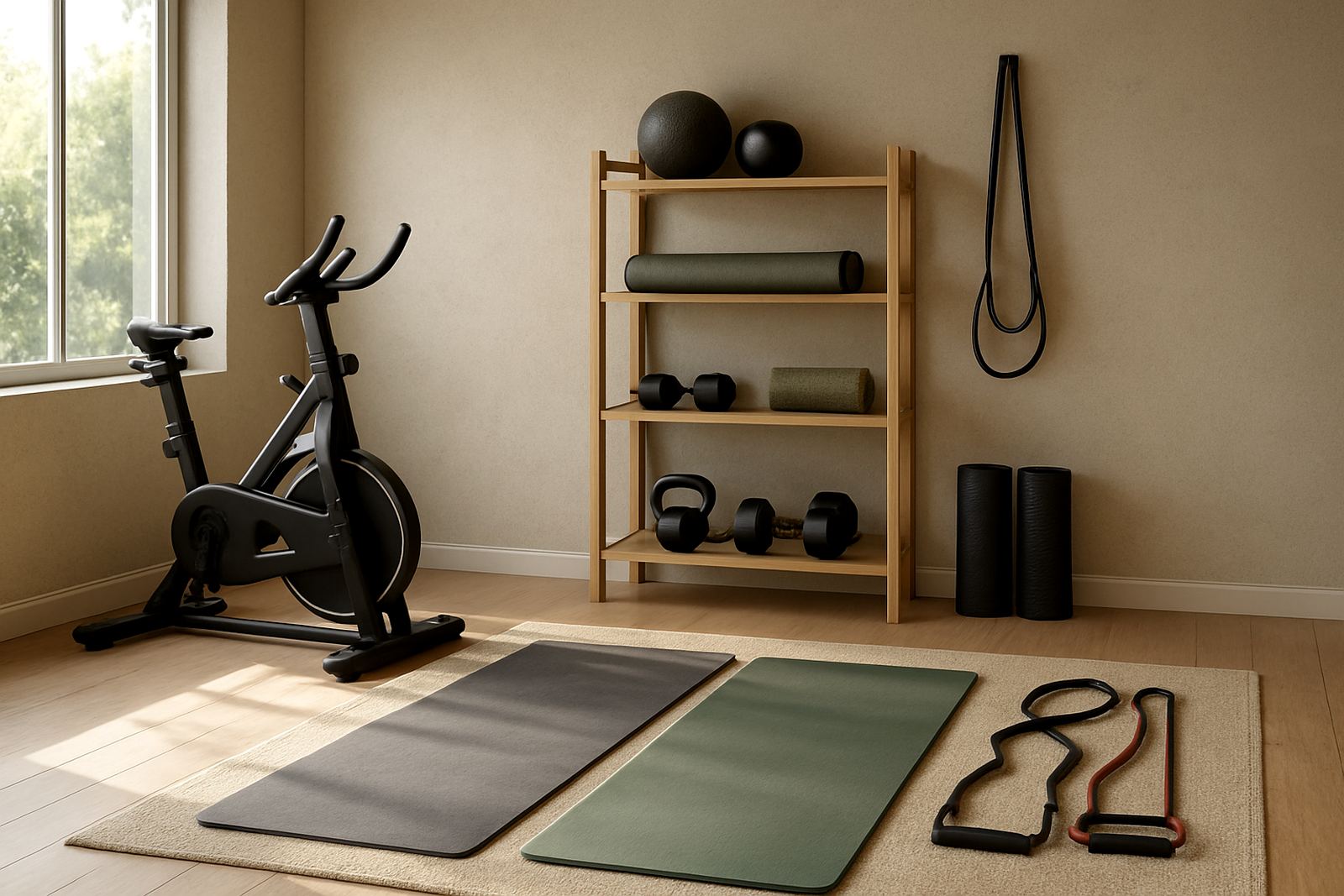
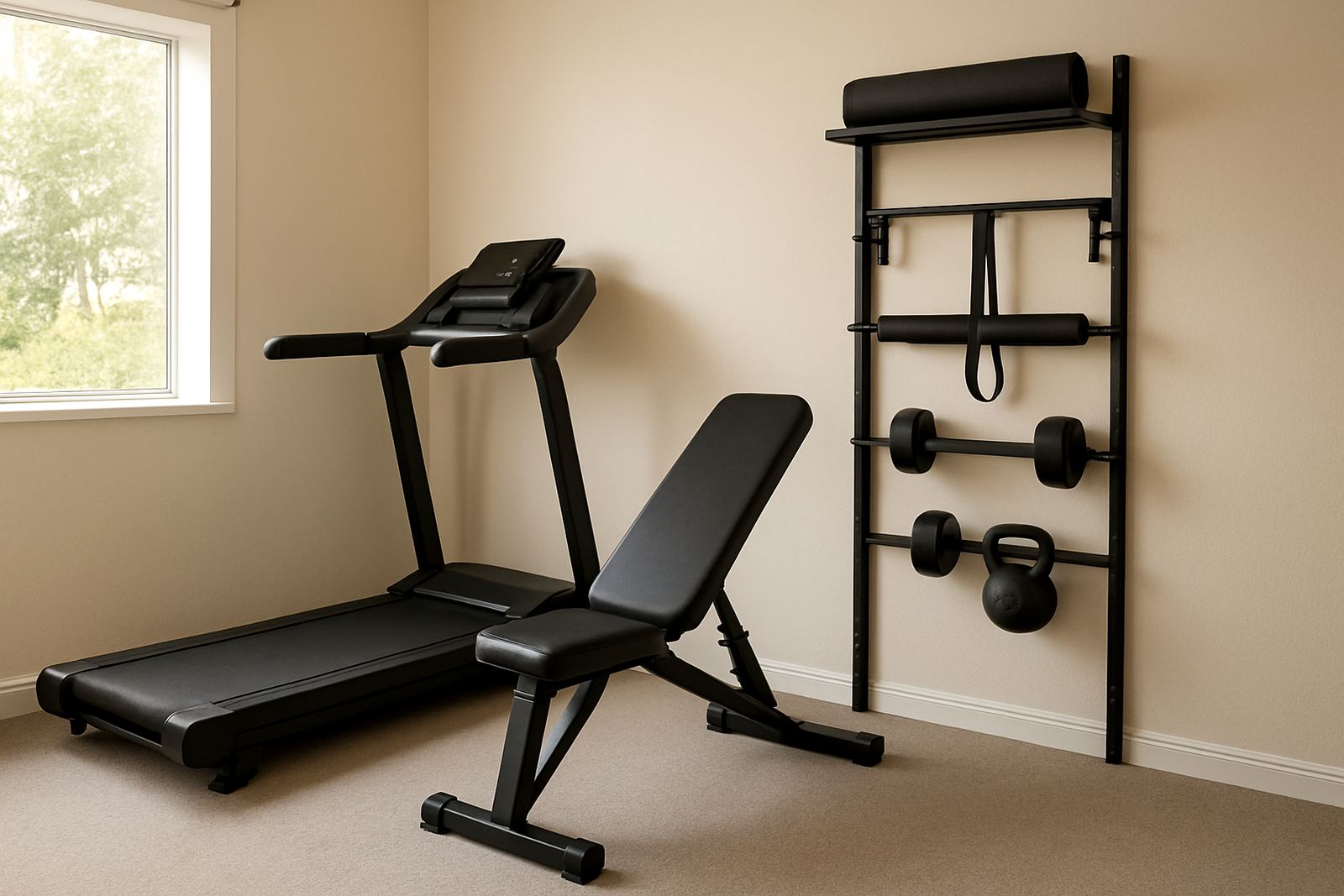
Most small gyms work best with a mixed set of free-weight, cardio and tracking tools. A foldable bench, adjustable dumbbells, resistance bands, a mat and a compact cardio unit will cover far more training styles than one large machine. If the household includes more than one person, it is worth choosing items that can be adjusted quickly between users. That keeps the room functional when one person is doing strength work and another is doing a lighter session after work.
FitSmart also supplies smart fitness trackers that help people keep a record of heart rate, recovery and weekly movement. For households trying to lose weight or build consistency, that feedback matters. A training room becomes easier to use when progress is visible, especially for beginners who need a bit of encouragement to keep going.
- Foldable bench or compact adjustable bench
- Adjustable dumbbells or a tidy dumbbell set
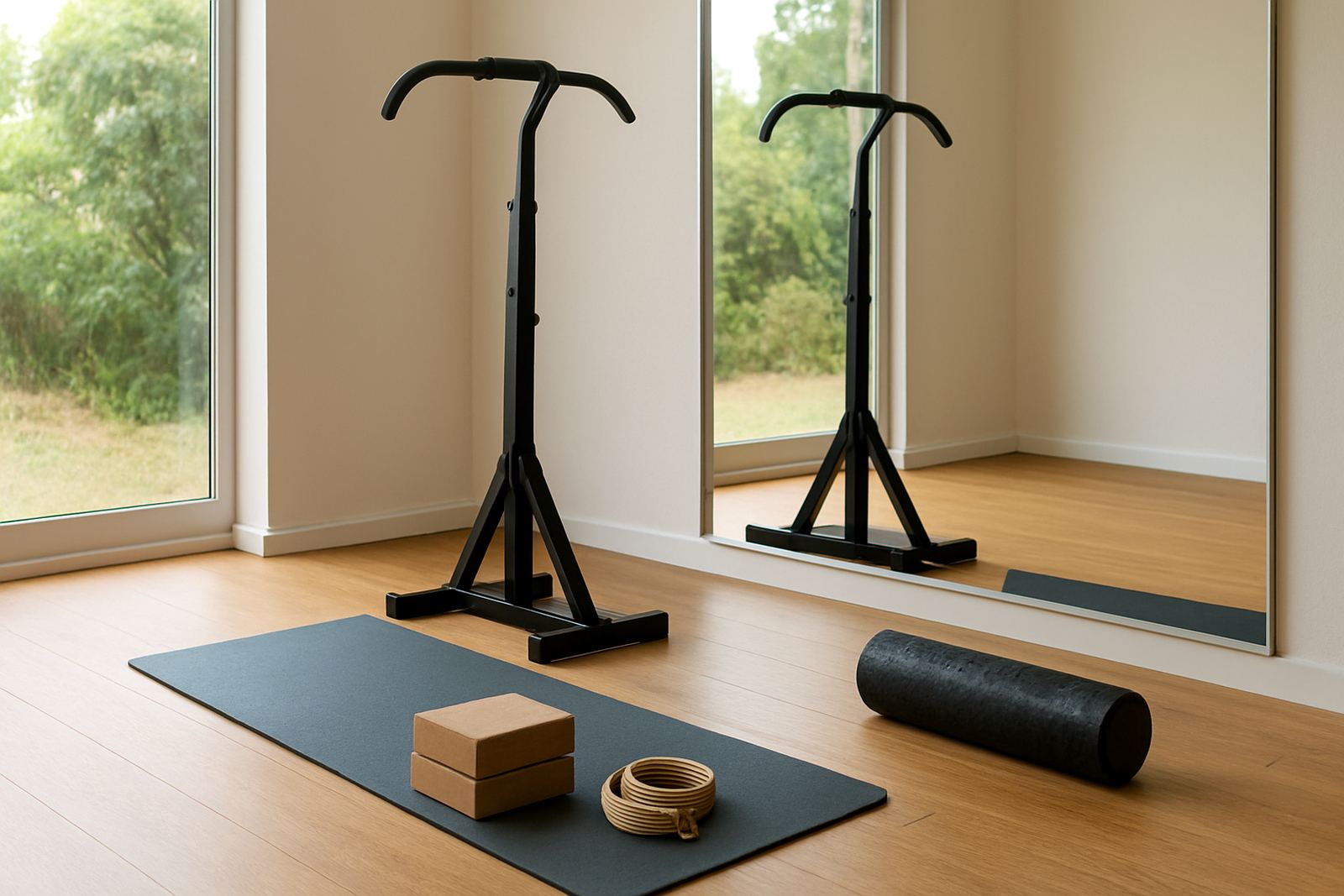
- Resistance bands and a stable exercise mat
- Compact cardio unit for walking, jogging or intervals
- Smart tracker for heart rate, steps and session data
How to plan the room before you buy anything
Good planning starts with measurements. Measure wall-to-wall width, ceiling height, door swing and the space needed to step back or lie flat. In many homes the issue is not the equipment itself but the clearance around it. If a bench opens into a passage or a treadmill blocks a cupboard door, the space will become frustrating very quickly. That is where proper layout advice helps. We look at how the room is used during the day, where the plugs are and whether the floor needs protection from weights or vibration.
For coastal areas or closed rooms with limited airflow, materials matter too. A garage in Pretoria or a spare room in Fourways will behave differently from a humid space near the coast, so storage and ventilation need to be considered before installation. Mats, rubber flooring and easy-wipe surfaces help keep maintenance simple. If the room will double as a family area, choose equipment that folds or stores upright so the training zone can be cleared in a few minutes.
- Leave enough room for full arm and leg movement
- Check floor strength and use protective mats
- Keep access to plugs, windows and doors clear
- Plan storage for bands, chargers and smaller items
Common mistakes that waste space and money
One of the biggest mistakes is buying equipment because it looks impressive, not because it suits the space. Large machines can dominate a small room and end up used once a month. Another issue is buying too many items at once. A compact setup should grow in stages. Start with the essentials, then add pieces based on actual training habits. That way the budget goes further and the room stays practical.
People also forget about noise, flooring and maintenance. In upstairs flats or townhouse units, dropping weights or using hard feet on a machine can become a problem with neighbours. In some complexes, body corporate rules may restrict equipment movement, drilling or heavy noise after certain hours. It is better to plan for quiet use from the start. A good setup can still be effective without becoming a nuisance.
Small spaces also need discipline around storage. If resistance bands, collars, chargers and mats are left around the floor, the room stops feeling like a training area. That is when people begin skipping sessions. Keep the space simple and it will be used more often, no matter how busy the week is.
Typical budgets for compact home gyms in Rand
The budget depends on whether you want a starter setup, a more complete strength corner or a multi-user training room. For many households, a sensible compact gym can be built in stages. The first stage usually covers the basics, while the second stage adds more comfort and training variety. We often guide clients in Johannesburg and nationwide to avoid overspending on large items that do not fit the room properly.
As a rough guide, compact home gym budgets usually fall into these ranges:
- Starter space-saving setup: R6 000 to R15 000
- Mid-range compact gym: R15 000 to R35 000
- More complete multi-use setup: R35 000 to R75 000+
These ranges can shift depending on whether the room needs flooring, mirrors, storage, delivery or setup help. If you are working with a tight budget, it is often best to prioritise one cardio option, one strength option and one way to track progress. That combination gives better long-term value than filling the room with extras you do not use.
How FitSmart supports smaller training spaces
FitSmart works with clients from Fourways, Sandton, Midrand, Randburg, Roodepoort and Pretoria East, as well as customers further afield through nationwide delivery. Our team can help with Equipment Onboarding, Tracker Setup Help, Home Gym Planning and training support through Starter Programme, Strength Programme, Cardio Programme, Weight Loss Coaching, Mobility Coaching, Virtual Check Ins and Family Fitness Plans. That matters when the room is small because every choice needs to suit the household, the budget and the space available.
Whether you are setting up a spare bedroom in Bryanston or clearing a section of a garage in Centurion, the same rule applies: choose equipment that fits the room and your routine. A compact gym should make training easier, not add hassle. With the right plan, even a modest room can become a practical place to train before work, after school runs or between load-shedding slots.