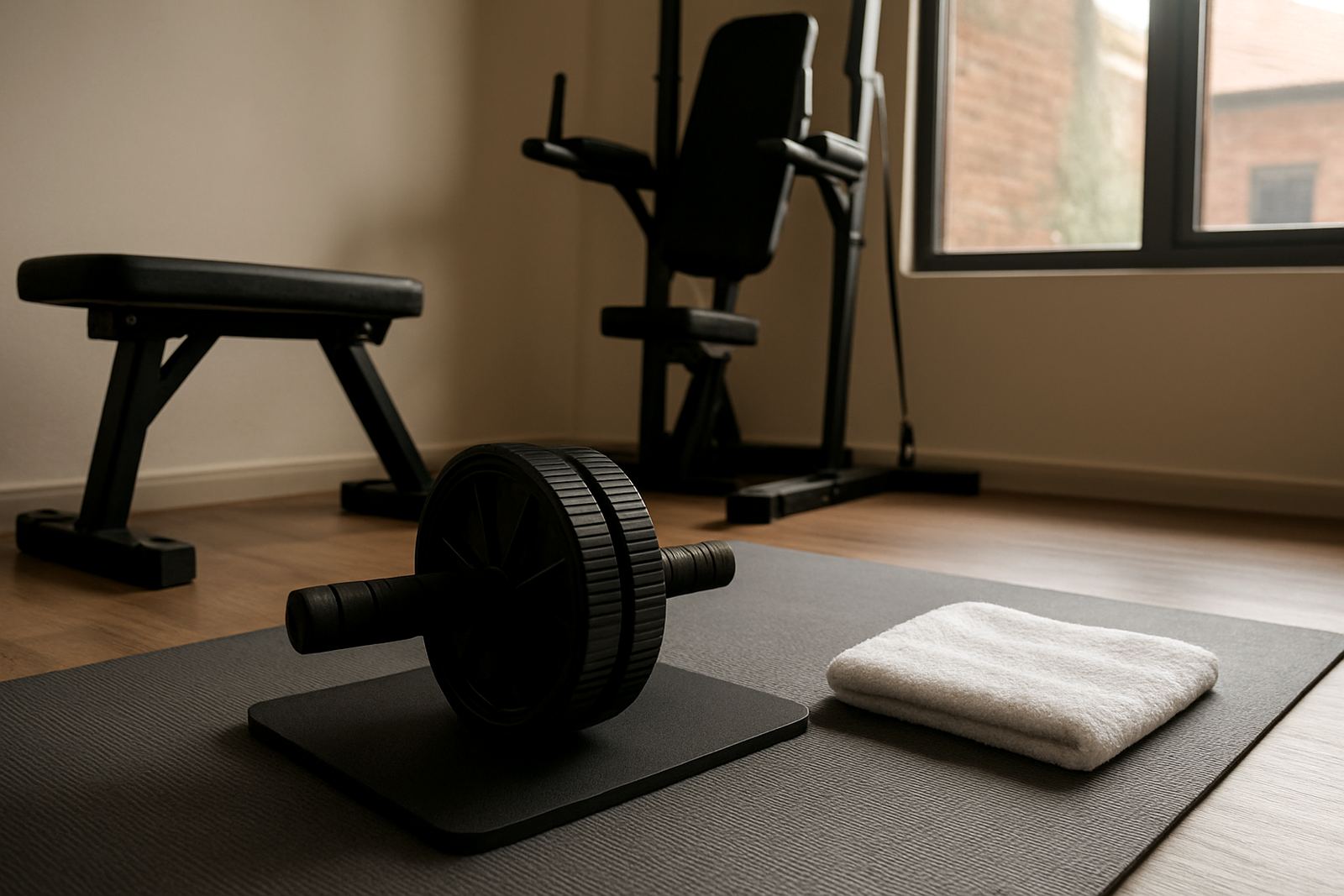
What this Ab Roller does in a home setup
An ab roller is a compact wheel-based training tool used for rollout movements that challenge the midsection, hips, shoulders and upper back at the same time. Unlike floor crunches that only ask for a small range of motion, rollouts require you to control the body as it extends and returns, which makes the work feel direct and efficient. For home users in Johannesburg, Fourways, Sandton or anywhere else in South Africa, it is a handy option when you want a space-saving tool that still asks proper effort from the core.
This type of equipment is popular because it does not need mounting, a mat with special fittings, or any power supply. You just set it on a clean floor and work through short sets with good form. It suits people building basic core strength, athletes adding trunk control to a training plan, and anyone looking for a compact tool that does not take over a room. If the goal is stronger midline control for lifting, running, cycling or general conditioning, the ab roller fits neatly into that work.
Sizes, grip style and common options
Most ab rollers are small and easy to handle, but the details matter. The wheel width, handle grip and surface contact all affect how stable the movement feels. A wider wheel gives a steadier base, while a narrower wheel can feel a little more demanding on balance and control. Some users prefer foam grips for comfort, while others want firmer handles for a tighter hold during longer sessions.
- Standard single-wheel design for compact storage
- Double-wheel or wider-base styles for extra stability
- Textured grips for better hold when hands get sweaty
- Lightweight build for easy packing and moving
- Optional knee support mat for floor comfort
For home use, it is usually worth choosing a model that feels stable under load rather than one that only looks neat. A small increase in wheel width or grip comfort can make a big difference, especially if you train on tiled floors, vinyl, or concrete with a mat beneath you.
Where it works best and who should use it
An ab roller suits spare rooms, garages, apartments and home gym corners where space is limited. It is especially useful if you already have a mat, dumbbells or a bench and want one more tool that does not need a dedicated footprint. Because the movement is done on the floor, it is easy to slot into a quick session before work, after school runs, or between other exercises.
It is a good fit for beginners who are ready to progress beyond basic floor holds, but it does need sensible pacing. Start with short range rollouts and increase the distance only when your lower back stays neutral and your breathing remains controlled. More experienced users can use it for slower reps, pause work, or higher volume in a structured programme. If you train at home in an upstairs room, keep noise low and use a mat so the wheel does not mark the floor.
- Best for core work, shoulder control and anti-extension training
- Suitable for short sessions of 5 to 15 minutes
- Works well with mat training and bodyweight programmes
- Not ideal on loose carpets or uneven floor surfaces
Setup needs, floor use and power requirements
There is no installation work for an ab roller in the usual sense. It arrives ready to use, with no tools, wall fixing, electricity or gas connection required. You only need enough clear floor space to kneel and roll forward safely. A smooth mat or firm exercise surface helps keep the movement controlled, especially on tiles common in many Gauteng homes.
If you train in a shared living area, check that the floor is dry and free from loose dust before starting. That helps the wheel grip properly and reduces the chance of slipping. In coastal humidity the handle grips and mat can hold moisture, so it helps to air them out after use. In Johannesburg and Pretoria homes, dust build-up can also affect grip over time, so a quick wipe before and after training is worthwhile.
- No power supply needed
- No gas or fixed installation required
- Use on a stable, level surface
- Recommended with a training mat for comfort and floor protection
Care, cleaning and servicing over time
Care is simple and does not take long. Wipe the handles and wheel after use with a dry or slightly damp cloth, then leave the unit to air-dry before storing it. If you train regularly, check the wheel edge and handle fixings every few weeks to make sure nothing has loosened. A small amount of movement in the handles can affect control, so it is worth catching early.
Keep the roller away from direct sun in a hot car boot or patio store, since heat can affect some plastics and grips over time. If the wheel starts to squeak, check for dust or fine grit first. A clean wheel usually solves it. If the grip surface begins to crack or flatten, replace the unit before the hold becomes uncomfortable. For family use in a busy home, regular cleaning also helps keep sweat and chalk residue from building up.
What to check before you order
Before placing an order, look at the wheel width, handle comfort and overall weight rating. If you are using the roller on tiles, laminate or sealed concrete, ask whether the base is suitable for those surfaces. It is also smart to check whether a knee mat is included or if you should add one to the order. For a new user, the right mat can make the first few sessions more usable and a lot more comfortable.
If you are planning home training in Fourways, Sandton, Midrand, Randburg, Roodepoort or Pretoria East, it helps to confirm delivery timing and packaging size so you can receive it without delay. Ask about setup help if you are starting a family fitness plan or a beginner strength routine and want guidance on safe progression. For product selection, check these points before checkout:
- Wheel width and stability
- Grip comfort and handle texture
- Included mat or accessories
- Suitable floor type at home
- Training level, beginner or advanced
- Delivery area and lead time
How it fits into a proper training routine
An ab roller works best when it forms part of a wider plan rather than being used on its own. It can support strength programmes, mobility work and weight loss coaching by adding a short, focused core block to the week. A few controlled sets after warm-up or near the end of a session are often enough. Home users who want steady progress usually do better with quality repetitions than with chasing high numbers too soon.
For training support, it can be matched with plank holds, dead bugs, glute bridges and light dumbbell work. That combination helps with trunk stiffness, posture and control during everyday movement. If your goal is family fitness or a starter programme, use the roller sparingly at first so the movement pattern stays clean. A little patience goes a long way and you will feel it in the right places when done properly.
Key facts
| Product type | Compact core training roller |
|---|---|
| Main use | Rollouts and controlled trunk strengthening |
| Footprint | Small, easy to store in a cupboard or gym bag |
| Power requirement | None |
| Recommended surface | Level floor with training mat |
| Care | Wipe clean after use and store dry |