
What a rowing machine does in a home training setup
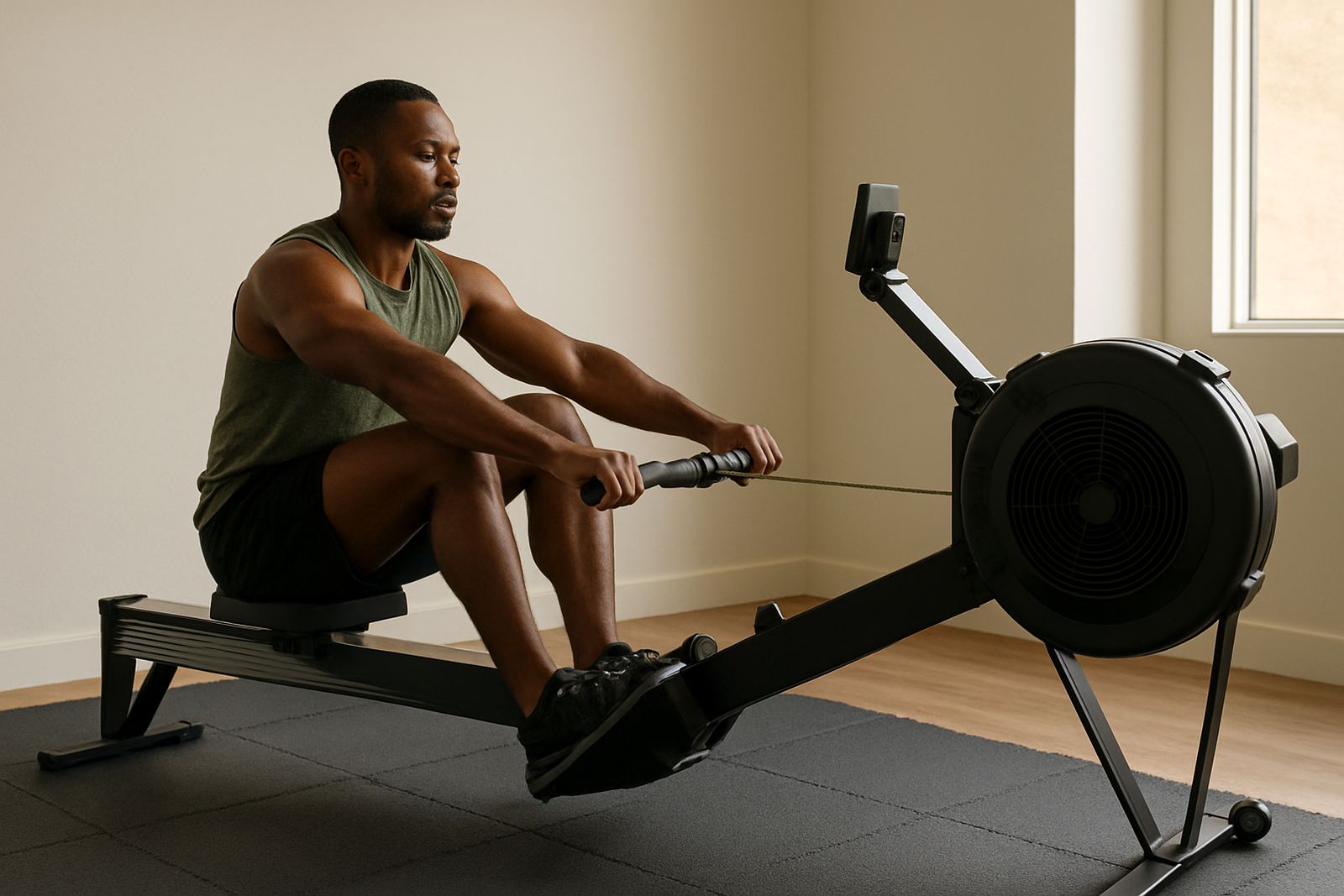
A rowing machine is a full body cardio machine that works the legs, hips, back, shoulders and arms in one controlled movement. It is useful when you want steady endurance work or harder interval sessions without needing a large footprint. For many homes in Fourways, Sandton and Midrand, it becomes the main machine because it folds away or stands upright on some models and gives you a proper workout in 20 to 40 minutes.
Most home units use either air, magnetic, water resistance or a mix of resistance types. Air units feel more natural and respond well to effort, while magnetic units are usually quieter which helps in townhouse complexes and shared homes. Water resistance gives a smooth pull and a more traditional feel. If you train early morning and do not want noise through thin walls, that matters more than people think.
It is also a good option for people doing weight loss work, general conditioning or return-to-fitness training after time off. The motion is low impact on the joints, but you still need good technique. If you pull with the arms too early or round the back, the session gets less effective and more tiring than it should be.
Sizes, resistance types and the setup space you need
Rowing machines vary in length, rail style and resistance system. Most home models are around 200 to 250 cm long when in use, with a footprint of about 50 to 60 cm wide. If you are short on space, check whether the machine stores upright and what the locked storage height is. In a garage or spare room, you also need room to step on and off safely.
- Length in use: usually 200 to 250 cm
- Width: about 50 to 60 cm
- Storage: some units fold, some stand upright
- User height: check the rail length for taller users over 1.85 m
- Resistance: air, magnetic, water or mixed systems
- Display: basic stroke count, time, pace, distance and calories on most models
For apartments in Randburg or Roodepoort, quieter magnetic resistance is often preferred. For home gyms where noise is less of a concern, air resistance can feel better for interval training. Water resistance works well for users who want a more natural stroke and do not mind the sound of moving water during a session.
When choosing size, remember the handle travel and seat movement, not just the body of the machine. A tall user needs enough leg extension without the knees lifting too high at the catch point. If two or more people will use the machine, choose the longer rail rather than the smallest model available.
Where a rowing machine suits best in South African homes
A rowing machine suits homes in Johannesburg and Pretoria where indoor training must continue through rain, load-shedding schedules and busy traffic. It is a strong choice for home gyms, spare rooms, enclosed patios and garages with enough ventilation. In coastal humidity, the machine still works well but you should keep the frame dry and wipe it down more often to prevent surface wear on bolts and rail parts.
For family use, rowing machines are practical because they support different fitness levels. A beginner can row at a steady pace while an experienced user can do timed intervals. It is also useful for people on a starter programme or weight loss coaching plan because the calories burned per session can be tracked easily and the effort can be adjusted without changing equipment.
Some households want one machine for several people. In that case, check the maximum user weight and the seat comfort. If the seat is too hard or the footrests are too small, people stop using it after a few weeks. That is why we always look at the practical details, not only the headline features.
- Good for cardio, endurance and conditioning
- Useful for low impact training when running is too hard on the joints
- Works well in garages, spare rooms and larger apartments
- Suitable for solo training or family fitness plans
Installation, power needs and what to plan for before delivery
Most rowing machines are simple to place and do not need plumbing or gas. Many basic models run without mains power, while console displays may use batteries or a low power supply. If the unit has a performance monitor with advanced tracking, check whether it needs a wall plug, USB charging or standard batteries. That matters during load-shedding if you want the console to stay on while training.
Installation is usually straightforward, but the machine must be assembled correctly, especially the rail, seat rollers, footrests and handle cord or chain. If bolts are left too loose the machine can creak, and if the rail is not level the stroke feels wrong. For delivery into homes in Fourways, Midrand and Pretoria East, we recommend measuring door widths, passage turns and ceiling height where the machine will stand upright for storage.
Before ordering, confirm the surface you will place it on. A rubber mat helps protect tiles, laminate and epoxy floors, and it also reduces movement on smooth concrete. In a garage, the mat reduces dust getting into the rollers. If the room has poor airflow, leave enough space around the machine so the user can breathe comfortably during longer sessions.
Care, cleaning and servicing that keep the machine moving well
Rowing machines need regular light care rather than heavy servicing. Wipe the rail, seat and handle after use, especially if several people train on the same unit. Sweat and dust are the main causes of wear in home gyms. In Johannesburg’s dry months, fine dust can collect on the rollers and footplates, so a quick clean once or twice a week helps keep the motion smooth.
Check the rail for dirt, the foot straps for fraying and the handle cord or chain for tension. Magnetic units usually need less day to day attention, while air and water resistance models may need a bit more checking around the moving parts. If the machine sits in a coastal area or in a closed garage with humidity, inspect the metal fasteners for surface rust and dry the machine after use.
- Wipe down after every session with a dry or lightly damp cloth
- Vacuum or dust around the rail and seat rollers weekly
- Check bolts and foot straps every few weeks
- Keep the console dry and change batteries when the display fades
If the machine starts making a knocking sound, the first step is usually a bolt check and rail inspection. Do not ignore small noises for long, because they often become more expensive to correct later on.
What to check when ordering the right rowing machine
When ordering, start with the basics: user weight limit, machine length, resistance type and console function. Then look at the feel of the seat, the footrest adjustment and how the handle sits in the hand. A machine can look similar on paper but feel very different once you start using it daily. If you plan to do longer cardio sessions, the seat and rail quality matter just as much as resistance.
It also helps to think about who will use it. A single user doing structured strength and cardio work may want one kind of machine, while a family setup needs simpler controls and an easy adjustment range. For homes in Sandton or Roodepoort where the machine may be used by more than one person, a clear display and quick footrest adjustment save time.
- Maximum user weight: make sure it suits all users
- Resistance type: choose quiet or natural feel depending on your space
- Console data: time, strokes, pace, distance, calories and heart rate if available
- Storage: check folding or upright storage if floor space is limited
- Parts: ask about seat rollers, foot straps and handle components
- Delivery access: confirm stairs, lifts and doorway sizes before arrival
If you are comparing options for a home training space, we can help you match the machine to your room size, training style and budget in Rand. That is often the difference between a machine that sits unused and one that gets regular use.
Key facts
| Product type | Full body indoor rowing machine |
|---|---|
| Resistance options | Air, magnetic, water or mixed resistance |
| Typical footprint | About 200 to 250 cm long and 50 to 60 cm wide |
| Power need | Usually none, some consoles use batteries or a low power supply |
| Best use | Cardio, endurance, strength conditioning and low impact training |
| Installation | Basic assembly required, mat recommended for most floors |