
What the Air Bike does in a home gym
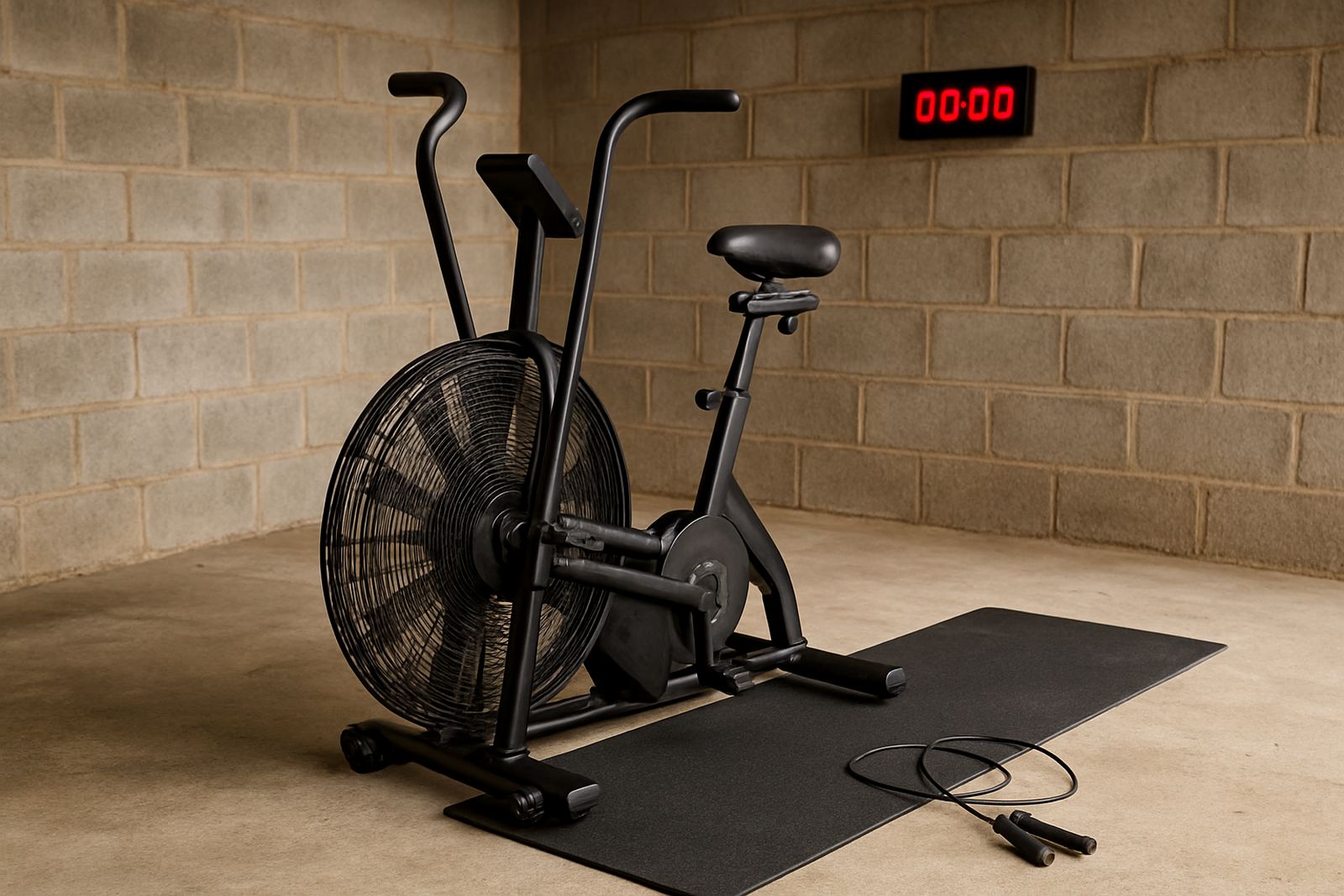
An air bike is a fan resistance exercise bike with moving handles and pedals, so your upper and lower body work together. The harder you pedal and drive the arms, the more resistance the fan creates. That makes it a good choice for short bursts, circuit training and finishers after strength work. In a home setting, it suits users who want fast sessions without needing a large amount of floor space.
It is a practical fit for properties in Fourways, Sandton, Midrand and other city areas where space is limited but consistent cardio still matters. The machine does not need mains power to create resistance, so it keeps working during load-shedding too. The console usually runs on batteries or a small power source, depending on the unit, and the bike itself is driven by you, not electricity.
Sizes, frame feel and setup choices
Most air bikes are sold as a single upright unit with a steel frame, adjustable seat and footrests. Some models are lighter and more compact for a smaller room, while others are heavier with wider stabilisers for commercial use at home. If you are tall, check the saddle height range and handlebar reach before ordering, because a poor fit can make intervals uncomfortable very quickly.
- Frame footprint: usually about 120 cm to 140 cm long and 60 cm to 75 cm wide
- Seat adjustment: vertical and sometimes fore and aft movement
- Console: basic speed, time, distance, calories, watts or pulse on selected models
- Transport wheels: useful if you need to move the bike between rooms
- Level feet: help with uneven tiled floors or garage slabs
If you plan to use the bike in a garage or a room with a smooth tile finish, allow enough space behind the fan guard for air movement. In humid coastal conditions the frame should be wiped down more often, and in Johannesburg the dust from open windows can build up around moving parts. A clean setup helps the bike last longer and keeps noise down.
Where the Air Bike fits best in your routine
This type of bike works well for people who want short, tough sessions rather than long steady rides. It suits home users doing HIIT, boxing conditioning, fat loss work and cross-training. It also fits families with different fitness levels, because each person controls the resistance simply by how hard they work. For one person it may be a 10 minute sprint set, for another it may be a 25 minute cardio block.
- Warm-ups before strength training
- Intervals for weight loss coaching
- Cardio programme sessions at home
- Mobility days where you keep the pace lighter
- Family fitness plans where different riders use the same machine
It is not the best choice if you want a silent machine. The fan makes a steady airflow sound, which is normal, and the noise rises with effort. That said, it is still manageable in a home gym or spare room if the family know training time is happening. For people in Pretoria East, Randburg or Roodepoort who need something simple, it is often more practical than a machine with complicated controls.
Installation, room needs and power requirements
Installation is usually straightforward. The bike arrives partly assembled or in sections, and the main work is attaching the stabilisers, pedals, seat and console. If you want help with setup, it is worth checking whether the delivery includes assembly or whether the unit is delivered to door only. A level surface matters more than fancy flooring, so a rubber mat or good training mat is useful under the frame.
No gas supply is needed, and the resistance system does not rely on electricity. That makes the bike suitable for homes where power cuts are part of daily life. The console may use batteries, so check that before your first session. If you are planning a full home gym in a townhouse, small apartment or double garage, measure doorway widths and ceiling height first, then compare that with the bike dimensions and your stride space.
- Best floor type: rubber, sealed concrete or stable tile
- Power need: none for resistance, possible batteries for console
- Space allowance: leave at least 60 cm around the sides where possible
- Noise note: fan sound increases with pace and resistance
- Delivery check: confirm if assembly is included in your area
Care, cleaning and servicing over time
Basic care is simple but important. Wipe the handlebars, seat, pedals and frame after use, especially if more than one person trains on it. Sweat left on metal parts can lead to early rust spots, mainly in humid areas or where windows stay open. Every few weeks, check that bolts are still tight and the pedals feel secure. If the seat starts slipping or the handles feel loose, stop and tighten them before the next session.
The fan area should be kept free of dust, pet hair and loose threads from gym towels. Do not spray water directly into the console or fan housing. If the chain or belt system needs attention, use the recommended service method for that model rather than forcing lubricant into the wrong place. A simple service routine every few months helps the bike stay smooth, and it reduces annoying squeaks that often start small then get worse.
For homes near the coast, a light wipe-down after each use can make a big difference. In inland areas like Johannesburg, regular dusting is usually enough. If the machine is shared by a family, assign one person to check the bolts and one person to clean it after sessions, otherwise it tends to get ignored for weeks.
What to check before you order
Before placing an order, compare the bike specs with your body size, training style and available space. If you are buying for one person, comfort and console data may matter most. If you are buying for a family, seat adjustment, frame stability and ease of movement matter more. You should also think about how often you will use it. A once-a-week rider has different needs to someone doing daily interval work.
- Maximum user weight and frame stability
- Seat height range and handle reach
- Console readouts you actually want to track
- Delivery coverage to your suburb or town
- Whether assembly, setup help or after-sales support is included
- Space in the room, including doorways and turning room
If you are setting up from Fourways and need support for home gym planning, starter programmes, strength work or cardio coaching, it helps to have the machine details ready before you order. That makes the handover faster and avoids buying a bike that is too large, too light or just not suited to your training style.
Key facts
| Product type | Fan resistance air bike for home cardio and interval training |
|---|---|
| Resistance system | Air resistance, self-powered by user effort |
| Typical footprint | About 120 to 140 cm long x 60 to 75 cm wide |
| User features | Adjustable seat, moving handles, pedals and transport wheels on selected models |
| Power requirements | No mains power needed for resistance, console may use batteries |
| Best use | HIIT, conditioning, warm-ups, fat loss sessions and family fitness |