
What the Cable Trainer does in a home gym
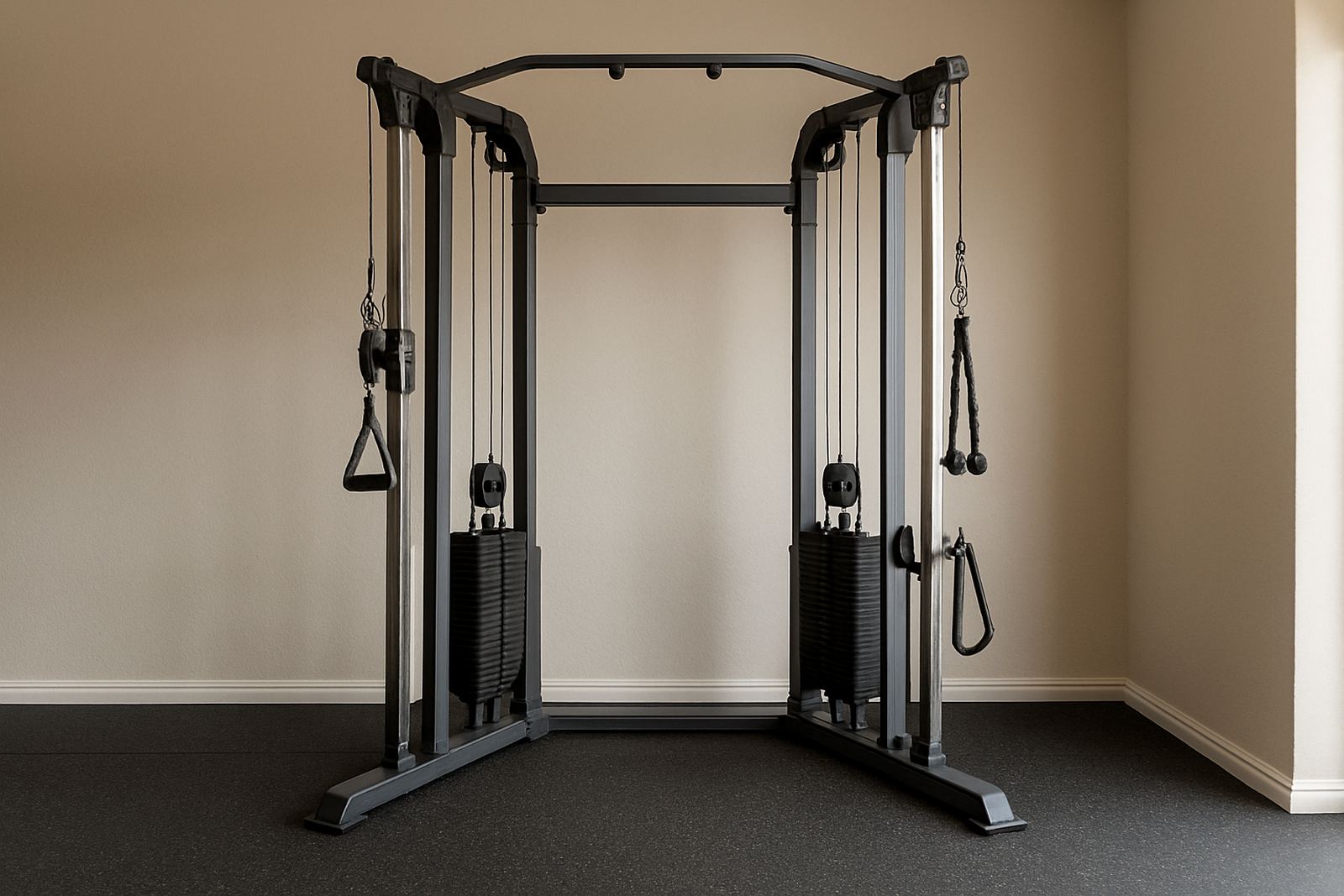
A Cable Trainer gives you a smooth pulling and pressing system for functional training at home. Instead of loading one fixed motion, the pulley lets you work through a natural path, which is useful for rows, presses, curls, tricep work, face pulls and rotation drills. It suits users who want more exercise variety than a simple barbell or a single station machine can offer.
For many South African homes, the big advantage is flexibility. You can place it in a spare room, garage or covered patio, and use it for short daily sessions before work or after load-shedding. If your space is limited, this type of unit gives you a lot of training value without needing a full multi-gym footprint.
- Supports controlled resistance training for full body routines
- Helps with mobility work, rehab movement and warm-ups
- Suitable for beginners and more experienced lifters
- Works well for single user training or family fitness plans
Sizes, pulley options and training feel
Most Cable Trainers are available in compact wall mounted or freestanding formats, with adjustable pulley height and a choice of handle attachments. The key difference is the resistance setup. Some units use a dual side arrangement for balance and symmetrical work, while others use a single column for tighter spaces and more direct isolation exercises.
When comparing options, look at the working load, the travel on the cable and how easily the pulley position changes. A smoother trolley and quality bearings make a big difference during higher rep sets. If you train for strength and conditioning, check whether the unit supports quick changes between light functional work and heavier loaded movements.
- Compact single column units for smaller rooms
- Wall mounted and floor anchored options available
- Adjustable pulley height for more exercise angles
- Attachment points for straight bars, rope handles and single grips
- Typical working load ranges from 50 kg to 100 kg per side, depending on the model
Best rooms for a cable trainer in Johannesburg homes
This product suits garages in Fourways, Sandton and Randburg, especially where the training area also needs to park a vehicle or double as storage. It also works in apartment gyms, backyard studios and small home training corners in Midrand, Roodepoort and Pretoria East. If the space is on a coastal side of the country later, the same unit needs a little more attention to moisture and rust prevention.
Because it is a cable based unit, it is useful for mixed households where one person wants heavier strength work and another wants lighter toning, mobility or weight loss coaching. The machine is practical for starter programmes, strength programmes and family fitness plans because the resistance can be adjusted without changing the whole setup.
- Good for garages, spare rooms and covered patios
- Useful where one machine must serve multiple users
- Fits training plans that include cardio accessory work and mobility drills
- Better suited to level floors and solid mounting points
Installation, anchoring and power needs
Most Cable Trainers need proper anchoring to a wall or floor, and that part should be checked before ordering. A concrete slab, solid block wall or reinforced gym frame is usually best. If you are mounting into brick, plasterboard or a lightweight partition, get the fixing point assessed first because the pull force shifts during each rep. The installer should confirm ceiling height, clearance for the handles and the swing path of the cable.
There is no gas requirement, and most models do not need continuous power for operation. If your unit includes a digital tracker, counter or lighting, it may need a basic mains point or battery backup. In Johannesburg homes, load-shedding is usually not a problem for the training itself, but it helps to confirm whether any add-on display or accessory needs charging.
- Check wall strength, floor level and ceiling height before fitting
- Allow space for cable movement and full arm extension
- No gas connection required
- Most units work without mains power, though some accessories may need charging
- Professional assembly is recommended for safety and alignment
Care, servicing and long term use
Keep the cable trainer clean and dry, especially if it sits in a garage where dust builds up or in a coastal area where humidity is higher. Wipe the frame after use, check the cable for fraying and inspect the pulleys for any rough movement. A small amount of routine care goes a long way and helps the unit stay safe under repeated use.
Servicing is simple. Tighten bolts as part of your monthly check, look for wear on handles and confirm that the carriage still moves freely. If the unit is used by more than one person, it is worth making a quick habit of checking the selector settings before each session so there is no surprise load jump. That sort of small routine saves time and keeps training steady.
- Wipe down after use to remove sweat and dust
- Inspect cable, pulleys and attachment points regularly
- Store in a dry spot where possible
- Treat coastal humidity with extra rust prevention
- Book maintenance if the carriage starts sticking or making noise
Key things to check before ordering your barbell set
Before you buy, measure your available wall width, floor depth and ceiling height so the unit fits properly. Check who will use it, how often it will be used and whether you want a compact home option or a heavier duty setup for serious strength work. If you are building a starter gym, the right pulley system can cover a lot of exercises without needing five separate machines.
Also confirm the finish, attachment package and maximum user weight where applicable. If you want help matching it to a Starter Programme, Strength Programme or Weight Loss Coaching plan, give us a call or send a note with your room size and training goals. That way we can point you to the right configuration, rather than guessing and ending up with something that is too light or too large.
- Measure the room and confirm fixing surfaces
- Check maximum load rating and pulley travel
- Ask which handles and bars are included
- Confirm assembly requirements and delivery access
- Match the unit to your training style and current fitness level
Key facts
| Product type | Multi purpose pulley training system |
|---|---|
| Use case | Functional resistance, targeted muscle training and home strength work |
| Mounting | Wall mounted or freestanding, model dependent |
| Resistance | Adjustable cable load, model dependent |
| Space need | Compact footprint for home gyms and garages |
| Power | No gas required, most models need no continuous power |