Guided strength training for home use
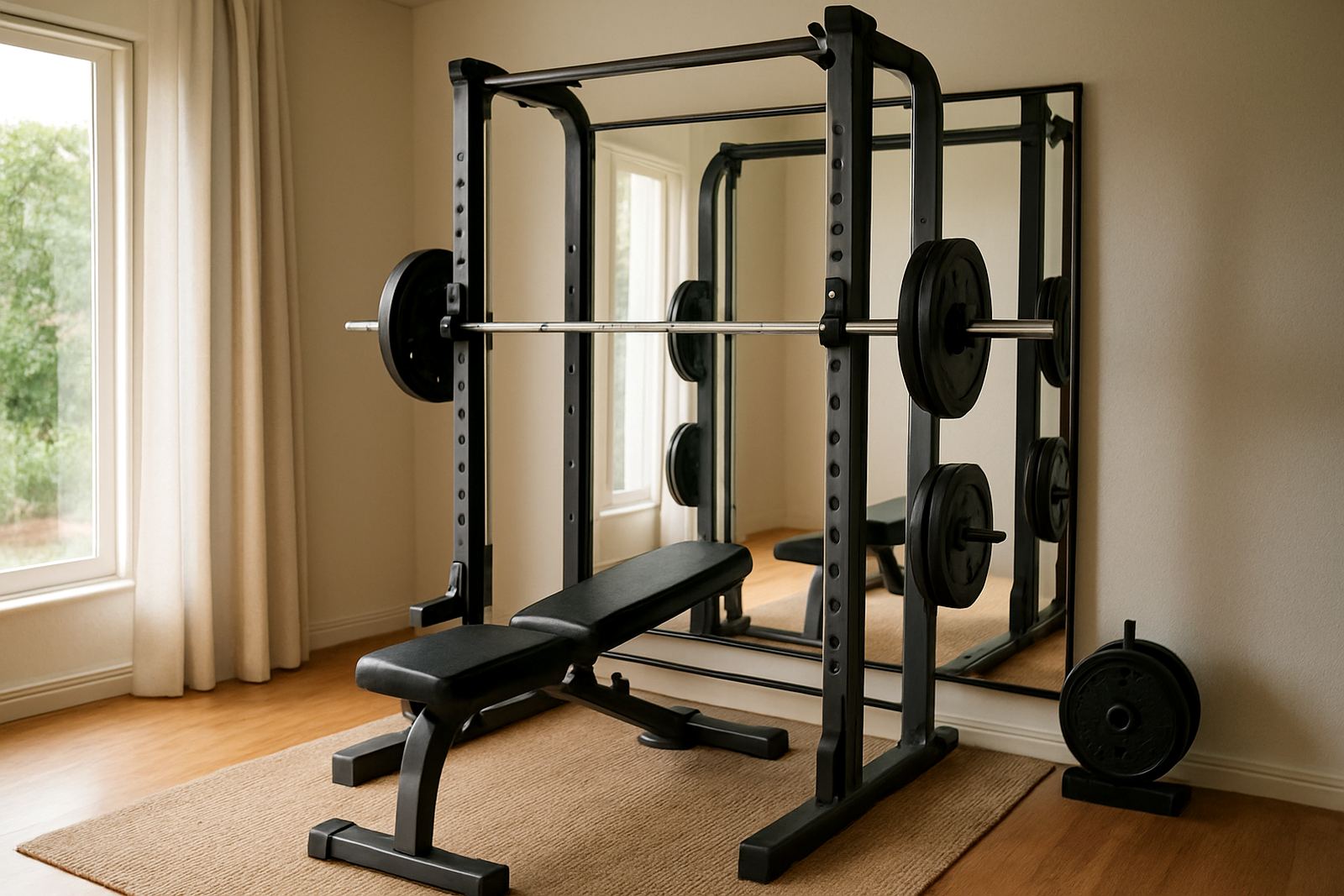
The FitSmart Smith machine is a guided bar unit built for controlled strength sessions at home. The bar travels on fixed rails, which helps keep movement steady for squats, bench presses, shoulder presses, lunges and other common lifts. That makes it a practical choice if you train alone and want a little more confidence under load.
It is especially useful where floor space is planned carefully, or where several people in the family will use the same setup. The frame gives you a defined training station, so you can work through a programme without shifting equipment around every few minutes. For many homes in Johannesburg, that kind of order matters quite a bit.
- Controlled bar path for repetitive training
- Suitable for beginner and intermediate lifters
- Works well in a garage, spare room or outbuilding
- Helps keep lifts consistent from session to session
Sizes, frame options and practical specs
Smith machines vary in overall size, rail angle, bar weight and loading setup, so it helps to match the unit to your space and training style. Most home models are designed with a footprint that fits a standard garage bay, but you still need enough room to load plates, step back and move around the sides safely.
Check the overall height first if you are working in a room with a low ceiling, bulkhead or exposed beams. A machine that fits on paper can become awkward once you add mats, plates and an overhead pull-up section. If your space is in Fourways or Sandton and part of the floor is tiled, allow for a stable platform or rubber matting as well.
- Typical footprint: about 2.0 m to 2.5 m long and 1.2 m to 1.8 m wide
- Typical height: about 2.1 m to 2.3 m
- Common bar load rating: 150 kg to 300 kg depending on model
- Plate compatibility: standard Olympic-style weight plates on most units
- Optional attachments may include spotter arms, pulley work or pull-up grip sections
Where it suits best in a South African home
This type of equipment suits users who want a dedicated strength station rather than a mixed cardio setup. It fits well in home gyms across Midrand, Randburg and Pretoria East where space is usually planned around a fixed routine. If you are training for muscle gain, general conditioning or strength maintenance, the machine gives you structure without needing a spotter for every lift.
It also suits households where more than one person trains. A parent can use it for structured strength work in the morning, then a teenager or spouse can follow later with lighter accessory sets. For families in Roodepoort or the East Rand, that flexibility can make the purchase feel worth it sooner.
- Good for controlled solo training
- Useful where free-weight confidence is still developing
- Works well as the main strength station in a home gym
- Suitable for flat garages, outbuildings and converted rooms
Installation, floor prep and power needs
A Smith machine does not need gas, and it usually does not need any electrical supply either unless the model includes a separate accessory such as a pulley system with added features. That keeps setup simple, especially in areas where load-shedding affects routine. You can train on the unit without worrying about a power outage interrupting the basic movement.
What it does need is a level, solid floor and enough ceiling clearance. We recommend rubber matting under the frame to help protect tiles and reduce movement during use. If the machine is going into a garage in Johannesburg where dust and moisture can get in, it is worth checking that the floor stays dry after heavy rain. Some customers underestimate the space they need for plate loading and then feel cramped later, so measure carefully before ordering.
- No gas connection required
- Usually no mains power required
- Level flooring and safe clearance are important
- Rubber flooring is recommended for grip and floor protection
Care, cleaning and servicing over time
Basic care keeps the machine moving smoothly and helps the guide rails last longer. Wipe sweat off the bar sleeves, handles and touch points after training, especially in coastal humidity or where the garage traps heat. A dry microfibre cloth is usually enough for daily cleaning, with a light check for dust around the moving parts once a week.
Every few weeks, check that bolts remain tight and that the bar glides evenly from top to bottom. If the machine is used heavily, lubrication on the recommended moving surfaces may be needed from time to time. Do not use harsh chemicals on painted or coated sections. A quick inspection before training can catch small issues before they turn into bigger repairs, which saves a lot of hassle later.
- Wipe down after each session
- Check bolts and moving parts regularly
- Keep the frame dry and free of dust
- Use only suitable lubricant on moving contact points
What to confirm before you order
Before ordering, confirm the exact dimensions of the machine and compare them to your room size, doorway access and ceiling height. Also check the maximum user weight and the bar load rating, because those figures should match the way you plan to train. If you want to add plates, benches or storage later, leave enough floor space now so the setup does not feel crowded.
It is also worth checking the warranty terms, delivery method and whether assembly support is available in your area. A machine can arrive in several cartons, so access into a complex, staircase or narrow passage should be measured properly. If you are buying for a shared home gym, think through who will use it and whether you need extra attachments now or later. A bit of planning at the start saves a lot of back and forth.
- Measure room height, width and doorway access
- Confirm bar rating and total frame capacity
- Check plate compatibility and attachment options
- Ask about delivery, assembly and servicing support
Key facts
| Product type | Guided bar strength machine for home training |
|---|---|
| Typical footprint | About 2.0 m to 2.5 m long x 1.2 m to 1.8 m wide |
| Typical height | About 2.1 m to 2.3 m |
| Load rating | 150 kg to 300 kg depending on model |
| Power needs | No mains power required for basic use |
| Best use | Squats, presses, controlled solo strength sessions |