What a squat rack does in a home gym
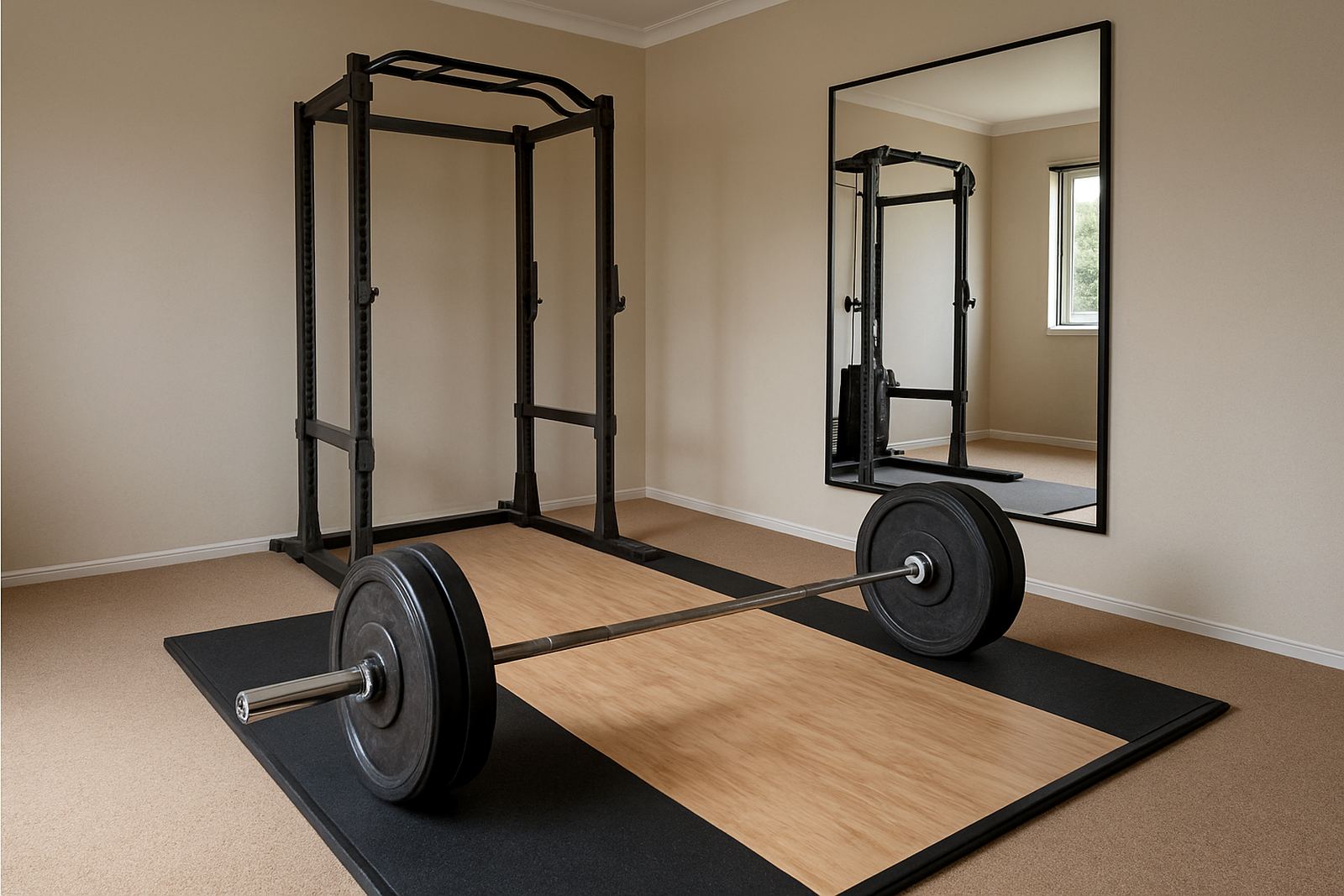
A squat rack is a compact frame that supports a barbell at set heights for squats, bench pressing, overhead pressing and other barbell movements. It is usually smaller than a full power cage, which makes it a practical choice for a garage, spare room, covered patio or a dedicated gym corner in a townhouse or freestanding home. For many households in Johannesburg, Fourways and Sandton, the main benefit is getting proper lifting support without turning the whole room into a gym.
It is best suited to people who want to train more than once a week and keep improving their strength over time. If you are working on body composition, building leg strength or following a structured home programme, a rack helps you lift with better control. A barbell and plates are still needed, and a bench is useful for pressing work. The rack itself is not powered, so there is no power or gas requirement, which also helps during load-shedding or in rooms with limited plug points.
- Supports squat, press and rack pull variations
- Useful for beginner to intermediate home strength work
- Fits smaller spaces than a full cage
- No electricity or gas needed
Sizes, frame styles and common options
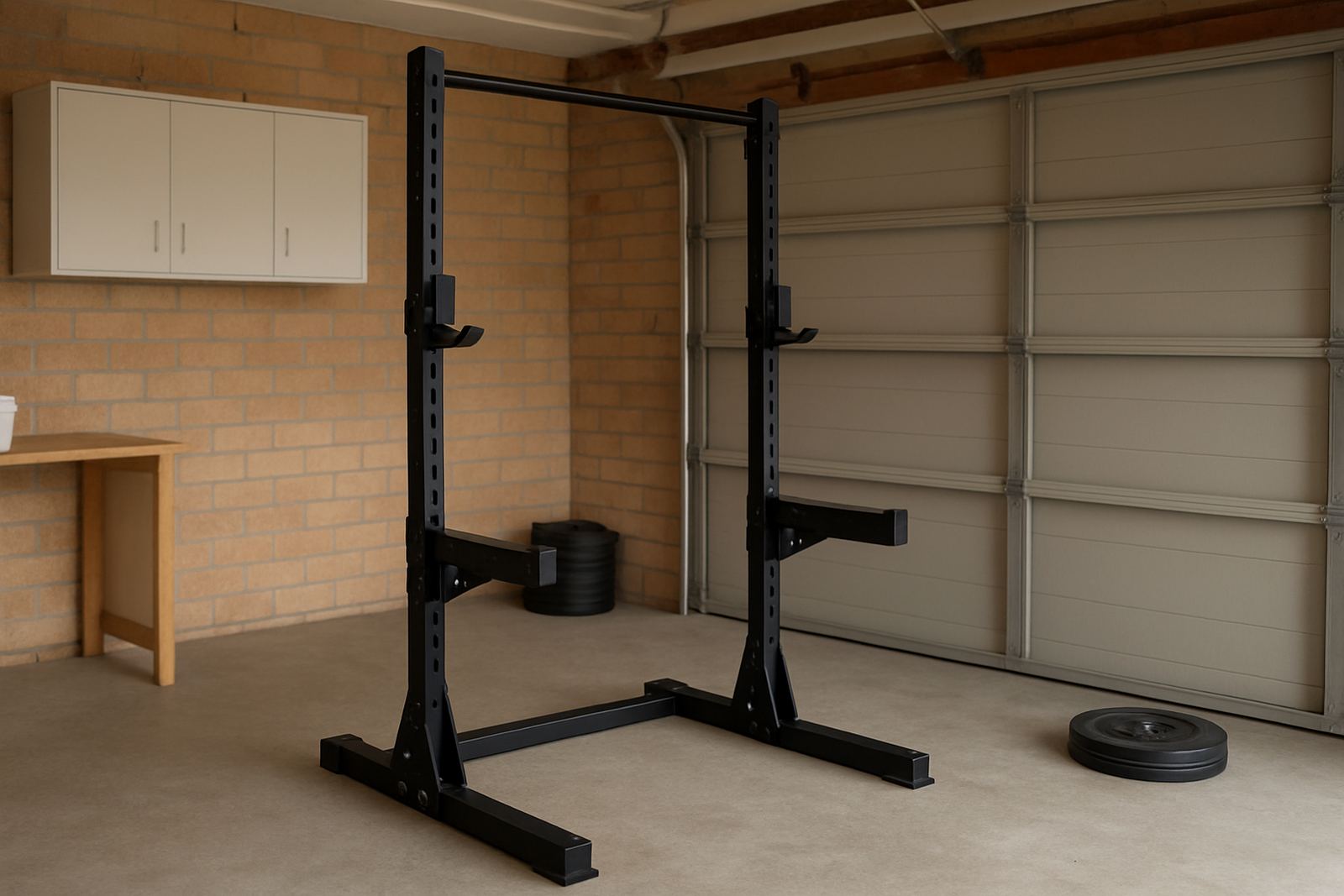
Most home squat racks are built from steel uprights with J-hooks or bar hooks, safety arms and adjustable height holes. The right option depends on your ceiling height, training style and the amount of floor space you have. In many homes, a shorter rack is easier to place in a room with low ceilings, while a taller rack gives more room for overhead pressing and pull-up attachments if included.
When comparing options, check the steel thickness, hole spacing and maximum load rating. Thicker steel and tighter hole spacing usually give better adjustment for bench press heights and safety arm positions. A wide base is helpful on tiled floors and on garage concrete that may not be perfectly level. If you train in coastal areas like Ballito or Durban but order into Gauteng, a powder-coated finish can help slow down surface rust from humidity during transport and storage. Hectic use in a shared family space means an easier wipe-down after each session also matters.
- Typical home rack height: 1800 mm to 2200 mm
- Typical width: 1100 mm to 1300 mm
- Common depth: 1200 mm to 1600 mm
- Load rating often ranges from 200 kg to 350 kg, depending on build
Where a squat rack works best
This product suits homes where training space must do more than one job. It works well in double garages, converted storerooms, larger spare rooms and covered outdoor areas. In Pretoria East and Midrand, many buyers use a rack in the garage so the rest of the home stays clear. In Roodepoort and Randburg, a rack can also fit into a multi-use room if there is enough ceiling height for standing presses.
For apartment living, measure carefully before ordering. A rack may fit the footprint but still feel tight if you need to walk around it with plates, a bench and a barbell. Allow enough room to load plates on both sides and to step back safely from the rack. If the floor is carpeted, use a rubber matting layer to protect the base and stop movement. On smooth tiles, mats also reduce sliding and noise for early-morning training, which neighbours usually appreciate.
- Good for garages, spare rooms and covered patios
- Needs a level floor and clear lifting area
- Best with rubber mats or floor protection
- Measure ceiling height before ordering for overhead work
Installation, anchoring and what you need before setup
Most squat racks arrive as a bolt-together frame. Assembly is usually straightforward, but it helps to have a socket set or spanner, a helper to steady the frame and enough space to lay out the parts. If the rack has adjustable safeties or spotter arms, make sure they are fitted at the correct height before the first session. For heavier units, a level floor and careful tightening are important so the frame does not rock under load.
Some buyers prefer to bolt the rack to the floor or into a wall structure, especially where training loads are high or the floor is uneven. If you are in a sectional title complex, check the body corporate rules before fixing anything to walls or slabs. In freestanding homes, anchoring can be useful but it is not always required if the rack is wide and stable. No electrician or plumber is needed. No gas line, water connection or dedicated power supply is required, which keeps setup simple and low maintenance.
- Assembly tools: socket set, spanner and measuring tape
- Optional extras: bench, barbell, plates and rubber mats
- Anchoring may help on uneven floors or for heavier training
- Check body corporate or landlord rules before drilling
Care, cleaning and servicing over time
A squat rack does not need complicated maintenance, but a little regular care keeps it safer and looking better. Wipe the uprights and hooks after use, especially if you train in a warm garage and sweat lands on the frame. Check bolts every few weeks in the first few months, then at longer intervals once the rack has settled. If the rack is used daily, a quick inspection before leg day is worth it.
In humid conditions or where the rack sits near an open door, look out for early rust spots, chips in the finish and loose plastic feet. These are usually easy to deal with if caught early. Keep plates off the safeties when not in use, and avoid dropping bars onto the hooks from height because that can bend the contact points over time. If you hear creaking or see wobble, stop and check the frame before the next lift, rather than pushing through. It saves trouble later.
- Wipe down after sweaty sessions
- Check bolts, feet and hook wear regularly
- Store plates neatly to reduce knocks and strain
- Treat chips and surface rust early
How to choose the right rack when ordering
Before placing an order, measure your floor space, ceiling height and the width of your doorway or passage if the rack will be moved through the house. Check the maximum load rating and compare it with your current training weight plus future progress. It is better to buy a rack that gives room to grow than one that feels full after a few months. If you plan to bench press, make sure the hook positions suit your starting height and that the safety arms are long enough for your lift style.
Also confirm the finish, included accessories and whether the frame can take a standard Olympic barbell. Some buyers want storage pegs for plates, while others want a simpler frame that keeps the footprint smaller. If the rack will be part of a starter setup, ask about programme support as well. A home gym works better when the equipment matches the plan, whether that is strength work, weight loss support or a family training routine. If you are unsure, send through your measurements and training goals so the right option can be matched to the space, no need to guess.
- Check ceiling height, floor space and doorway clearance
- Confirm load rating and barbell compatibility
- Decide if you want plate storage or a plain frame
- Match the rack to your programme and lifting goals
Key facts
| Product type | Compact home squat rack |
|---|---|
| Main use | Squats, presses and controlled barbell lifting |
| Typical dimensions | 1800 to 2200 mm high, 1100 to 1300 mm wide, 1200 to 1600 mm deep |
| Frame material | Powder-coated steel |
| Load rating | Usually 200 kg to 350 kg depending on model |
| Power or gas requirement | None |