
When your training window is 20 to 40 minutes
Most busy professionals do not need a big room or a full gym floor. They need a setup that is ready in minutes, stores neatly and supports short sessions that still move the needle. In Fourways, Sandton and Midrand, many clients are working from home part of the week and want something they can use before the first call or after the last message. If the equipment takes ten minutes to unpack, it will not get used often.
The best home training for a busy schedule is simple: a small footprint, a clear training plan and tools that let you move from warm-up to work set without wasting time. That might mean a foldaway bench, adjustable weights, a compact cardio machine or a tracker that keeps your heart rate and step count on track. The aim is consistency, not a perfect gym look.
- Short sessions are easier to keep up when the setup is always ready.
- Compact equipment works well in apartments, spare rooms and garages.
- Tracking progress helps when motivation is low after a long day.
Typical gear for a fast, practical home setup
A busy professional setup usually starts with a few pieces that cover strength, cardio and mobility. You do not need to buy everything at once. It is better to choose equipment that matches your time, space and current fitness level, then add more only when the first items are earning their keep. For households in Pretoria East or Roodepoort, where space may be shared with family or used for storage, folding and stackable items make life easier.
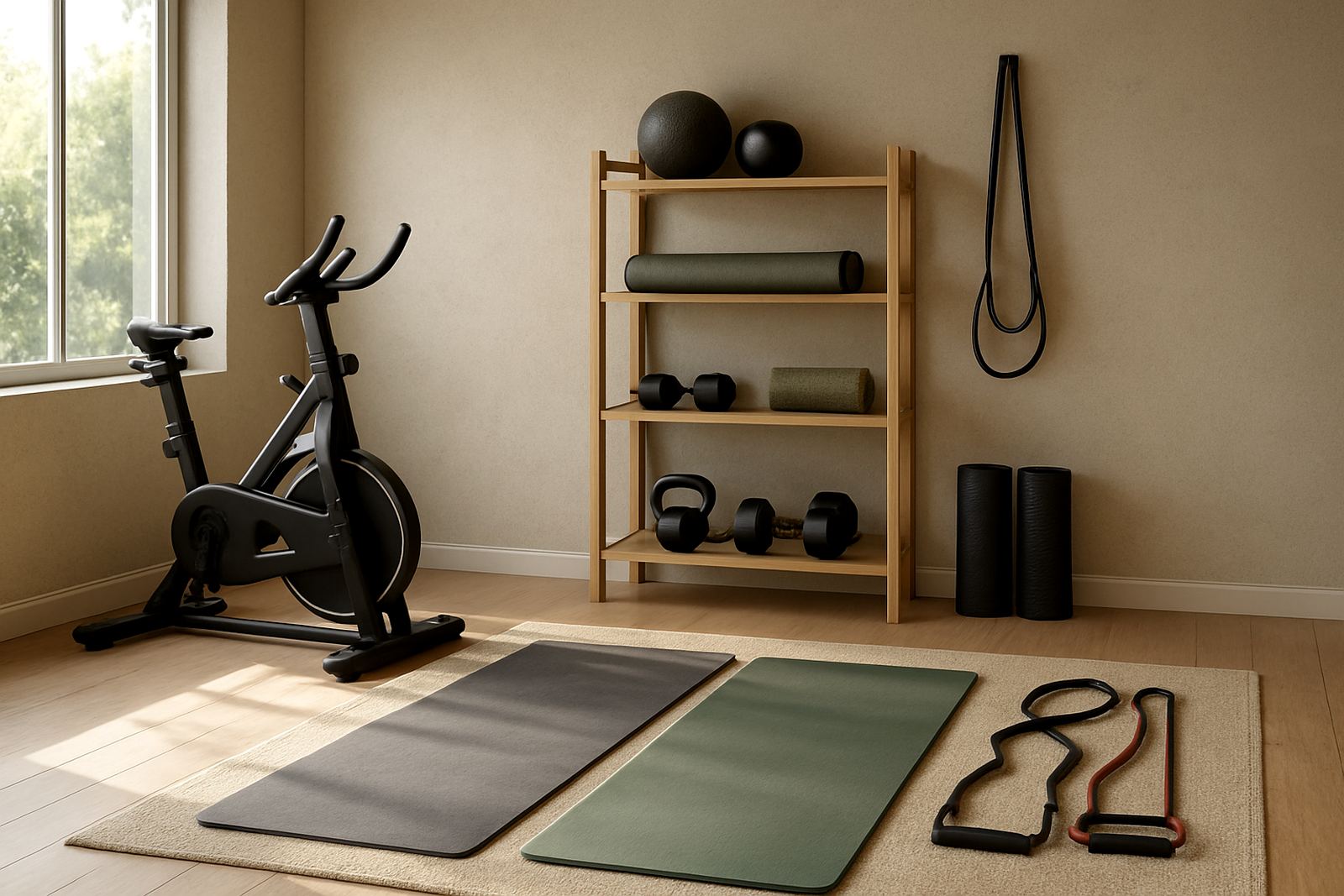
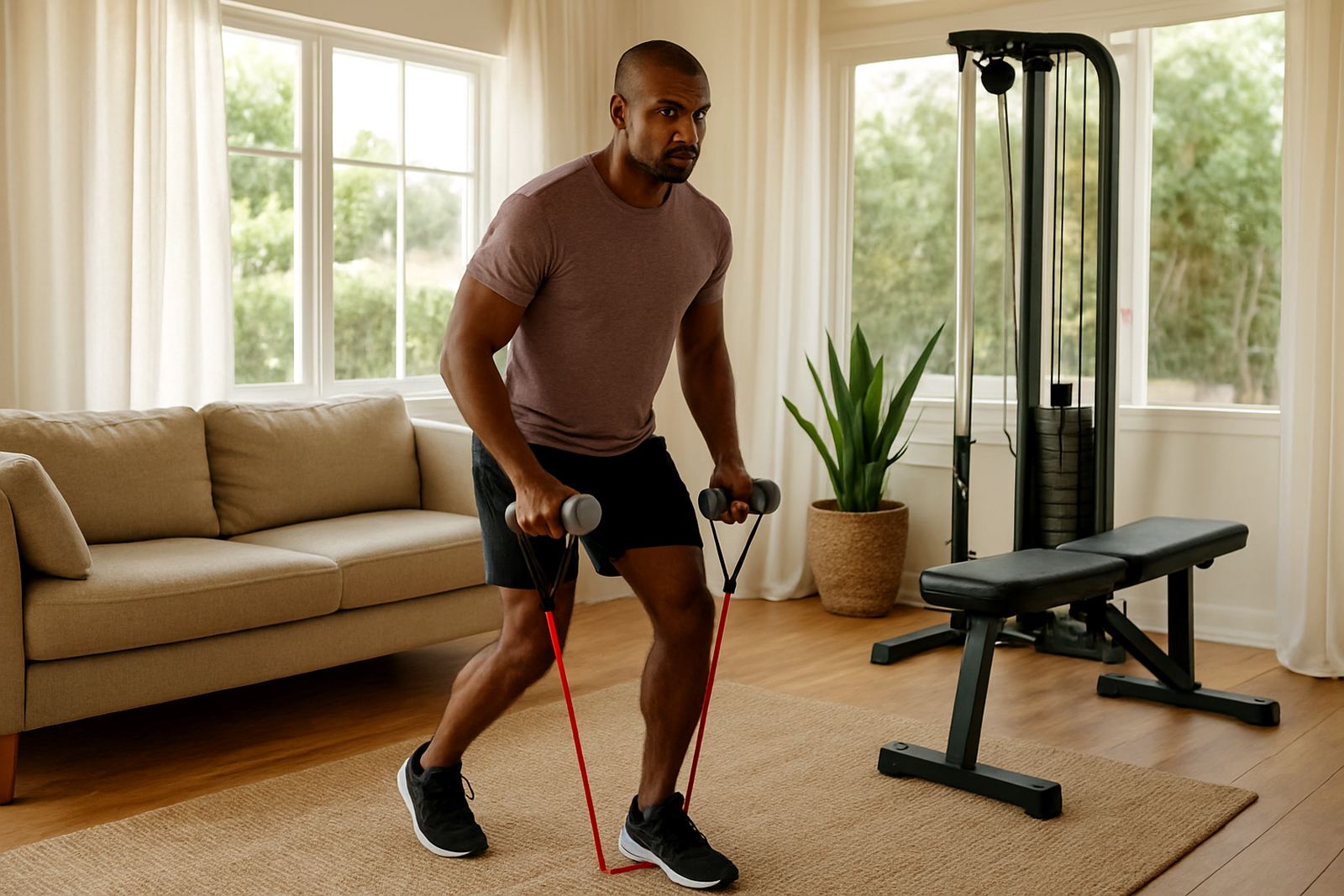
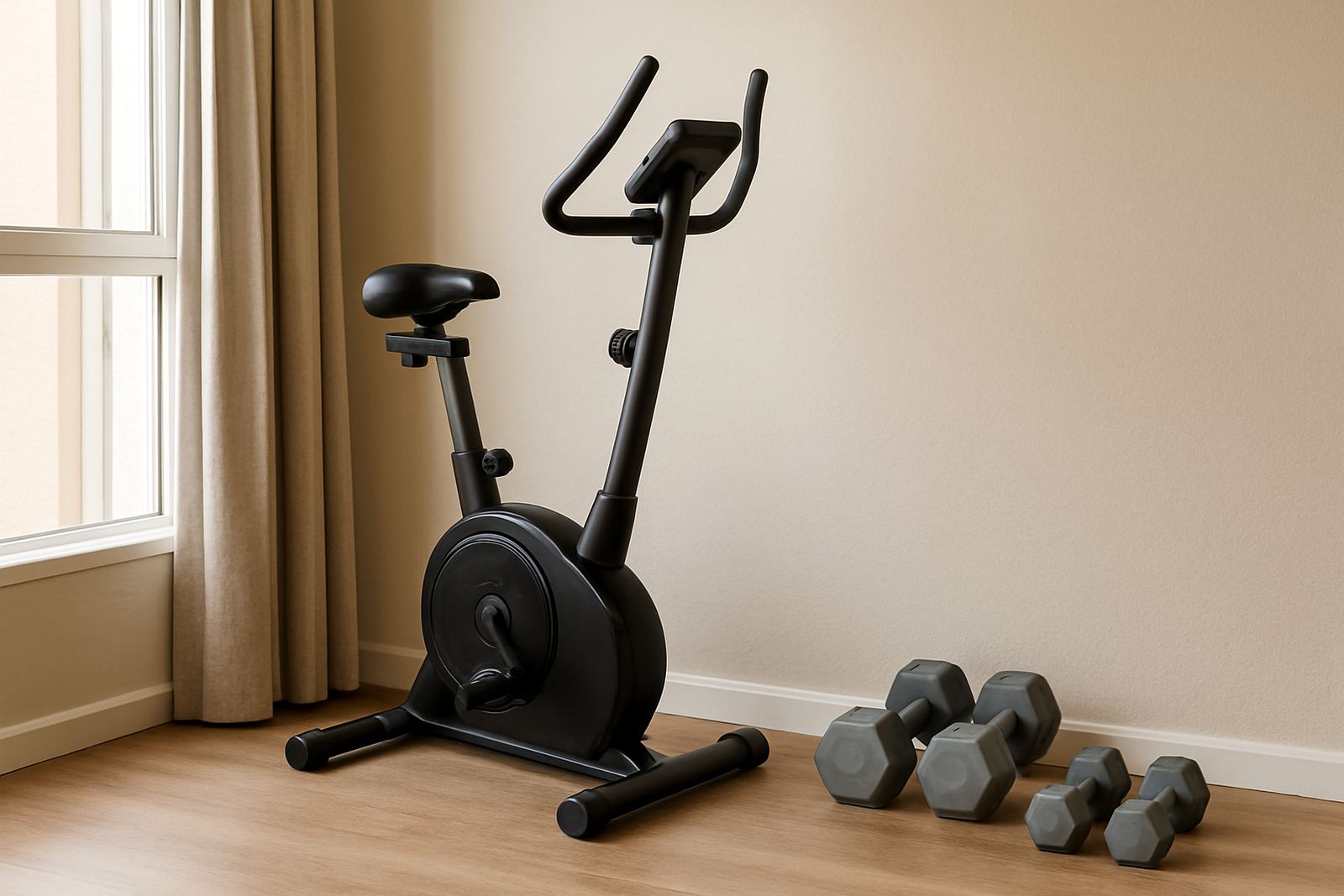
Common equipment for this use case includes dumbbells, kettlebells, resistance bands, a compact bench, a bike or rower, a yoga mat and a smart tracker. If you prefer lower-impact work, a stationary bike is often easier on knees than running on a hard surface. If you want full-body work in a small area, resistance bands and adjustable weights give good range without filling the room.
- Adjustable dumbbells for strength work without a rack of separate weights.
- Resistance bands for warm-ups, core work and travel days.
- Compact cardio equipment for early mornings when going outside is not practical.
- A fitness tracker to monitor steps, heart rate and recovery.
Layout advice for homes, flats and office corners
Good planning matters as much as the gear itself. A small room can work well if the floor space is clear and the movement path is safe. Leave enough room to step forward, squat and swing an arm without hitting a wall or light fitting. In Johannesburg, many homes also deal with load-shedding, so it helps to place equipment near natural light and keep a charged tracker or monitor ready before your session starts.
If your training area doubles as a study or work corner, choose items that can be stacked against a wall or rolled aside. Mats should dry quickly, especially in coastal humidity if you are ordering for Durban or Port Elizabeth, and equipment should be easy to wipe down after a sweaty session. Garages in Gauteng can get dusty, so covers and regular cleaning matter more than people think.
For most busy professionals, the simplest layout is best: one open training area, one storage point and one charging point for tech. Keep water nearby, lay out the next session in advance, and set up in a way that lets you start within two minutes, not twenty.
Mistakes that waste time and money
The most common mistake is buying heavy equipment for a routine that only allows three short sessions a week. Another is choosing pieces that are too large for the room, which leads to clutter and less use. People often forget about noise too, especially in townhouses or sectional title units where neighbours hear every dropped weight. If your building has rules about floor protection or shared parking access, plan around that from the start.
Some people also ignore progression. They buy a set of equipment, then repeat the same workout for months without changing load, pace or session structure. That leads to boredom and little improvement. A better approach is to start with a starter programme, then move into strength, cardio or weight loss coaching depending on your goal. If you are unsure, ask for help with equipment onboarding or home gym planning before you spend the full budget.
- Do not fill the room with gear before testing your routine.
- Do not skip floor mats where weights or bikes will sit.
- Do not buy tech you will not check or charge regularly.
- Do not leave cables, chargers or bands where they become a trip hazard.
Budget ranges for different working lives
Budgets vary a lot depending on whether you want a simple start or a more complete home setup. For many professionals, the sweet spot is a package that supports three to five sessions a week without taking over the house. A focused starter setup can work well from about R2 500 to R6 000, depending on what is included. That may cover bands, a mat, a tracker and a small set of weights.
A mid-range setup usually sits around R6 000 to R18 000 and can include a bench, adjustable dumbbells, a bike or rower and more durable accessories. If you want a fuller setup for strength and cardio at home, budgets can move to R18 000 to R45 000 or more. That level suits people who train most days and want better comfort, more options and stronger long-term use. Delivery to Johannesburg, Pretoria and nationwide areas can be planned around your building access and availability, so the purchase arrives when you are actually home.
It is often better to buy fewer pieces of better quality than to replace cheap gear within a year. That matters when you are using the equipment at 6am before work, or 7pm after traffic, because you want it to feel ready every time.
How FitSmart supports busy professionals
Busy professionals usually want a clear process, not a long shopping exercise. FitSmart assists with Equipment Onboarding, Tracker Setup Help, Home Gym Planning and programme support that suits real routines. If you need a Starter Programme, Strength Programme, Cardio Programme, Weight Loss Coaching, Mobility Coaching, Virtual Check Ins or Family Fitness Plans, the goal is to make the setup usable week after week.
Based in Fourways, Johannesburg, and serving Sandton, Midrand, Randburg, Roodepoort and Pretoria East, the team can help match compact equipment to the way you live and work. If you are in an apartment, a cluster home or a house with limited spare space, the right advice saves money and prevents clutter. For questions or a practical quote, use our contact form and work out a setup that fits your calendar, not the other way around.