
The brief for a compact Sandton flat
The client was a private homeowner in Sandton living in a modern apartment with limited floor space and shared walls. They wanted a small fitness area for before-work sessions, plus something the family could use in the evening without dragging equipment in and out of storage. The room had a hard floor finish, a single power point on one side, and not much spare wall space because of built-in cupboards and a sliding door.
The brief asked for quiet cardio, light-to-medium strength training, and a setup that would not look cluttered when not in use. It also had to be practical during load-shedding, so the core training plan needed to work even when the apartment had no power. We were asked to keep the equipment footprint low, allow for easy cleaning, and make sure the client could train safely without disturbing neighbours below or next door.
- Room size: approximately 3.2 m x 2.4 m
- Use case: solo training, with family access on weekends
- Main need: low noise and quick pack-away storage
- Flooring: hard surface with added anti-slip support
Constraints that shaped the layout
The biggest constraint was space, followed by noise. We could not place a heavy machine in the middle of the room because it would block the walking line from the bedroom doorway to the balcony. The client also asked for gear that could be moved by one person, since the apartment does not have a service lift and everything has to fit through standard doors and a narrow passage.
Coastal humidity was not a factor in Sandton, but indoor airflow still mattered. We advised storing any foam items away from direct sun and keeping metal parts dry after use. The building has normal body corporate rules around common-area noise, so we kept the plan focused on smooth movement equipment rather than anything that drops, slams, or needs a lot of impact. That gave the client a setup that works for early mornings without upsetting neighbours, and it keeps the place tidy too.
- Noise control: low-impact cardio and controlled strength work
- Storage: fold flat or move against the wall after use
- Access: clear walkway kept open at all times
- Maintenance: wipe-down routine after each session
What we supplied for the apartment studio
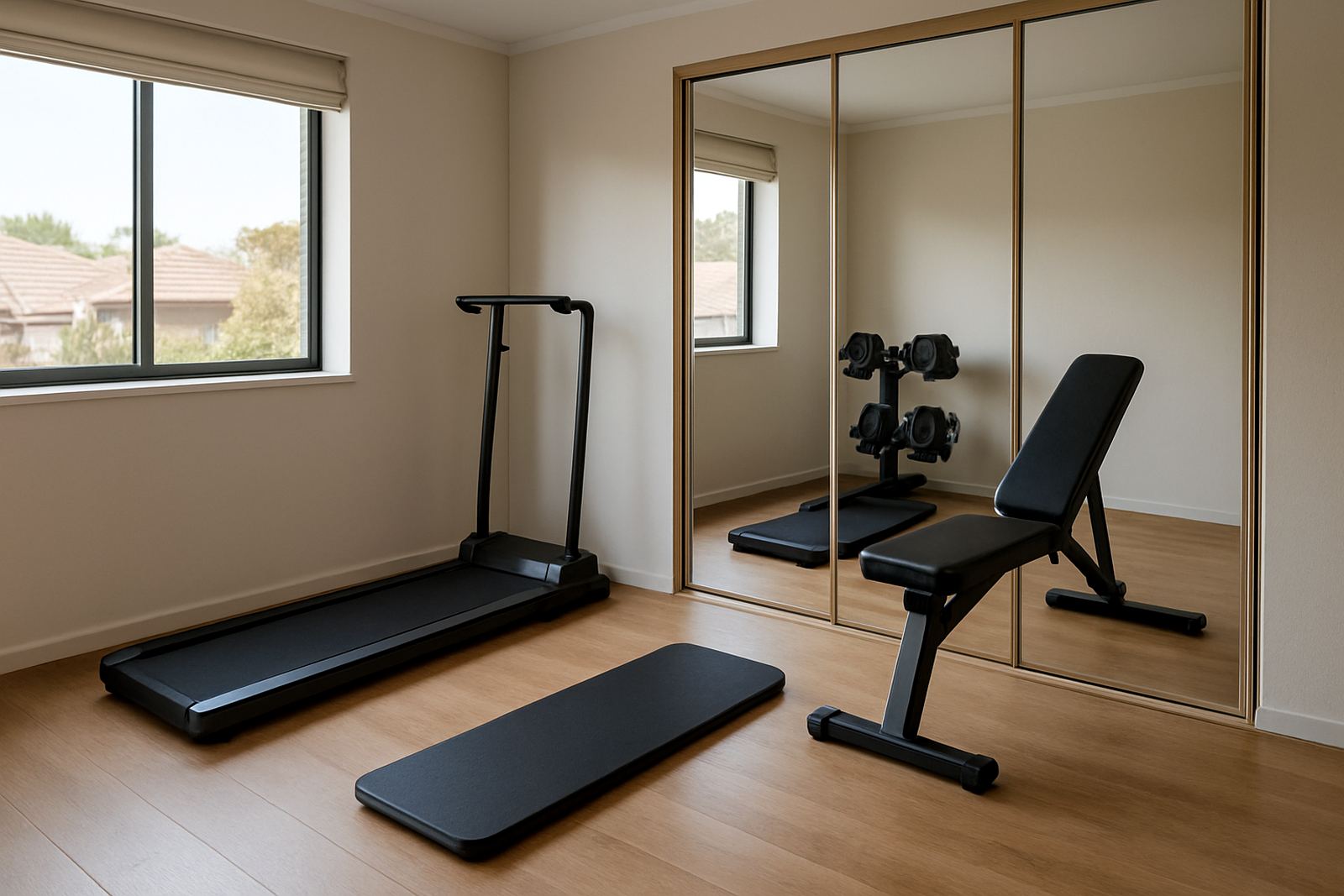
We supplied a compact selection of cardio and strength pieces suited to home use, together with small accessories for mobility and core work. The main cardio unit was a quiet magnetic-resistance machine with a small footprint of about 1.2 m by 0.6 m, chosen because it gives a steady workout without the impact of running. For strength, we used fold away adjustable benches and compact resistance tools that can be stacked neatly in a corner when the session is done.
We also added a non-slip training mat, a wall-mounted timer for interval sessions, and a set of storage hooks so the room stays uncluttered. The client wanted a simple routine that would cover strength, cardio, and recovery, so we matched the equipment to those three zones rather than filling the room with too much kit. Michael handled the installation plan, while our technical specialist checked clearances and movement space before placement.
- Quiet cardio unit with magnetic resistance
- Fold away adjustable bench for strength training
- Compact dumbbell set and resistance accessories
- Training mat for floor work and noise reduction
- Timer and storage fittings for tidy pack-away
Setup and onboarding over two weeks
The project ran over two weeks from first site check to final handover. In week one we confirmed room dimensions, outlet positions and the best training flow. We then mapped out where each item would sit when in use and where it would be stored after training. Week two covered delivery, setup help, tracker setup and a short starter session so the client could use the space from day one without guessing how everything worked.
Reabetswe and Siyanda handled the client communication, while Christo took care of the supply list and workout use-case questions. We also set up one of the fitness trackers so the client could monitor time, heart rate zones and weekly consistency. That made it easier to follow the starter programme and keep training honest, even on days when the session was only 20 minutes. The handover included safety checks, adjustment guidance, and a few practical tips for cleaning and storage.
- Week 1: measurement, planning and equipment finalisation
- Week 2: delivery, installation and setup support
- Tracker pairing and app guidance completed on handover
- Starter session plan issued for first four weeks
Results for daily home training
The finished studio gave the client a calm, usable workout space that fits apartment living. The quiet cardio machine allows early morning sessions without vibration complaints, and the fold away strength equipment means the room can return to normal use in a few minutes. The client also gained a structured way to train instead of relying on spare-moment exercise that was often skipped.
After setup, the client reported better consistency in the first month because the equipment was always ready and easy to access. The family started using the mobility work and light cardio on weekends, which helped the space earn its keep. The tracker data also made progress easier to see, especially for step counts, session length and recovery days. It is a small apartment gym, but it performs like a proper home training station.
- Improved training consistency from week one
- Low noise confirmed for apartment use
- Faster session start because equipment stays in place
- Family members able to share the same room safely
What we would repeat on the next apartment project
For this kind of Sandton apartment studio, we would use the same planning method again. The key is not packing in too much equipment, but choosing a few pieces that suit the room and the way the client actually trains. Quiet movement, easy storage and clear walking space matter more than a large number of items. That approach keeps the setup practical over time, not just impressive on the first day.
We would also repeat the tracker setup help and the first-week training guidance because that is where most home gyms either work well or get ignored. When the client knows how to use the space, how to store the kit, and how to keep the routine simple, the gym becomes part of the day rather than another chore. And in a compact flat, that makes all the difference.
- Start with measurements before choosing equipment
- Keep one wall clear for storage and movement
- Prioritise low-noise cardio in apartment settings
- Use simple programmes so the routine sticks
Key facts
| Project type | Compact apartment studio gym |
|---|---|
| Area | Sandton, Johannesburg |
| Timeline | 2 weeks from plan to handover |
| Cardio footprint | About 1.2 m x 0.6 m |
| Strength storage | Fold away bench and stackable accessories |
| Use focus | Quiet cardio, strength, mobility and tracker support |