
Why a closed garage turns training into hard work
Many home gyms start in a garage because the space is already there, but garages were never built to handle repeated exercise, body heat and extra moisture. Once you add a treadmill, bike, weights, mats and a few people moving around, the temperature climbs quickly. In Johannesburg, a west-facing garage in Fourways can feel stuffy by late afternoon, while in humid areas near the coast, sweat and damp air linger long after the session ends.
Poor airflow does more than make training uncomfortable. It can leave floors slippery, increase odours and create condensation on metal parts. If you store dumbbells, bars or tracker accessories in the same room, dust and moisture can also shorten their working life. A garage gym should feel like a space where you can train consistently, not a box that you avoid by Thursday.
Simple signs your garage needs better airflow
You do not need special equipment to see when a space is struggling. If your breathing feels heavy before you even start your warm-up, or if the room still smells damp long after you have opened the door, ventilation is probably weak. The same goes for foggy windows, rust spots on storage racks and a floor that stays clammy after cleaning.
- Air feels stale within 10 minutes of training
- Moisture appears on mirrors, windows or metal frames
- Dust collects fast on mats and screens
- Fans are not moving air across the full room
- The garage becomes hotter than the outdoor temperature very quickly
In Pretoria East and Randburg, where heat can build up inside brick garages, these small signs are easy to miss until training becomes unpleasant. If two people are exercising at once, the problem usually shows up even faster.
Ventilation choices that work in South African homes
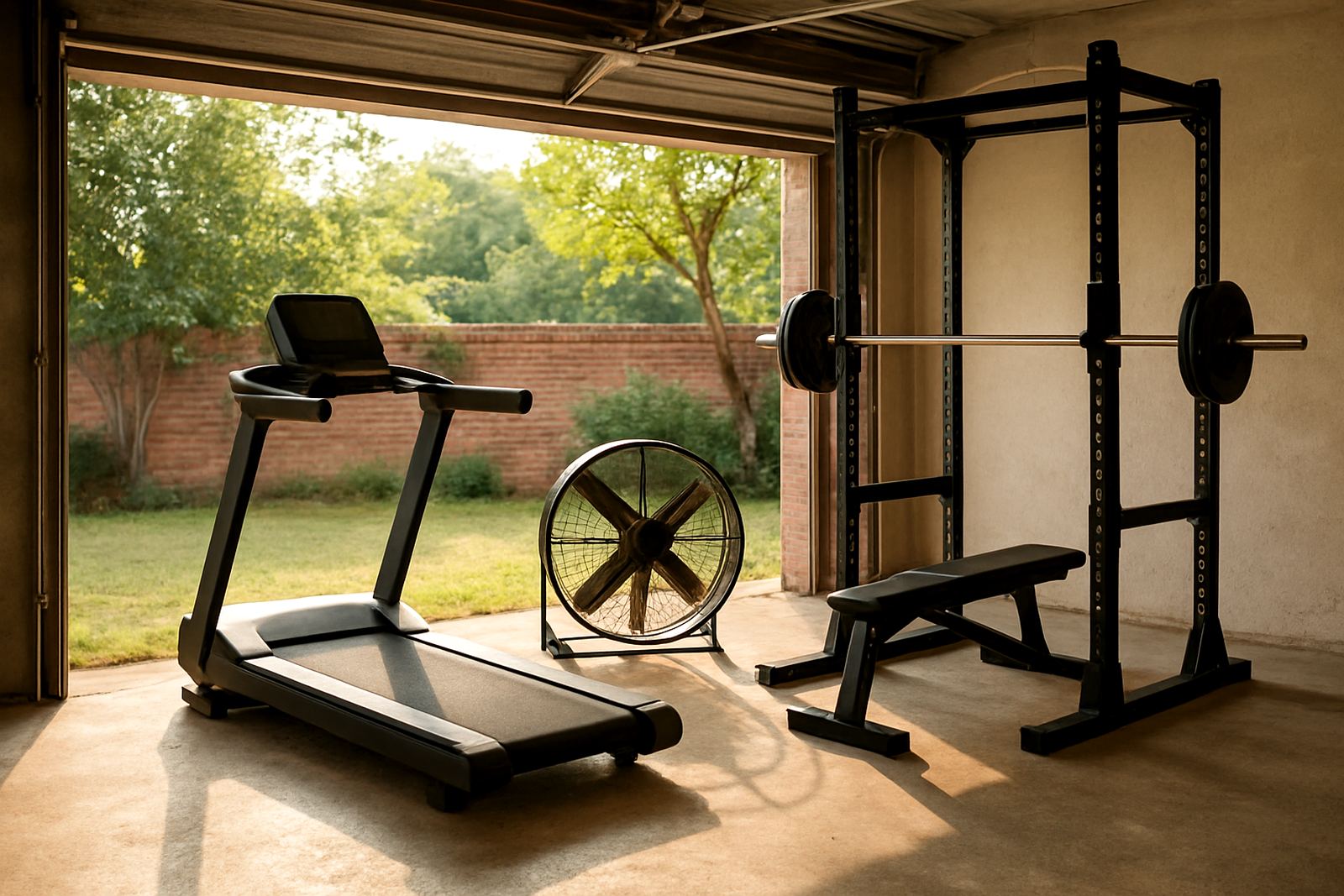
The best setup is usually a mix of natural airflow and mechanical cooling. A garage door that can open safely while still securing the space is a strong starting point. If you can create cross-flow through a side door or window, that helps remove warm air rather than just pushing it around. Ceiling height matters too, because hot air rises and needs somewhere to go.
For many homes, portable fans are the easiest upgrade. A wall-mounted fan or pedestal fan can push air across benches and cardio machines without taking up floor space. If the room gets very hot, a small extractor fan may help move stale air out. On load-shedding days, even a battery fan can make a real difference during strength work or mobility sessions.
- Use two points of airflow where possible, such as a garage door and side window
- Keep fans aimed across the room, not straight at one person only
- Leave space behind machines so air can move freely
- Choose coverings and mats that dry quickly after washing
- Store towels, straps and accessories in ventilated containers
In a Midrand home gym, for example, a simple side window, an open sectional door and one strong fan can turn a cramped, sweaty room into a workable training area. That small change often means the difference between skipping a session and completing it.
Humidity, sweat and equipment care go together
Airflow is not only about comfort. It also helps protect the equipment you use every week. Sweat drips onto benches, mats and grips, and if the air stays damp the residue sits there longer. Over time that leads to odours, sticky handles and corrosion on fasteners or exposed metal. Electronics such as fitness trackers, heart-rate monitors and charging units also prefer dry conditions.
After training, wipe down bars, handles and pads before the room closes up for the day. If you keep trackers or chargers in the garage, store them in a sealed box away from direct heat. It is worth checking rubber floor tiles too, because trapped moisture underneath can cause smells or lifting at the edges. A few minutes of cleaning and airing out saves money later, and it keeps the room more pleasant for the rest of the family.
Planning around Fourways weather and family use
In Fourways, many garage gyms are shared spaces. One day it is a parent doing a strength session before work, the next it is a teenager using a bike trainer after school. That makes ventilation even more important because the room needs to recover between sessions. If the garage opens onto the street or driveway, dust can also become an issue, especially after dry, windy days.
Think about the time of day you train. Early mornings are usually cooler, while late afternoon can be harsher on a west-facing garage. If your routine includes family fitness plans or virtual check-ins, allow enough fresh air before people arrive. A room that is 3 metres by 6 metres with a full rack, bench and cardio machine can feel tight unless you plan for clear movement and proper air circulation.
Local rules also matter. If your setup affects shared property, body corporate or municipal access, keep doors and emergency exits clear, and avoid blocking a passage with large equipment. Good planning prevents complaints and makes the space safer for everyone in the house.
A practical ventilation checklist before your next session
Before you start training, take two minutes to check the room. That small habit can save you from a hard session in poor air. It also helps if you are following a starter programme, a weight loss programme or strength work that already pushes your breathing higher.
- Open the garage door or side door 15 to 20 minutes before training
- Turn on a fan before the first warm-up set
- Wipe down wet surfaces after every session
- Keep drinking water inside the gym area
- Move equipment slightly away from walls if airflow feels blocked
- Use dehumidifying options if the room stays damp in winter or near the coast
If your training space still feels uncomfortable after these steps, the room may need a better airflow plan rather than just more equipment. That could mean a different layout, extra venting or a smarter choice of storage. In practical terms, the cooler and drier the room, the more often you will use it, and that is what keeps a home gym useful over the long term.
When better airflow improves consistency
Most people do not need a perfect garage gym. They need one that feels good enough to use on busy South African days when traffic, work and power cuts all get in the way. Good ventilation helps with that because you finish training less drained, the room dries faster and your equipment stays in better condition. A cooler space also makes it easier for beginners, older family members and anyone doing mobility work to stay comfortable.
For households in Johannesburg, Sandton, Midrand, Randburg, Roodepoort and Pretoria East, the lesson is simple: treat airflow as part of the gym setup, not an afterthought. If the room can breathe, your routine is easier to keep. And when training fits into everyday life, it becomes much more likely to stick.