
1. Placing Your Order and Confirming What You Need
When you place an order, start by checking the exact item, size and any add-ons you need for your home gym. That includes tracker setup help, mats, spare parts, batteries, chargers or any extra components needed for a safe first session. If you are planning a family setup, it helps to note who will use the equipment and how much room is available before finalising the order.
For customers in Fourways, Sandton, Midrand, Randburg, Roodepoort and Pretoria East, collection or local delivery can be arranged according to the order and timing. For other areas, we deliver nationwide. If you are unsure about compatibility, send us a note at our contact form before you pay, rather ask once than sort it out after delivery.
2. Delivery Timing, Access and Where the Driver Can Leave It
Most home fitness products are easier to handle if the delivery point is planned in advance. Before your order arrives, check whether the driver can get through gates, estates, stairwells or narrow passageways. In many Johannesburg suburbs, estate access and security procedures can add time, so having your access details ready keeps things moving.
Large items may be handed over at the property entrance or reception if access is restricted. If you live in an apartment block or sectional title unit, confirm with your body corporate whether deliveries can be taken to the unit or must remain at ground level. Load-shedding can also affect lift availability and garage access, so it is worth planning for a small delay if power is out.
- Keep your phone nearby on delivery day
- Make sure someone is available to receive the order
- Clear a path from the gate or entrance to the setup area
- Have any access codes, intercom numbers or estate instructions ready
3. Checking the Parcel Before You Sign
Before signing for any parcel, check the outer packaging for visible damage, crushing or moisture. If you live near the coast and have had items moved through humid conditions, open them soon after delivery so packaging does not sit damp for too long. A quick check at the door saves time if there is a missing part or damaged box.
Open the parcel carefully and compare the contents with the invoice or packing slip. Look for loose fittings, screws, cables, sensors, chargers and manuals. If something is missing, tell us straight away and keep the packaging until the issue is resolved. A small tear in the box is not always a problem, but any puncture, dent or broken seal should be recorded before the driver leaves.
- Inspect the box edges and corners
- Count all parts against the packing list
- Take clear photos if anything looks damaged
- Keep the original packaging for returns or exchanges
4. Preparing the Room for Safe Use
Good preparation makes training safer and more comfortable. Choose a flat surface with enough space to move, stretch and store accessories. If you are setting up in a spare room, garage or upstairs area, check the floor strength and ventilation. Garages in Johannesburg often get cold in winter and hot in summer, so you may want a mat or rubber flooring to reduce noise and protect the surface.
Leave space around the equipment for movement, especially for strength and cardio work. If the room has tiles, a protective mat helps with grip and reduces vibration. If your power supply is unstable because of load-shedding, charge any trackers, smart devices and batteries ahead of time so your first session is not interrupted.
- Measure the floor area before unpacking
- Keep water bottles, towels and chargers within reach
- Use a non-slip mat where needed
- Store loose cables out of walkways
5. Setup Help, Onboarding and First Session Checks
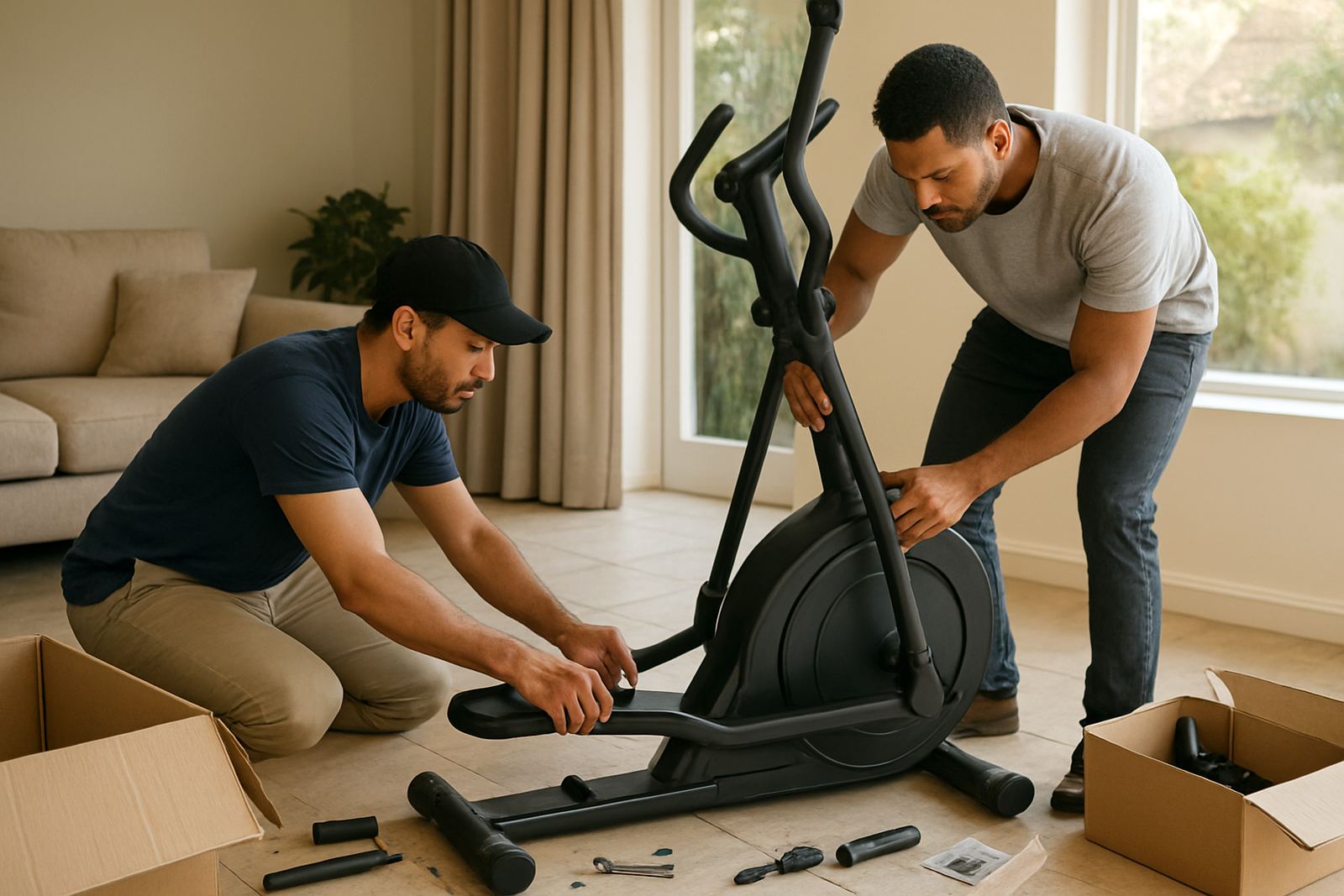
Some products are simple to get running, while others need pairing, calibration or a quick mechanical check. Our Equipment Onboarding and Tracker Setup Help services are there to make that first step easier. If you have ordered a fitness tracker, make sure the battery is charged, the app or device settings are ready and the fit is correct on your wrist or body before you start training.
For gym equipment, check bolts, locking pins, resistance settings and any moving parts before use. If a machine feels uneven, stop and recheck the assembly. Michael Petersen and the support team can help guide you through the practical bits, and Irfaan Bhamjee can assist with product questions when a setting or feature is not clear. It is better to spend ten extra minutes now than deal with wear or poor alignment later.
If you are a first time user, start with a shorter session and test the setup under light load. That helps you check the position of the item, the comfort of the movement and whether the room layout works in practice.
6. Building a Routine After Delivery
Once everything is in place, the next step is to make the equipment part of your weekly routine. Our Starter Programme, Strength Programme, Cardio Programme, Weight Loss Coaching, Mobility Coaching, Virtual Check Ins and Family Fitness Plans are there to help you use the equipment properly and keep momentum going. A good setup is only useful if you actually use it, so keep your plan simple at the start.
Try to train at the same time each day, even if it is just 20 to 30 minutes. Keep your tracker charged, record progress honestly and adjust the load or pace as your fitness improves. Families often get better results when each person has a set time, because the room stays organised and the equipment is ready for the next person. With a bit of structure, the home setup becomes part of normal life instead of another item in the corner.