
Start with your training goal, not the band colour
Before you buy a band, decide what you want it to do. A band that helps with glute work and warm-ups will not feel the same as one used for assisted pull-ups, chest presses or heavy strength work. In Fourways, Sandton and Randburg we see many people buy one set and expect it to cover every exercise, then they struggle because the resistance is either too light or too stiff. The better approach is to match the band to the job.
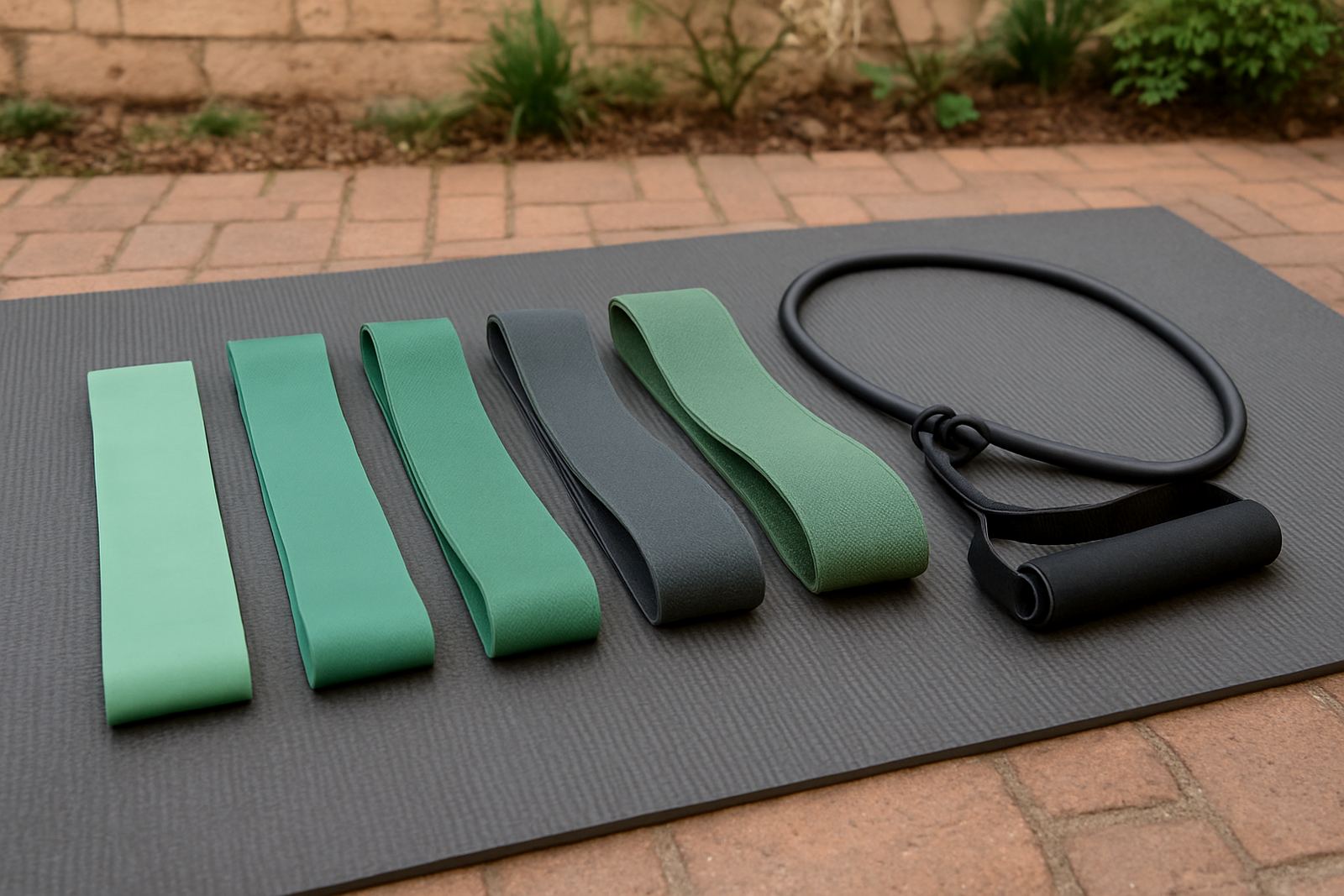
For general home training, think in three buckets. Light bands help with mobility, shoulder activation and rehab style movements. Medium bands suit rows, presses, squats and core work. Heavy bands are better for lower body strength, assisted bodyweight work and more demanding pulling drills. If you are just starting out, a mixed set usually gives you more value than choosing only one strength.
- Choose light for warm-ups, mobility and shoulder work
- Choose medium for full body circuits and beginner strength work
- Choose heavy for lower body, assisted pull movements and progressive overload
- If two goals matter, buy a set with at least three resistance levels
Pick the band style that fits your exercises
Band style affects comfort, range of motion and where you can anchor it. Loop bands, tube bands and long flat bands each have their place. Loop bands are popular for hips, glutes and leg activation. Tube bands with handles work well for rows, curls, chest presses and home gym stations. Long flat bands are useful when you need more length for stretching, assisted movements or mobility drills.
If you live in a flat in Midrand or a townhouse in Roodepoort, storage matters too. Loop bands take up almost no space and can go in a drawer or training bag. Tube sets usually pack neatly as well, while longer bands need a bit more care to avoid tangling. For coastal humidity, even if you are inland now, keep bands dry and out of direct sun because heat and moisture can shorten their lifespan.
- Loop bands: glutes, hips, warm-ups, lateral walks
- Tube bands: upper body work, general strength, compact home gyms
- Flat long bands: stretching, assisted training, mobility and recovery
- Check that grips, clips and anchors are included if you need them
How to read resistance levels without guessing
Band resistance is not measured the same way as dumbbells, so do not expect a simple kilogram number to tell the whole story. A band may feel light at the start of a rep and far harder at the end. That means the stretch length matters just as much as the rating. If the product gives a resistance range, use it as a guide and not a promise.
A useful rule is to choose a band you can control for 10 to 15 good reps with proper form. If you cannot finish the set without leaning back, shrugging your shoulders or losing control, the band is too heavy for that movement. If you can do 25 reps with no challenge at all, it is too light. For most home users in Pretoria East, Sandton or Fourways, a light, medium and heavy set gives enough room to grow without buying too much at once.
- 10 to 15 controlled reps is a solid target for strength work
- Higher reps suit mobility, rehab and endurance style training
- Resistance increases as the band stretches, so form matters more than ego
- Keep one lighter band for warm-ups even if you train hard
A simple strength checklist before you order
Not all bands are built the same. Some are fine for occasional stretching but wear out quickly under repeated use. If you are training several times a week, look for bands with even tension, comfortable handles if included and good stitching on attachment points. For family use, safety should come first. A band that snaps during a row or kickback is not worth a small saving.
Use this checklist before you buy:
- Does the band suit your main exercises and your training space?
- Is the resistance level clear and suitable for your current strength?
- Are the materials suited to regular use in South African heat?
- Do you need a door anchor, handles or ankle straps?
- Will more than one person use it, and do you need different strengths?
If you are setting up a starter home gym in Fourways or planning a family fitness corner, it often makes sense to buy a small set instead of a single band. That way each person can use the right strength and you can progress over time without replacing everything at once.
Match bands to home workouts and fitness programmes
Resistance bands are especially useful when space is limited or when you need a quiet session during load-shedding. They work well for strength programmes, cardio circuits, weight loss coaching and mobility sessions because they let you keep training with very little equipment. At home, a band set can support squats, presses, deadlifts, rows, glute bridges and core work all in one small kit.
For beginners, start with a starter programme that uses lighter resistance and simple movement patterns. For more experienced users, combine bands with bodyweight work and timed intervals. A family fitness plan can use the same set by changing stance, grip length and tempo. That keeps costs down and makes it easier for everyone to take part, from teens to parents.
- Use light bands for warm-up circuits and mobility
- Use medium bands for full body sessions and general conditioning
- Use heavy bands for lower body strength and assisted moves
- Rotate exercises so the same band does not wear on one point every session
Care tips to help your bands last longer
Good care makes a big difference, especially if you train regularly in a garage, spare room or patio area. After training, wipe sweat off the bands and keep them out of direct sunlight. Heat can dry out the material, while rough floors and sharp edges can cause early damage. If you live near the coast and travel between areas, store bands in a dry bag so they do not sit damp after use.
Check the band before each session. Look for cracks, thinning, loose stitching or damage near the attachment points. If a band feels uneven or makes a small tearing sound, stop using it. That is especially important for exercises where the band is stretched close to the body. A damaged band is not worth the risk, even if it still looks mostly fine.
- Keep bands away from sun, heaters and wet floors
- Do not stretch bands over rough or sharp surfaces
- Inspect clips, handles and anchor points before every session
- Replace worn bands sooner rather than later
If you want help choosing the right setup for your home, our team in Fourways can assist with equipment onboarding, home gym planning and programme guidance. You can also ask for tracker setup help if you are pairing your training with a smart device, and we deliver nationwide across South Africa.