
What a battle rope does in a home training space
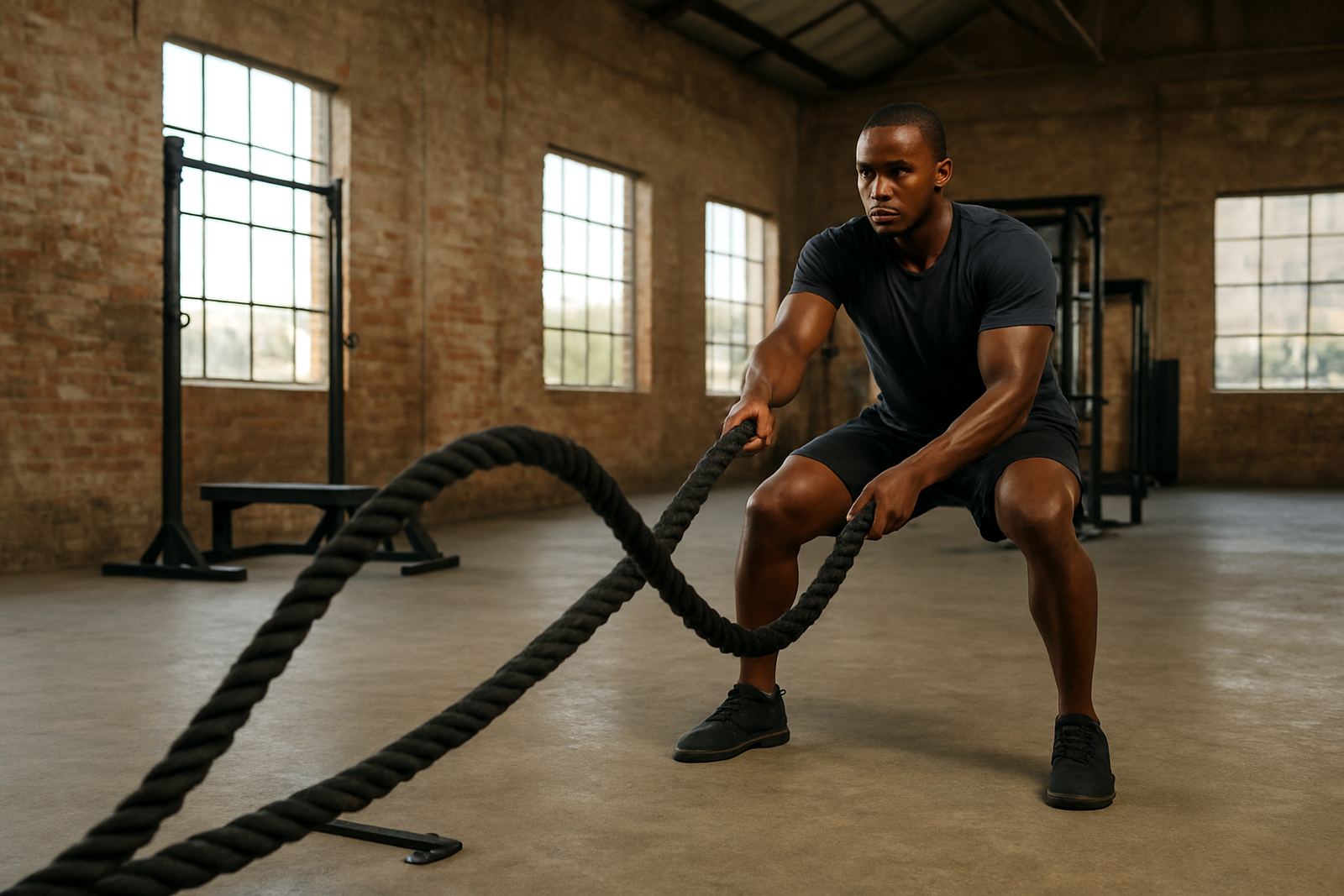
A battle rope gives you a fast way to work your arms, shoulders, back, core and grip in one session. It is used for wave drills, slams, alternating pulls and interval rounds that get the heart rate up quickly. For many home users in Johannesburg, Fourways, Sandton and Midrand, it is a practical way to train hard in a small area without setting up a full machine. You can use it for short power bursts, conditioning circuits or warm ups before strength work.
Because the rope is not electronic and does not rely on motors, batteries or mains power, it works well during load-shedding and in outdoor spaces too. It is also a good choice where noise needs to be kept lower than with dropped weights, although the anchor point and floor surface still matter. On tiled patios, rubber gym mats or concrete, the rope can handle regular use if the fixing point is solid and the end caps are checked now and then.
Length, thickness and build choices
Battle ropes are usually selected by length and thickness. A common home setup is 9 m to 12 m, which gives enough slack for waves and slams without taking over the whole room. Shorter users or beginners often prefer the 9 m option, while 12 m is better if you want a wider movement pattern and tougher intervals. Thickness normally ranges from 38 mm to 50 mm, with the thicker rope demanding more grip and upper body effort.
Most ropes have a braided synthetic outer with protective end grips and reinforced sections near the handle area. That helps with abrasion from concrete, pavers and garage floors. If you plan to train near the coast, for example in Durban, Ballito or Port Elizabeth, storage matters because humidity can affect metal anchor points and any nearby fittings. Keep the rope dry and off damp ground when not in use.
- 9 m suits compact training areas and starter conditioning work
- 12 m gives more range for waves, circles and power slams
- 38 mm is easier to hold for longer sessions
- 50 mm increases grip demand and upper body load
Where it fits best in your training routine
This product suits people building home gyms, garage gyms and outdoor workout corners. It works well for conditioning blocks after dumbbells or kettlebells, and it can also stand alone as a fast cardio tool on days when you do not want a full weights session. A lot of clients in Pretoria East, Randburg and Roodepoort use it for 10 to 15 minute finishers because it fits into busy schedules and still leaves them properly worked.
Battle rope drills are useful for weight loss coaching, strength programmes, mobility warm ups and family fitness plans too, provided the user can manage the effort level safely. It is not a machine for long slow walks, rather it is for short, focused work with rest in between. That makes it useful when you want to improve power output, work capacity and shoulder endurance without needing a large training footprint. For anyone recovering from a layoff, starting with shorter sets is the sensible route, ja don't rush the volume too fast.
- Best for short interval sessions and conditioning rounds
- Useful in garages, patios and covered outdoor areas
- Pairs well with squats, lunges, push ups and sled style work
- Suitable for solo training or group circuits at home
Installation, anchor points and space planning
A battle rope does not need electrical installation, gas connections or plumbing. What it does need is a reliable anchor point and enough clear space for the user and rope movement. In most homes, that means checking whether the rope can be fixed to a wall bracket, heavy post, sturdy frame or dedicated anchor base. The fixing point must handle repeated pulling, so loose balustrades, plastic fixtures and lightweight garden furniture are not suitable.
For home planning, allow a clear lane of about 2 m to 3 m in front of the anchor, with more space if you want wider side-to-side movements. Ceiling height is less important than floor clearance, but low beams, parked cars and hanging storage can become a problem quickly. If you are using it in a shared space in Fourways or Midrand, think about where family members will walk so the rope does not become a trip risk. A tidy layout matters. There should be no trailing cables, loose mats or water on the floor.
Care, cleaning and servicing over time
Routine care is simple but worth doing. After a session, wipe the rope down if it has picked up sweat, dust or patio dirt. Do not leave it lying on wet grass or wet concrete, especially in coastal humidity or after summer rain. Store it coiled loosely rather than pulled tight around a sharp edge, since that can flatten the fibres over time. If the rope is used outdoors, inspect the end sections regularly for fraying and make sure the anchor point has not loosened.
There is no motor service or fuel maintenance, only basic inspection and sensible storage. If the rope is showing heavy wear, split fibres or damage around the grip area, stop using it and replace it. That is especially important if more than one person uses it in a family training setup. For most households, a quick monthly check is enough, though frequent users may want to inspect it every week.
- Wipe down after use to remove sweat and grit
- Keep it dry and out of standing water
- Check anchor fittings and end wear regularly
- Store loosely coiled to reduce fibre stress
Key things to check before ordering your barbell set
Before ordering, check the rope length, thickness and weight so it matches the user and the space. A heavier rope is usually harder to control, which is good for advanced conditioning but can be tough for beginners. Also confirm the handle style, end finish and whether an anchor is included or needs to be fitted separately. If you are setting up a home gym from scratch, it helps to know whether the rope will be used on rubber flooring, tiles, concrete or paving, because that can affect how fast it wears.
It is also worth checking who will be using it. A strong adult training alone in Sandton may prefer a thicker, longer rope, while a starter in Roodepoort or Pretoria East might need a lighter option first. If you want support with Equipment Onboarding, Starter Programmes or Home Gym Planning, choose your rope alongside the rest of the training space so the setup makes sense from day one. Delivery is available nationwide, so you can order from Fourways and have it sent wherever you need it in South Africa.
- Confirm rope length and thickness before checkout
- Check whether an anchor point is included
- Match the rope to the floor type and available space
- Choose a setup that suits the main user level
Key facts
| Product type | Conditioning rope for full body power work and intervals |
|---|---|
| Typical lengths | 9 m or 12 m |
| Typical thickness | 38 mm or 50 mm |
| Material | Braided synthetic rope with reinforced end sections |
| Power or gas needed | None |
| Best use | Home conditioning, cardio finishers, strength intervals and group circuits |