
What a walking pad does in a small home
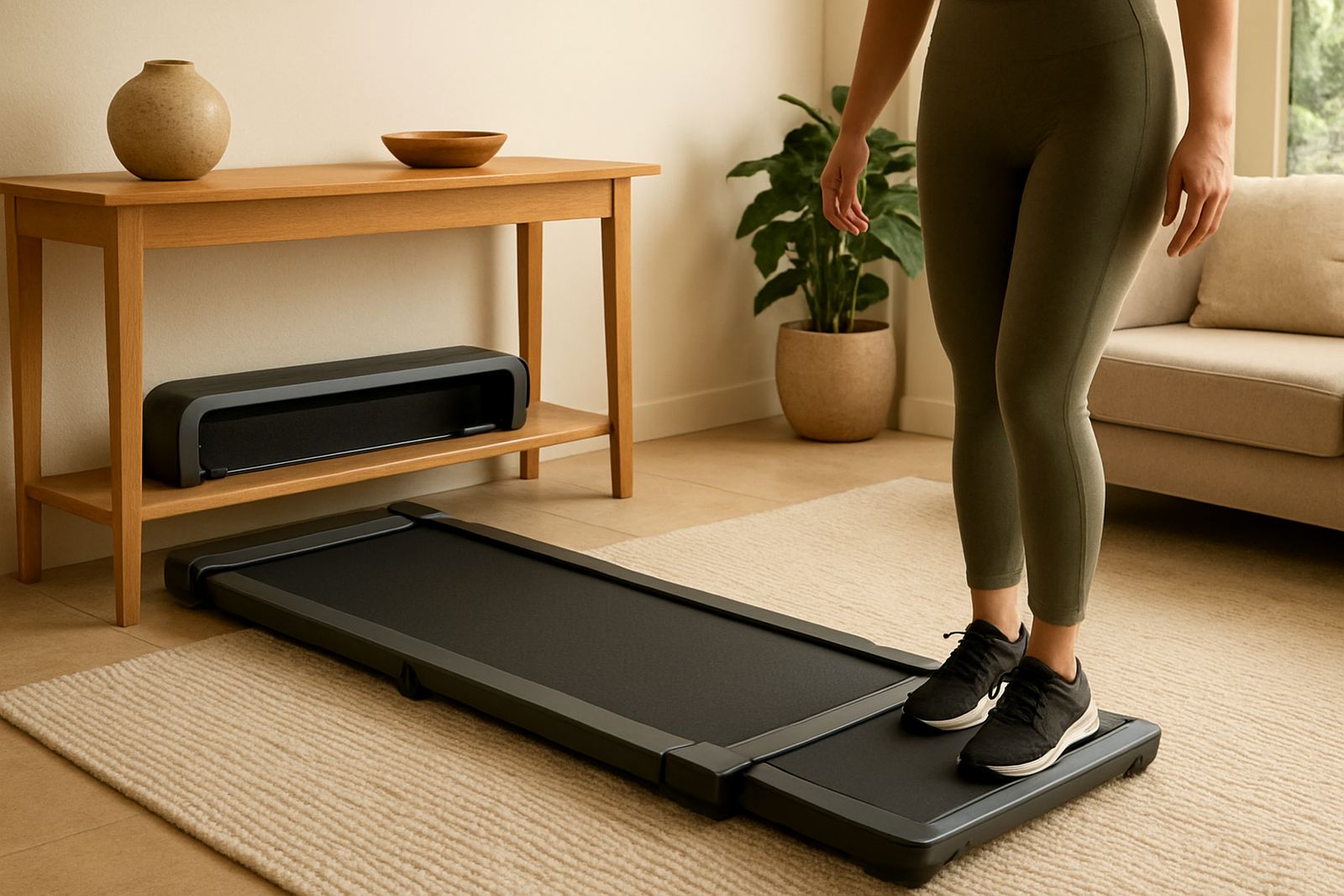
A walking pad is a slim treadmill alternative made for walking at a steady pace indoors. It is low to the ground, easier to store than a standard treadmill and usually folds or slides away when you are done. For people in Fourways, Sandton or Pretoria East who want daily movement without giving up floor space, it is a practical setup. It also works well for early morning sessions when you do not want to leave home in the dark, or when load shedding has interrupted your usual gym routine.
FitSmart walking pads are suited to regular walking, light recovery work and low-impact cardio. They are not built for sprint training, but they do give you a dependable surface for step counts, calorie tracking and routine movement. If you are trying to build consistency, a walking pad is often easier to use than a bigger machine because it stays close at hand and doesnt need a separate room.
Sizes and options worth comparing
When choosing a walking pad, size matters more than many buyers expect. Check the belt length, the width of the walking area and the folded height so you know whether it will fit under a sofa, against a wall or in a cupboard. In smaller Johannesburg flats, even 10 cm can make a difference when storing it after use.
- Walking area: typically around 100 to 120 cm long and 40 to 50 cm wide
- Unit height: often between 10 and 15 cm when folded flat
- Weight capacity: commonly 90 to 120 kg, depending on the model
- Speed range: usually suited to about 1 to 6 km/h for indoor walking
- Display: basic speed, time, distance, steps and calorie readout
- Control: remote control or app-linked controls on selected models
Some users want a plain unit for simple walking, while others prefer a model with a clearer display or a quieter motor for shared living spaces. If you live in an upstairs flat or a townhouse with neighbours below, look closely at the sound level and the base feet under the machine too.
Where it fits best in Johannesburg homes
A walking pad suits compact areas where movement can happen without major rearranging of furniture. Home offices, TV rooms, spare corners and covered patios all work well if the floor is level and dry. In areas like Randburg, Roodepoort and Midrand, many households prefer equipment that can be used in the morning and packed away before the day starts.
It is also a sensible option for families who want shared equipment. One person can use it for a brisk walk, another can use it for gentle recovery after training, and older family members can use it for low-impact movement. For weight loss coaching or a starter programme, it helps people build a habit without needing long gym sessions. A walking pad is most useful when it is easy to reach, easy to start and easy to put away again.
- Best for flats, townhouses and smaller free-standing homes
- Useful for work breaks and evening walks indoors
- Good for light cardio and daily step goals
- Less suitable for running, steep incline training or very long strides
Setup, power use and room requirements
Most walking pads need only a standard household power point, so there is no gas requirement and no special plumbing. They should be used on a stable floor with enough clear space in front and behind for safe walking. As a basic guide, allow at least 1 metre of free space at each end and about 50 cm on either side. If the unit is used on laminate, tiles or sealed concrete, a mat can help protect the floor and cut vibration.
Before first use, check that the unit sits level, the belt is centred and the remote or control panel is charged. If you live in an area where power cuts are common, consider where the machine will be stored during outages and whether you want a surge protector for the outlet. A walking pad is simple to get going, but it still needs the same care as any motorised fitness equipment.
- Uses standard household electricity
- No gas, water or fixed installation needed
- Best on a firm, flat surface
- Works well with a protective floor mat
Care, cleaning and servicing over time
Keeping a walking pad in good order is straightforward if you follow a few basic habits. Wipe the belt and side rails with a dry or lightly damp cloth after use, especially if the unit sits near a balcony or in a coastal home where humidity can build up. Dust around the motor area and under the machine regularly so grit does not work its way into moving parts.
Check belt alignment now and then, and listen for unusual noises such as rubbing or knocking. If the belt feels tight or starts drifting to one side, stop and check the adjustment before using it again. In busy homes, where the machine may be used several times a day, a simple monthly check helps a lot. For long-term care, keep it stored indoors, away from direct sun and damp walls. A bit of regular attention goes a long way, and it usually prevents bigger issues later.
What to check before you order
Before placing an order, measure the space where the walking pad will stand and where it will be stored. Check the doorway width, stairs and lift access if it will need to move through a tighter area in a complex. If you live in Fourways, Sandton or Midrand and want delivery to a sectional title unit, make sure there is room for the package to come through safely.
It also helps to confirm your body weight, the main user count and the type of walking you plan to do. If more than one person will use the machine, choose a higher weight rating. If you want it for daily office use, noise level and ease of folding matter more. Ask about the warranty, what is covered and whether tracker setup help or home gym planning is needed for the rest of your space. That way you get a machine that suits the room, not only the brochure.
- Measure both use space and storage space
- Check weight capacity and walking surface width
- Confirm power point position and cable reach
- Ask about warranty terms and maintenance guidance
Key facts
| Product type | Slim indoor walking machine for home use |
|---|---|
| Speed range | Typically 1 to 6 km/h |
| Walking belt | Approx. 100 to 120 cm long x 40 to 50 cm wide |
| Weight capacity | Usually 90 to 120 kg, model dependent |
| Power | Standard household electricity, no gas needed |
| Suitable spaces | Flats, townhouses, home offices and compact rooms |