Start with the space you actually have
Most home training falls apart because people plan for a perfect room, then try to squeeze life around it. A bodyweight setup works better when you measure the real space first. In a Fourways townhouse, that might be a mat beside the couch, a clear patch on the patio, or a narrow room where you can still step forward and back without hitting furniture. Two metres by two metres is often enough if you choose the right movements.
Check for low ceilings, slippery tiles and anything that shifts underfoot. If you train early or late, think about neighbours and family routines too. In block complexes around Randburg and Midrand, a hard jump session at 05:30 can cause more trouble than it solves. On load-shedding days, it helps to keep the setup simple so you can train without needing lights, screens or power points.
- Clear away loose rugs and cables before each session.
- Keep water, a towel and a timer within reach.
- Mark a small training zone with one mat or two floor tiles.
- Use a wall for balance work, split squats and push-up progressions.
Build strength with slow, clean repetitions
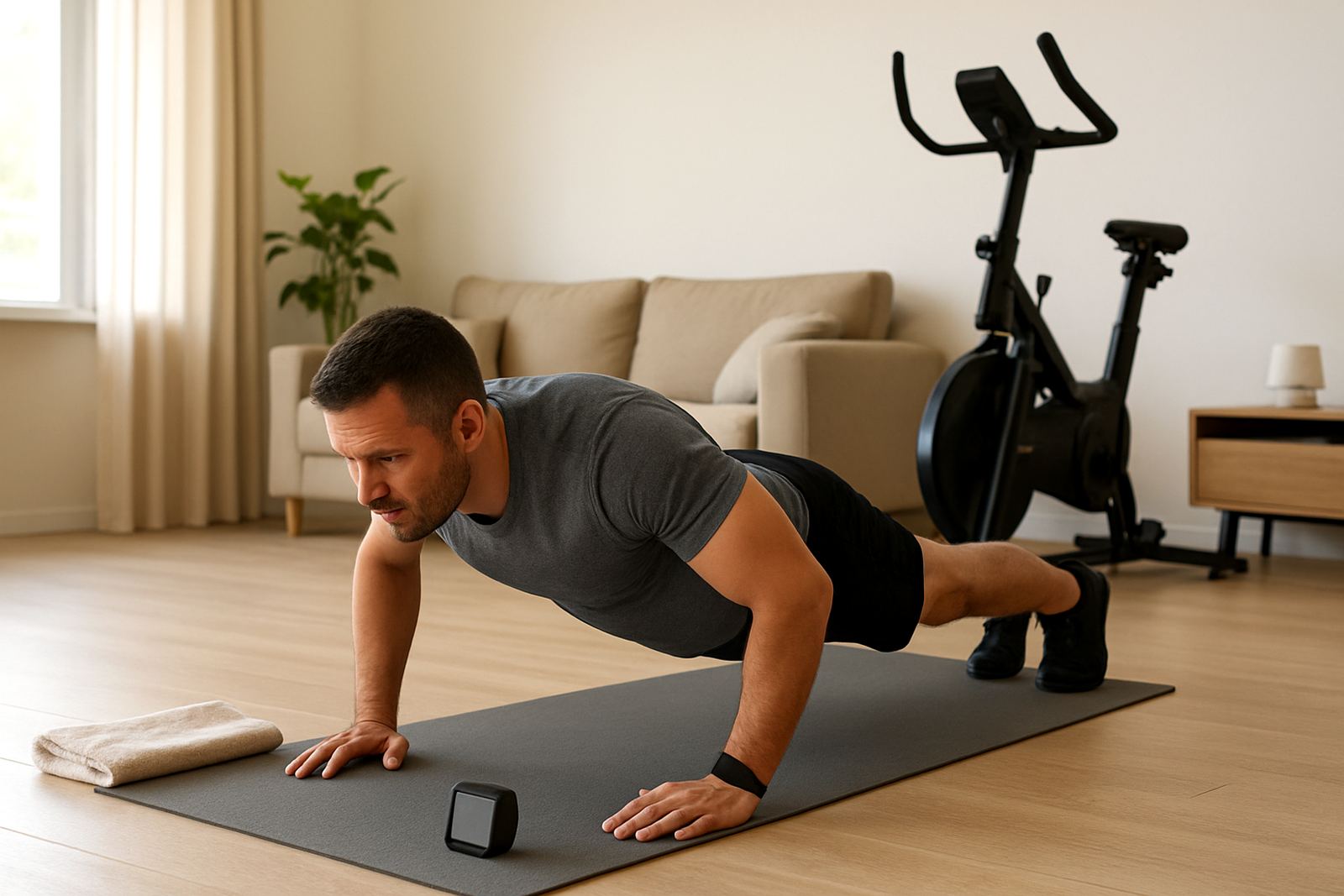
Bodyweight training is not only about doing more reps, its about making each rep count. Slow lowering phases, pauses at the bottom and controlled breathing make simple movements far more effective. A push-up done well can challenge the chest, shoulders, core and triceps. A squat with a three-second descent can light up the legs without needing any equipment.
For beginners, quality matters more than speed. Start with a level where you can keep good form for 8 to 12 repetitions. If full push-ups are too hard, use a wall, counter or sturdy couch arm. If bodyweight squats feel easy, add a pause, a single-leg version or a tempo change. That extra control is what helps you improve without chasing fancy kit.
- Push-ups: wall, incline, kneeling, then full floor version.
- Squats: chair box squat, air squat, pause squat, split squat.
- Core: dead bug, plank, side plank, hollow hold.
- Lower body: glute bridge, single-leg bridge, calf raises.
Use simple equipment only where it adds value
You can train a long way with no equipment at all, but a few small items help when space is tight. A mat protects sore knees and makes floor work more comfortable. A light pair of resistance bands can support mobility, pull movements and warm-ups. A skipping rope works well if you have enough head height and the floor can take the impact. For many homes, one sturdy chair and a doorframe anchor are enough to open up new exercises.
Choose tools that store easily and suit the room you have. In apartments in Sandton or Pretoria East, bulky machines often become laundry racks. Smaller items get used more because they are quick to pack away. It is also easier to keep a family-friendly routine when the gear can disappear into a cupboard after the session.
- Mat for floor comfort and grip.
- Resistance bands for warm-ups and upper-body work.
- Skipping rope for short cardio bursts.
- Stable chair for step-ups, incline push-ups and split squats.
Train around load-shedding and busy family schedules
One of the best things about bodyweight work is how little it depends on perfect timing. If power cuts interrupt your evening, shift to a 20-minute session in the morning. If the kids need the living room after school, do a short block in the driveway or on the balcony. Consistency matters more than one long session that never happens. A practical plan is easier to keep than an ideal plan you keep postponing.
In a home in Roodepoort, a parent may only get 25 minutes between school runs and supper. That is enough for a proper circuit if the structure is clear. Try pairing one upper-body move, one leg move and one core move, then repeat for three to five rounds. Keep rest short but sensible, and stop before form starts to slip. If you can speak in short sentences but not hold a full chat, you are usually in the right zone.
- Morning option: 5 minute warm-up, 12 minute circuit, 3 minute stretch.
- Lunch option: EMOM style intervals for push-ups, squats and planks.
- Evening option: mobility work plus a short strength finisher.
Make progress without chasing more and more reps
People often think home training stops working once the exercises feel easy. In reality, progress comes from changing the challenge. You can increase time under tension, shorten rest, add a pause, move to one leg or one arm, or combine strength with cardio in a smart way. That keeps training effective even in a small flat or a spare room with not much more than a mat.
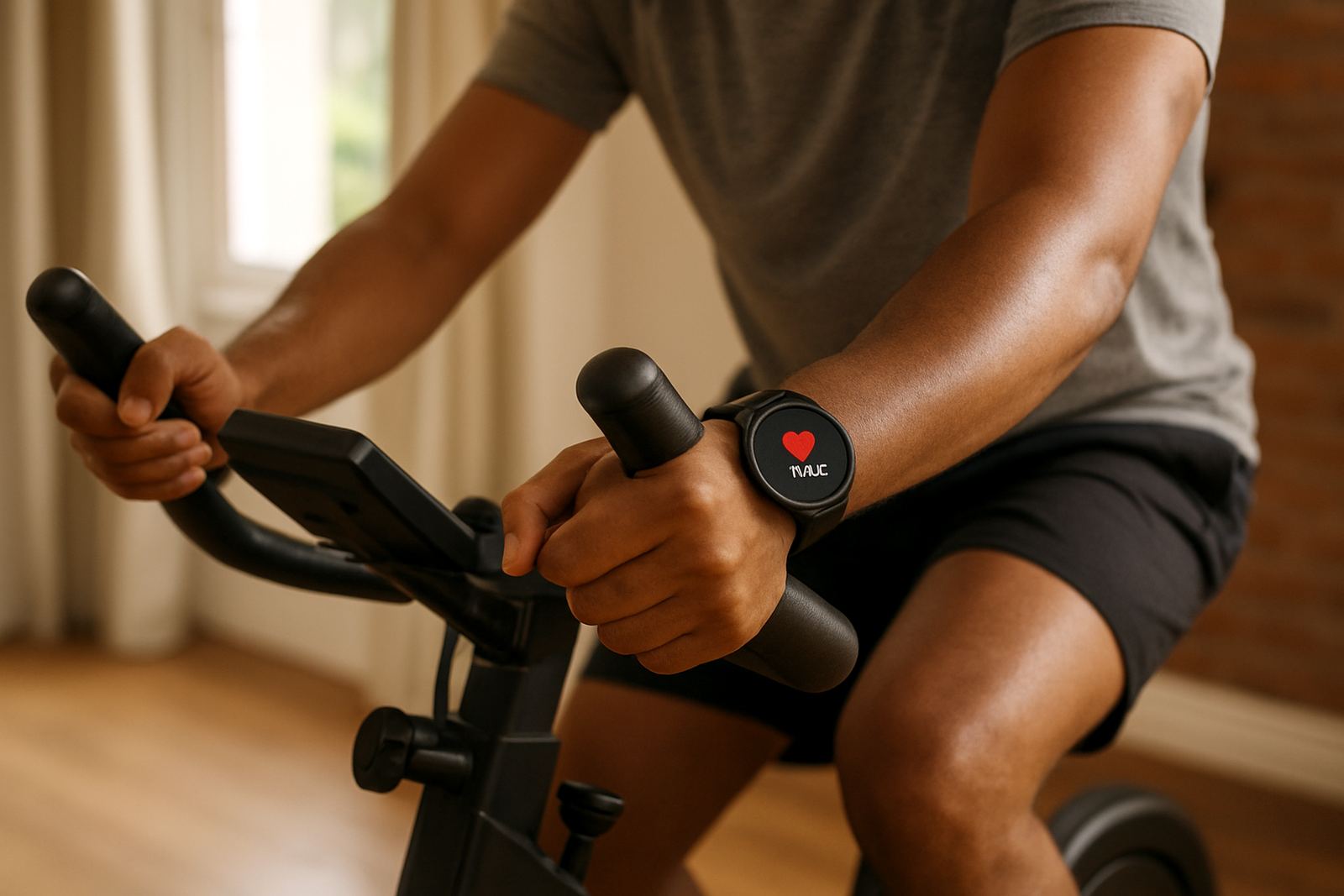
A good rule is to track one thing at a time. For four weeks, keep the same four movements and aim to improve one detail, such as cleaner form or an extra round. Then change the variation. This is also where a tracker can help, especially if you want to monitor steps, heart rate, recovery and sleep without overthinking the process.
- Week 1 to 2: learn the movement and settle the pace.
- Week 3 to 4: add a pause or extra round.
- Week 5 onward: move to harder variations or shorter rest.
- Use a simple log so you can see real progress over time.
A realistic home session for Johannesburg households
Here is a simple session that fits many homes around Fourways, Midrand and Randburg. It needs one mat, one chair and about 25 minutes. Warm up with marching on the spot, arm circles and hip openers. Then do push-ups, squats, glute bridges and plank holds in a circuit. Finish with mobility for the hips, calves and upper back. If the family is sharing the space, split it into two smaller rounds so nobody waits too long.
For someone starting out, the key is to keep the routine repeatable. Three sessions per week is a strong target. Add a walk on off days and you will get a lot further than trying to do a brutal workout once, then taking ten days off. The home environment should make training easier, not feel like another chore.
- 3 rounds for beginners, 4 to 5 for intermediate level.
- 30 to 45 seconds rest between movements.
- Use a phone timer or simple interval watch to stay on track.
- Keep a bottle of water nearby, especially in warmer months.