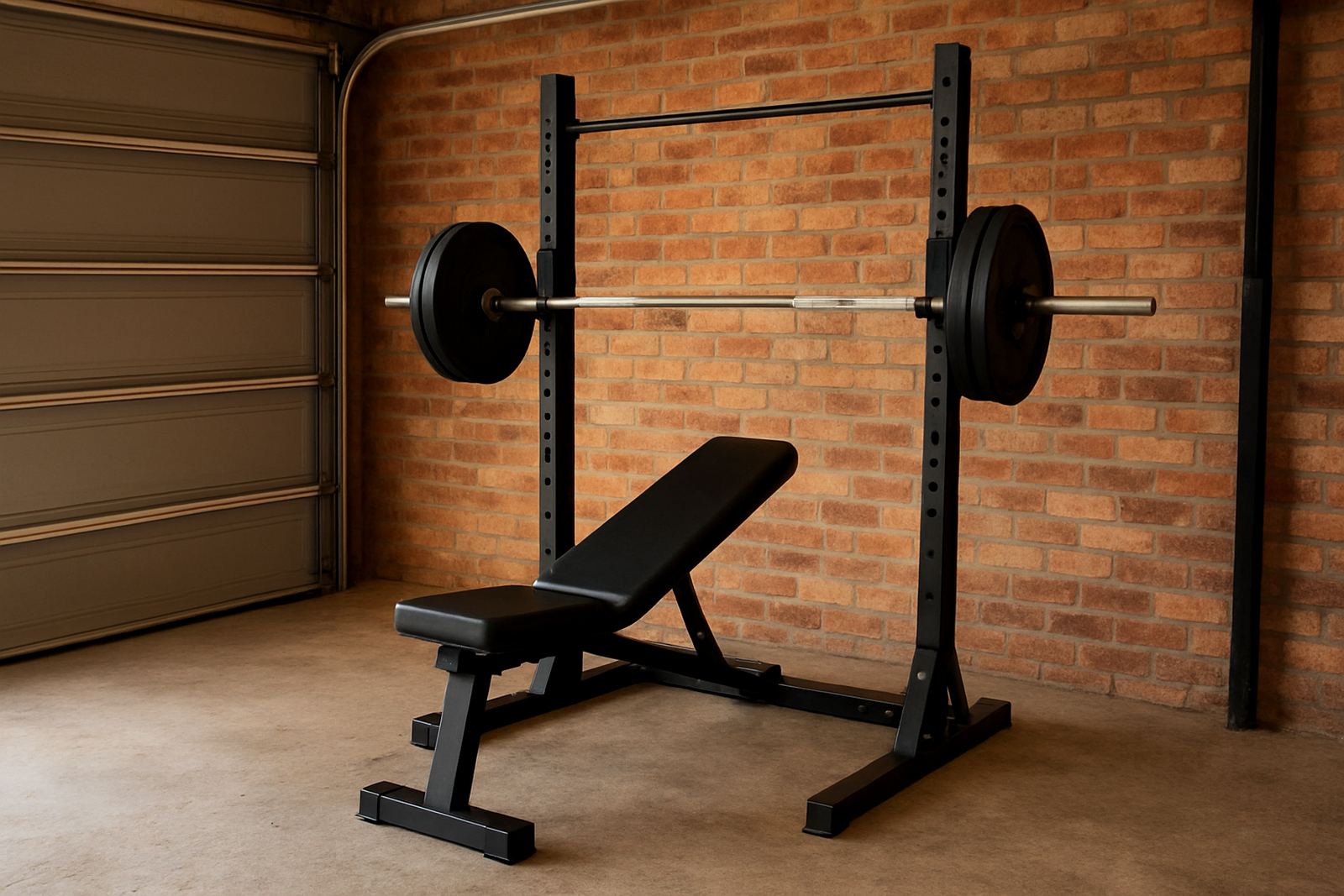

Start with the lifts you actually do at home
Before you compare padding, frames or price, look at how you train now and how you want to train over the next 12 months. If your routine is mostly dumbbell bench press, shoulder press, step ups and split squats, you need a bench that changes angle quickly and stays steady under load. If you also do core work, hip thrusts and supported rows, a bench with a flatter seat and a firm backrest makes everyday training much easier.
In Fourways, many homes have a spare room, garage corner or covered patio set up for training. That means the best bench is not always the biggest one, but the one that matches the space and the programme. A compact unit may suit a beginner, while a stronger lifter might want a wider base and more adjustment positions.
- Match the bench to your main exercises.
- Choose the angle range you will use weekly, not just once a month.
- Check whether you need flat, incline and decline settings.
If the bench only looks good on paper but does not suit your actual routine, it will end up gathering dust against a wall.
Check the frame, stability and weight rating
For home use, stability matters more than flashy extras. A bench should feel planted when you sit down, change the backrest or press a pair of dumbbells overhead. Look for a solid steel frame, non slip feet and clean welds. The base should not wobble when the bench is set to a steep incline.
Weight rating is one of the first numbers to compare. Do not only check the user limit, also think about the total load from your body, the bench itself and the weights you plan to use. A lighter bench may be fine for beginner workouts, but if you are training hard three or four times a week it is worth paying for a stronger build.
- Ask for the total load capacity, not only the seat limit.
- Check if the bench shifts on tiled floors or epoxy garage flooring.
- Look for wide rear feet and anti slip rubber caps.
- Test whether the bench stays stable when the backrest is fully upright.
In coastal areas like Durban or even a damp garage in Pretoria East, metal parts also need proper coating so moisture does not lead to rust over time. Johannesburg is drier, but dust and summer storms still test home equipment.
Look at adjustment options, not just the number of settings
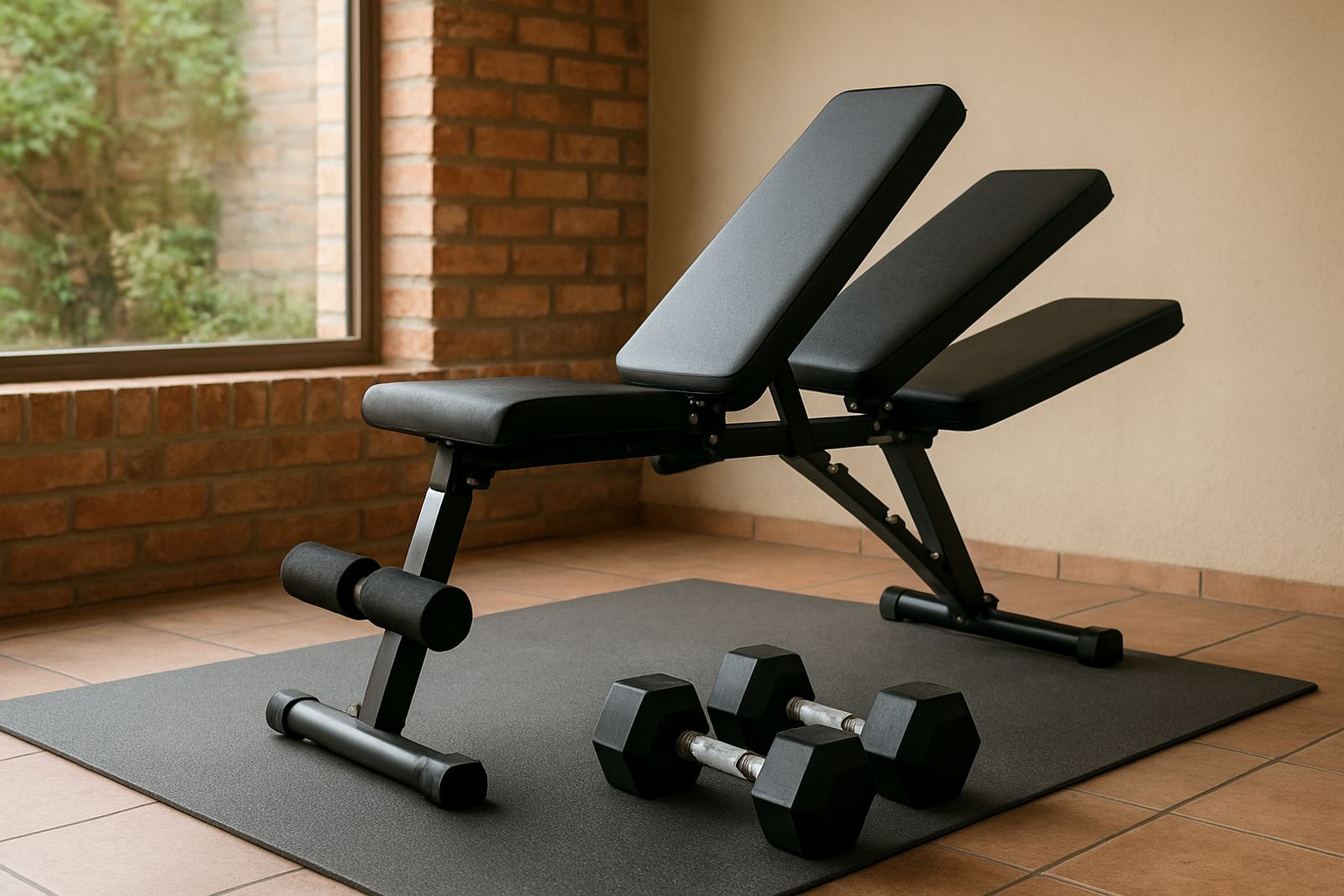
More settings sound useful, but what matters is how practical the bench feels in daily use. A good adjustable bench should move smoothly between positions and lock firmly without a fuss. If it takes too long to change from flat to incline, you will probably use fewer exercises and waste training time.
For most homes, the key positions are flat, a few incline levels and a steep backrest for shoulder work. Some benches also offer decline settings, which can be useful for core training. The seat angle should support your hips when the backrest changes position, otherwise you slide forward during pressing movements.
- Check how many incline positions are easy to use, not only listed in the brochure.
- Make sure the adjustment ladder or pin system locks tightly.
- Look at the seat and backrest gap, especially for pressing.
- See whether the bench adjusts without trapping fingers.
A well made bench should feel simple enough for a beginner, yet precise enough for somebody following a structured strength programme.
Padding, width and comfort affect better training
Comfort is not a luxury item, it affects how well you train. If the padding is too soft, you sink in and lose support. If it is too firm or too narrow, long sessions become uncomfortable and heavy dumbbell work feels awkward. The best bench usually has firm padding with enough give for the shoulders and upper back.
Width also matters. A very wide bench may feel stable, but it can limit shoulder movement for pressing. A bench that is too narrow may feel less secure when you are doing heavier lifts. Try to find a balance that suits your body size and training style.
- Check whether the upholstery is easy to wipe down after sweaty sessions.
- Look for stitching that is neat and tightly finished.
- Choose padding that supports your back without compressing too much.
- Consider a slightly textured surface if you train in a humid room.
In summer, a garage gym in Randburg can get warm fast. Sweaty training sessions make easy cleaning and durable stitching more useful than most people expect.
Size, storage and the real space you have available
Many home buyers focus on training features and only measure the bench after delivery. That is usually where problems start. Before you order, measure the floor area where the bench will sit, plus enough room to lie back, move weights and walk around safely. If the bench folds, check the folded size and make sure it fits behind a door or next to a cabinet.
Think about how you will move the bench. A heavier model may be better for training, but if you need to shift it for family use or cleaning it can become inconvenient. If the room is shared, a bench with wheels or a carry handle can save a lot of hassle.
- Measure the length, width and ceiling height of your training area.
- Allow space for dumbbell movement on both sides.
- Check folded dimensions if storage is tight.
- Make sure the bench can pass through passages and gates, especially in sectional title units.
For homes in Midrand or Roodepoort, where garages often double as storage, compact storage can make the difference between regular use and a bench that stays in the corner.
Plan for accessories, support and long term use
The best bench should work as part of a full training setup, not as a one off purchase. Think about whether you will pair it with dumbbells, a rack, resistance bands or an adjustable programme. If you plan to build a proper home gym, it helps to choose a bench that suits future equipment too.
Support is also important. If you are setting up a first gym in a townhouse or family home, clear guidance on assembly, safe use and training structure can save a lot of time. Some households also need a bench that works for more than one person, so check whether the settings are easy enough for different users to adjust correctly.
- Ask whether the bench supports common accessory use like bands or leg work.
- Check if spare parts or replacement pads are available.
- Look for clear assembly instructions and simple maintenance needs.
- Consider whether the bench suits a starter programme and a strength programme later on.
For buyers in Sandton, Fourways and Pretoria East, practical support can matter just as much as the product itself, especially when the goal is to build a routine that actually lasts.
A local buying example from a Fourways home gym
A client in Fourways recently wanted a bench for a shared garage setup. The brief was simple: one bench, two users, limited floor space and enough strength for dumbbell presses, rows and core work. A basic flat bench would have saved money upfront, but it would have limited the programme after a few weeks.
The better choice was an adjustable bench with a solid frame, enough incline positions and easy storage. That let the family use one space for strength sessions in the morning and mobility work in the evening. It also reduced the need for extra equipment because the bench could support more exercises from one compact footprint.
That is the real test when comparing benches. The right one should not only suit your budget today, it should still make sense when your training gets more serious next month. If you want a bench that fits your space and your programme, compare the frame, angles, padding and size carefully before you buy. Small details make a big differnce over time.