Start With Your Actual Training Goal
Before you look at speed settings or screens, be clear on why you want a treadmill. A walker needs a very different machine from someone who plans interval runs, hill work, or daily family use. If the goal is weight loss or general fitness, a stable machine with a sensible top speed and simple controls is often enough. If you are training for races, or doing longer sessions 4 to 5 times a week, then the motor, belt size and frame quality matter much more.
In Fourways and Sandton, many buyers want a machine for early morning walks before the day starts, while others need a quieter option for apartment living in Midrand or Randburg. In both cases, buying according to lifestyle saves space and money.
- Walking only: focus on comfort, low noise and easy controls.
- Jogging: check deck width, motor strength and cushioning.
- Running: look for a larger belt, stronger motor and steady frame.
- Shared family use: choose a model that can handle different body weights and training levels.
Check Motor Power, Belt Size and User Weight
The motor is one of the clearest signs of whether a treadmill will cope with your routine. A light walking machine may be fine for short daily sessions, but runners should not settle for a unit that feels underpowered. You also want to look at the belt size, because a narrow deck can feel cramped when stride length increases. For most homes, a longer belt is simply easier and safer to use.
User weight limits are another important filter. Always leave a margin between the listed limit and the heaviest person who will use the machine. That extra buffer helps with wear and gives better performance over time. In Johannesburg homes where load shedding can interrupt schedules, buyers often want to fit workouts into shorter windows, so a machine that starts quickly and runs without fuss is practical.
- Walking belt: compact is acceptable if the user keeps a steady pace.
- Running belt: allow more length and width for natural stride.
- Motor: stronger units suit frequent use and heavier users.
- Weight rating: leave room, do not buy right at the limit.
Measure the Room Before You Order
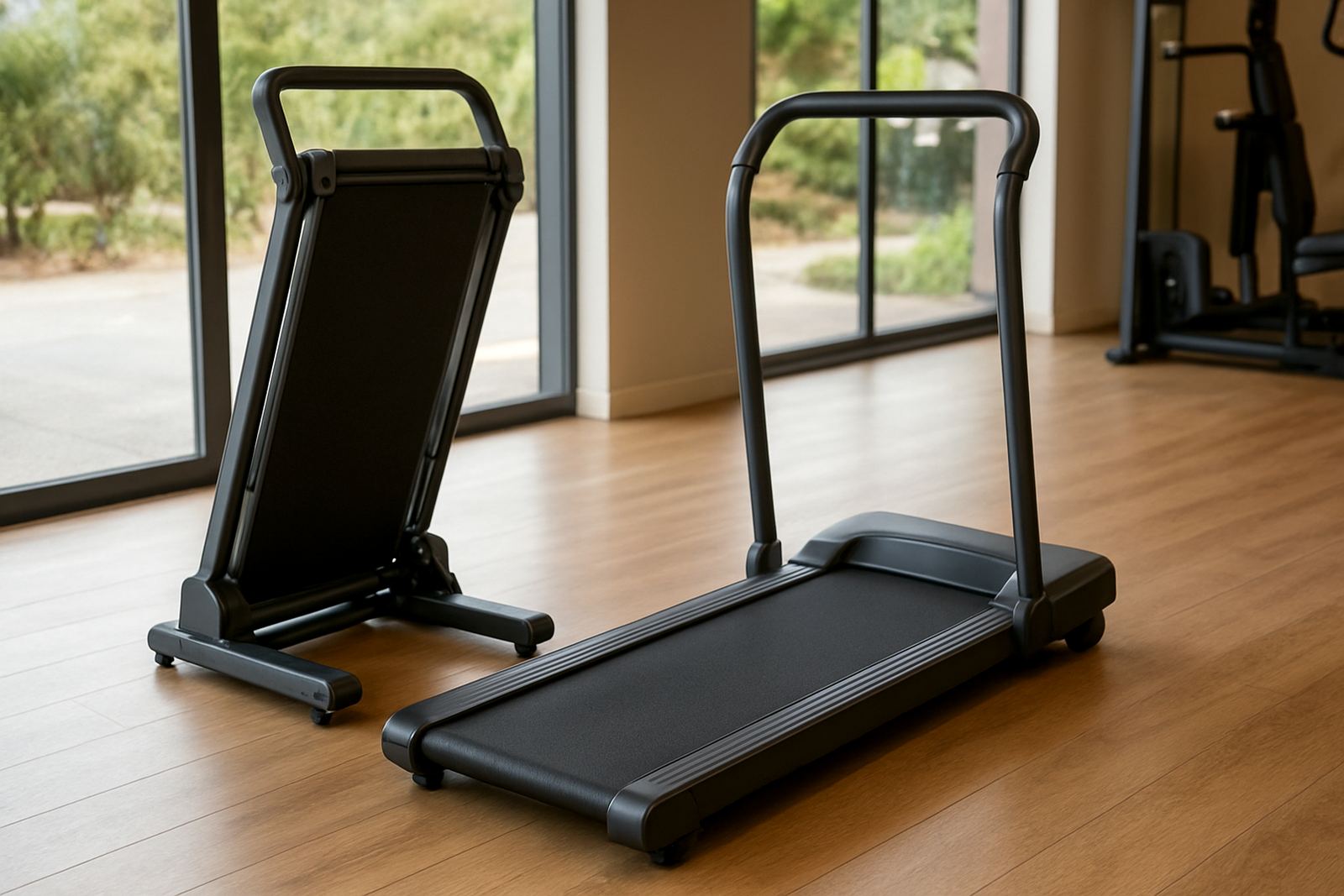
One of the most common mistakes is buying a treadmill before checking floor space. Measure the exact area where it will stand, then add room around it for safe entry, exit and airflow. Remember that foldable does not mean small when in use. You still need enough clearance behind the machine and enough side space to step on and off comfortably.
If the treadmill will sit in a spare room or open-plan living area, consider ceiling height, nearby plugs and whether the room gets hot in summer. In homes closer to the coast the humidity can be harder on electronics, so storage in a dry room is better. In areas like Roodepoort or Pretoria East, garages are common training spots, but the floor should be level and protected from dust.
- Measure length, width and ceiling height before ordering.
- Leave space behind the treadmill for safety.
- Check where the power point is, and avoid thin extension leads.
- Allow for folding space if the machine will be stored away after use.
Look at Cushioning, Noise and Day-to-Day Comfort
A treadmill can look good on paper but still feel unpleasant after ten minutes. Cushioning affects joint comfort, especially if you are recovering from injury or walking most days. Too little support can leave your knees and ankles sore, while too much bounce can feel unstable. Try to match the deck feel to the way you train.
Noise is equally important in a home setting. If you live in a townhouse complex or above another unit, a loud motor and heavy footfall can become a problem quickly. Ask how noisy the machine is at walking speed and at a run. Also think about fans, holder trays and the display layout, because small details make sessions easier to stick with.
- Cushioning helps reduce impact on joints.
- A steadier frame usually feels better at higher speeds.
- Low noise matters in shared homes and complexes.
- Simple controls are easier when you are tired.
Compare Console Features Without Paying for Extras You Will Ignore
Many first-time buyers pay for a screen full of functions they never use. It is better to choose features that support your routine. A clear display, time, speed, distance and heart rate readouts are enough for many households. If you use fitness trackers, make sure the treadmill setup works with your own routine so you can follow progress properly.
Programmes can help, but only if they suit the way you train. A beginner may need gentle intervals and a walking plan, while a more active user may want pace changes and incline work. For a family in Midrand using one machine for different goals, simple presets can be helpful without becoming confusing.
- Must-have basics: speed, time, distance, calories and heart rate.
- Useful extras: incline control, preset workouts and pause memory.
- Only pay for app features if you will use them regularly.
- Check if the display is easy to read while moving.
Plan for Delivery, Setup and Long-Term Use
After you choose a treadmill, think about how it will be delivered and set up at home. A machine can be a good fit on paper but difficult to get up stairs, through narrow passages, or into a small room. If you are in a complex in Fourways or a home office in Randburg, check access points before placing the order. Good planning avoids damage and delays.
It is also worth thinking about ongoing use. Treadmills should be kept clean, checked for loose parts and used on a stable surface. In South African homes, power interruptions are part of normal life, so it helps to keep the unit on a suitable socket and avoid rushing starts after an outage. A first treadmill should feel practical from day one and still make sense a year later, not just when it arrives.
- Check access for stairs, doors and tight corners.
- Use a level surface and keep the machine clean.
- Plan regular checks for bolts, belt alignment and wear.
- Choose a model that suits your routine for the long run.