What each one does best in a home setup
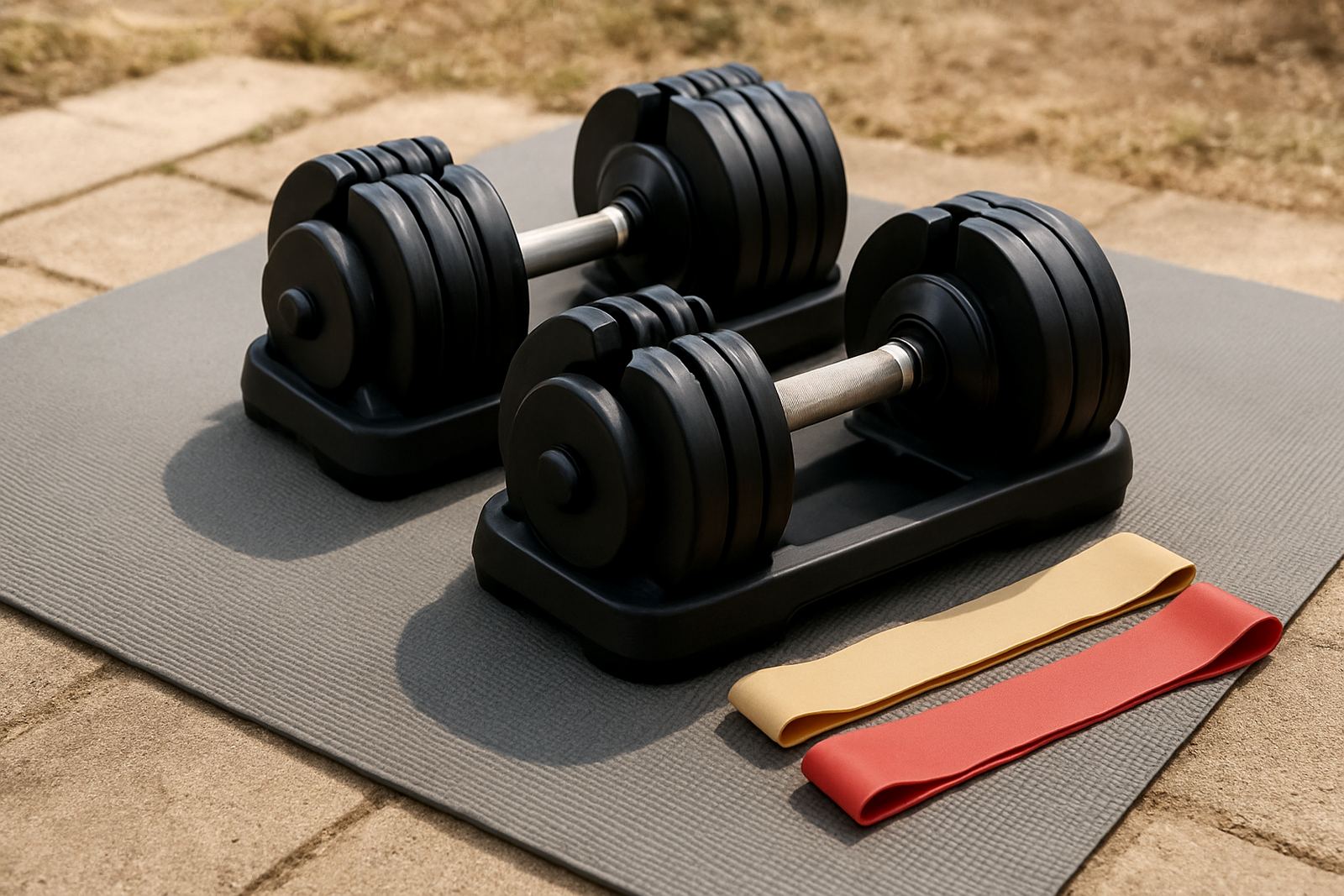
Dumbbells and bands are both useful for strength training, but they do different jobs. Dumbbells give you fixed weight, which makes them easy to track and better for building strength on exercises like presses, rows, squats and lunges. Bands give changing resistance, so the tension gets harder as the band stretches. That is handy for warm-ups, mobility work and lighter accessory exercises.
In a Johannesburg home where space matters, the big difference is storage and versatility. A pair of dumbbells needs some shelf or floor space and a safe place to keep them. Bands take almost no room and fit into a drawer or gym bag. If your home training area is also used for family life, work calls or load-shedding backup routines, bands are easier to move out of the way fast.
When dumbbells make more sense
Dumbbells suit people who want a straightforward strength routine and clear progress. If you are trying to get stronger with goblet squats, overhead presses or one-arm rows, fixed weights are easier to repeat and measure. You can note the exact weight, reps and sets, then add more load later.
They are also better for movements where balance and control matter. A dumbbell forces each side of the body to work on its own, which helps you notice strength differences between left and right. That is useful if you are returning after injury or if one shoulder feels weaker than the other. For many people, a pair of adjustable dumbbells is the most practical long-term home option.
- Good for progressive overload
- Useful for lower and upper body work
- Easy to track in a starter programme
- Better for heavier strength work over time
If you live in Fourways, Midrand or Sandton and only have a corner of the lounge for training, one adjustable set can cover a lot without needing a full rack. Just make sure the floor can handle dropped weights and use a mat if you have tiles or laminate.
When resistance bands are the smarter pick
Bands are ideal when space is tight and you want low-impact training. They are useful for banded squats, glute work, shoulder warm-ups, assisted pull movements and rehab-style exercises. Because the resistance increases through the movement, bands can make an exercise feel harder at the top end without needing heavy metal weights.
They are also practical for travel or for homes where the training area changes each day. If the kids are using the same room, or you train around evening power cuts in Randburg or Roodepoort, bands are easy to pack away and use with minimal fuss. They are quieter too, which helps in sectional-title living where neighbours are close.
- Very compact and easy to store
- Good for warm-ups and mobility
- Useful for glutes, shoulders and core work
- Handy for travel or quick sessions
That said, bands are not a full replacement for every strength exercise. If you want to keep adding load for months or years, you may eventually outgrow them for some lifts. They can also snap if they are old, frayed or used on rough edges, so check them regularly.
The real differences in progression, comfort and control
The biggest difference between the two is how the resistance feels. Dumbbells stay the same through the movement, while bands get harder the further you stretch them. That means a banded press can feel light at the start and much tougher near the end, whereas a dumbbell press stays steady from top to bottom.
For progression, dumbbells are easier to measure. Going from 8 kg to 10 kg is simple. With bands, the increase in difficulty depends on band thickness, length and how far you stand from the anchor point. That can make precise progression a bit more awkward, although still very workable once you learn the setup.
Comfort matters too. Some people like dumbbells because the feel is familiar and stable. Others prefer bands because they place less load on the joints during some movements. For example, someone with sensitive elbows may find lighter band rows more comfortable than heavy dumbbell curls.
In a busy household, control is practical as well. Dumbbells need care on the floor and around children. Bands need anchors, door points or sturdy posts, and you must be careful with the line of pull. Both can work well, just not in the same way.
Best choice by goal: strength, fat loss or mobility
If your main goal is strength, dumbbells usually win. They are better for loading the body in a clear, measurable way. If your goal is fat loss, either tool can work because the result depends more on training consistency, diet and weekly activity than the equipment itself. Bands can help you keep sessions short and frequent, which is useful for people balancing work and family time.
For mobility and general conditioning, bands are often the better starting point. They help with shoulder openers, hip activation and lighter full-body work. Dumbbells still have a place in a mixed plan, especially for carrying movements and controlled squats.
- Strength focus: choose dumbbells first
- Mobility focus: choose bands first
- General fitness: use both if possible
- Small space and low noise: bands help a lot
For a family in Pretoria East training after school pickups, a simple setup may be one pair of adjustable dumbbells, two or three bands, and a mat. That covers most starter and intermediate routines without turning the house into a gym.
A simple home gym answer for South African homes
If you can only buy one item, choose based on your training style. If you like structured strength work and want to get visibly stronger, buy dumbbells. If you need something compact, quiet and easy to use in a small space, buy bands. If your budget allows for both, that is the best answer for most homes.
A practical combination is this: use dumbbells for main lifts, then bands for warm-ups, activation and finishers. That gives you heavier loading where it matters and lighter resistance where you want control and movement quality. It also helps when load-shedding cuts the evening routine short, because a band session can still be done in 15 minutes with very little setup.
At FitSmart, the most useful advice is simple: match the tool to the space, your body and the programme you can stick to. A garage in Fourways, a spare room in Midrand or a townhouse in Sandton may all need slightly different setups. The right choice is the one you will use properly week after week.