Start with a family routine that suits the youngest person
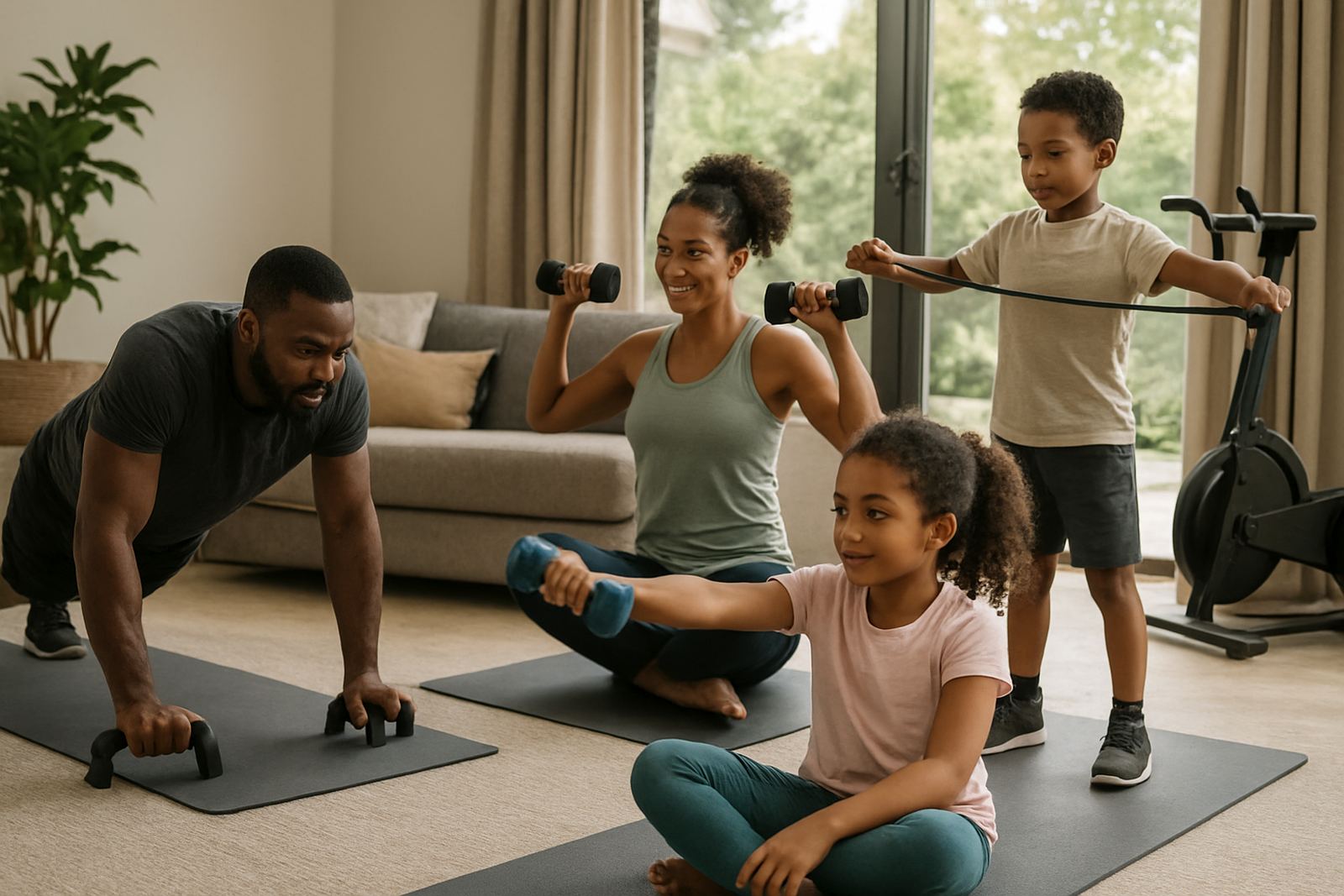
The best home session is the one everyone can finish. If you have a six-year-old, a teenager and two adults, build the routine around short blocks of movement instead of long sets. Aim for 20 to 30 minutes, with one person leading each round so nobody gets bored.
Begin with a 3 minute warm-up that works indoors on a rainy Randburg afternoon or out on a driveway in Fourways. March on the spot, arm circles, gentle squats and shoulder rolls are enough to get going. Keep the first round light, then add effort as everyone settles in.
For safety, use stable shoes, clear the floor and keep water nearby. If you live in a flat or townhouse, choose low-impact moves that wont upset neighbours below you. A family workout should feel organised, not chaotic.
- Warm-up: marching, side steps and arm swings
- Main work: 4 to 5 exercises, 30 seconds each
- Recovery: 20 seconds of walking or water break
- Finish: stretching calves, hamstrings and shoulders
Use game-style circuits to keep children interested
Children usually stay involved when the session feels like a game. Set up a simple circuit and call out the next move with a timer or clap count. If you have enough space, place a mat, a chair and a skipping rope in different corners. If not, a single open area works just fine.
Try a family circuit with jumping jacks, bear crawls, star jumps, wall sits and plank holds. Keep reps short and let younger children choose between two options, such as marching instead of jogging. That small choice helps them feel included and keeps the mood positive.
A family in Midrand might do this after school while supper is in the oven. The parent can track time, one child can count reps, and another can be in charge of music. Small roles help everyone take part and it makes the session easier to repeat week after week.
- 8 jumping jacks
- 10 bodyweight squats
- 20 second wall sit
- 6 slow burpees or step-backs
- 15 second plank
Mix strength, cardio and mobility in one session
A balanced family workout should not be all cardio. Strength moves help with posture and daily lifting, while mobility work keeps hips, ankles and shoulders moving well. This is useful for parents who sit at a computer all day and for teens who spend hours at school or training. Even grandparents can join in with gentler versions.
Start with strength movements such as squats, glute bridges, wall push-ups and suitcase carries using a water bottle or a light bag. Then add a cardio block like stepping, fast feet or shadow boxing. Finish with mobility work, including hip circles, chest openers and ankle rolls.
If your home gets hot in summer or you are training during load-shedding with limited fans, split the work into two shorter rounds. That keeps the session manageable and helps people stay focused. A family does not need fancy kit, just consistency and a bit of planning.
- Strength: 2 rounds of 5 to 8 reps
- Cardio: 3 quick intervals of 30 seconds
- Mobility: 5 calm stretches held for 15 seconds
Set up age-friendly options so nobody feels left out
One of the biggest mistakes is asking everyone to do the exact same thing. A six-year-old, a teenager and a parent recovering from a long week need different levels of effort. Build the workout in layers so each person can work at the right pace.
For younger children, keep movements simple and repeatable. For older children and adults, add tempo, extra rounds or a light resistance tool. If someone is new to exercise, focus on form before speed. Family workouts work best when the group can progress together without pressure.
Here are easy swaps that keep things fair:
- Jumping jacks to step jacks
- Full push-ups to wall push-ups
- Running on the spot to marching knees
- Planks on toes to planks on knees
- Squats to chair sits for beginners
This kind of setup is especially helpful in homes across Pretoria East and Roodepoort, where space, age groups and schedules can vary a lot. It is practical, and no one has to sit out because the level is too high.
Make use of simple equipment without turning it into a big production
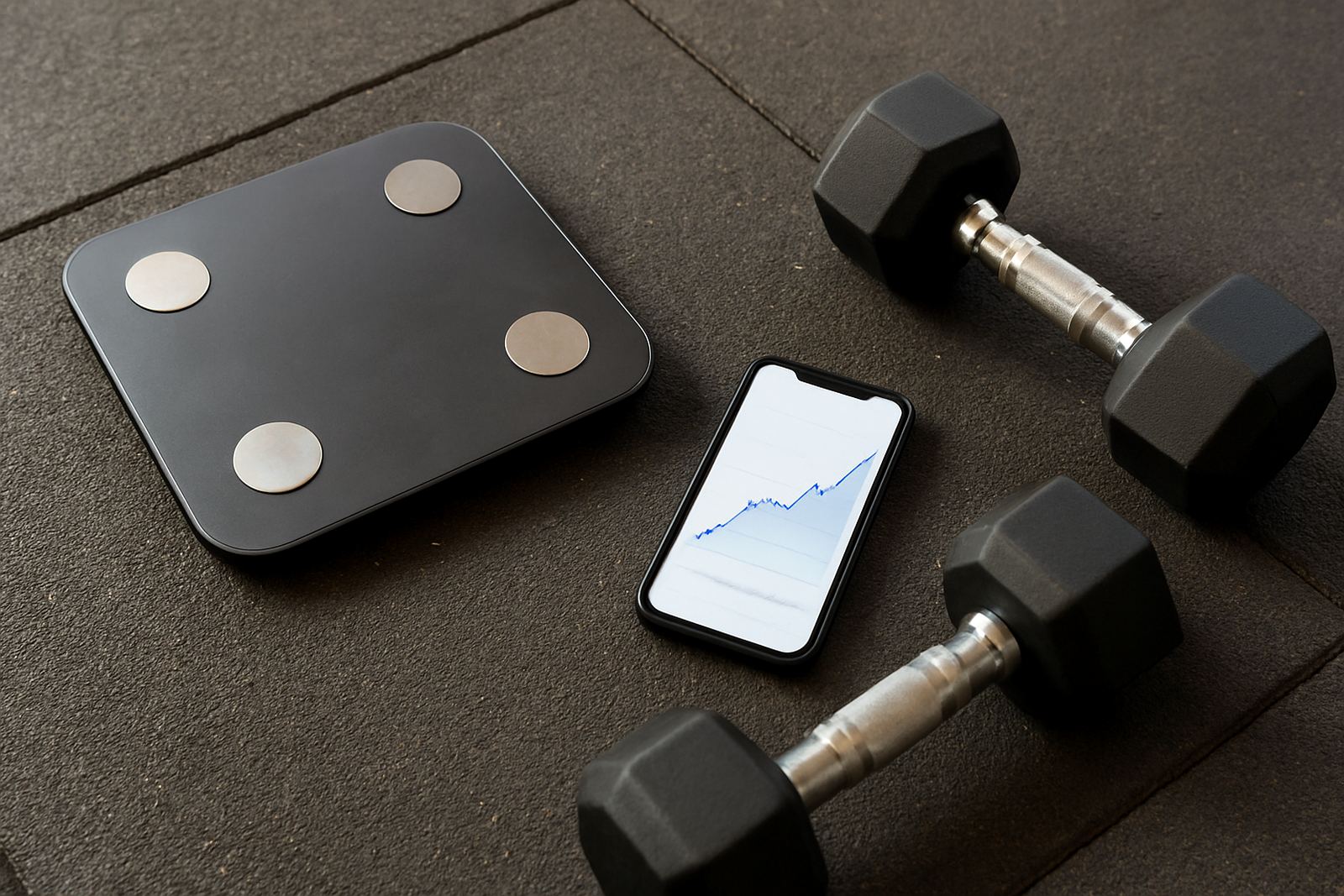
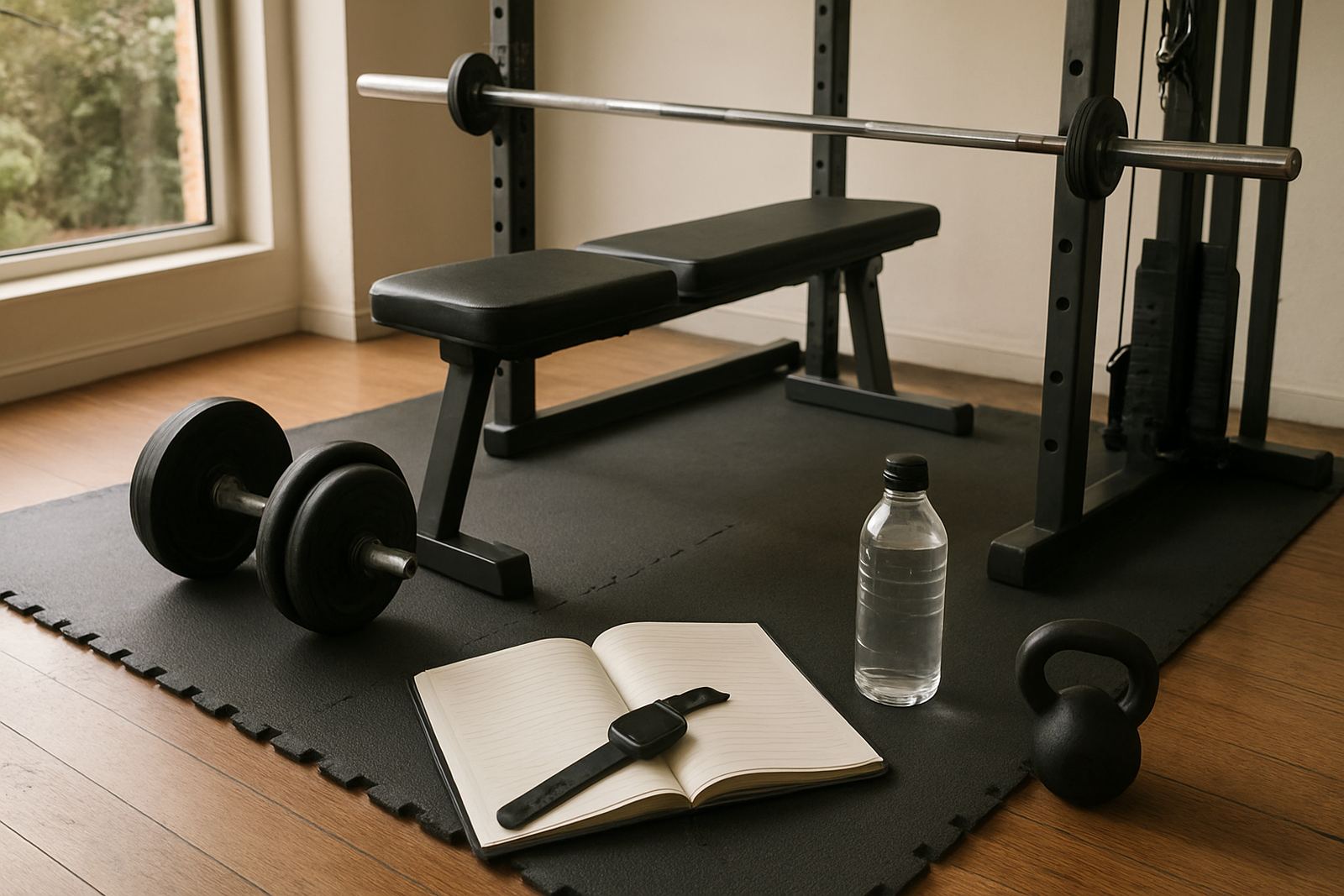
You do not need a full home gym for family training. A skipping rope, exercise mat, light dumbbells, resistance bands and a timer can cover most sessions. If you already have a fitness tracker, it can help older children and adults keep an eye on steps, active time and heart rate. That can be motivating without becoming competitive.
Keep equipment in one basket or corner so set-up takes less than five minutes. In homes around Fourways and Sandton, where mornings can be rushed before school or work, the easier the set-up the more likely the workout will happen. A storage crate with mats and bands can save a lot of faffing about.
When choosing kit, think about grip, weight and floor protection. Rubber mats are useful on tiles and concrete, especially if you train in a garage or covered patio. If you are unsure what to buy, start small and only add pieces your family will actually use.
End with a simple weekly plan your household can stick to
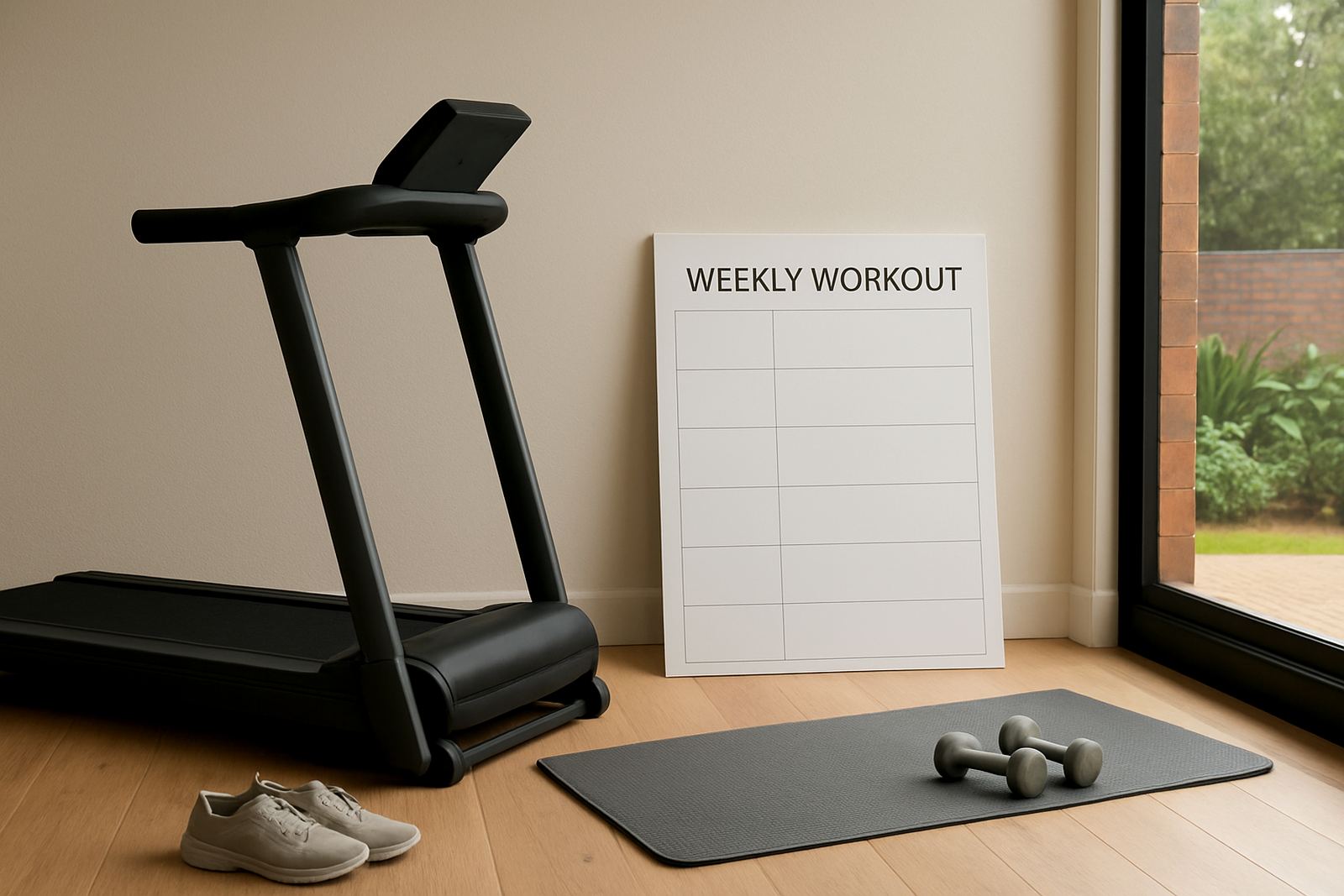
The real win is not one perfect workout, it is a routine that gets repeated. Pick two or three days a week and keep the format the same for a month. That makes it easier for children to remember, and easier for adults to plan around work, homework and sport practice. Start with 20 minutes on a Tuesday and Thursday, then add a Saturday walk or mobility session if everyone is up for it.
A useful weekly plan could look like this: one cardio day, one strength day and one mixed play day. On the mixed day, choose relay races, dance rounds or a family challenge with points for effort, not speed. If someone misses a session, move on without drama and pick up at the next one.
For a Johannesburg example, a family in Fourways might do strength indoors after supper, cardio in the driveway on Saturday morning and stretching before church or a braai. That rhythm suits busy households and keeps fitness part of normal life, not a special event.
- Tuesday: 20 minute strength circuit
- Thursday: cardio and coordination games
- Saturday: stretching, walking or a short challenge
If you want help choosing simple home training tools or setting up a family plan, FitSmart can help from Fourways, Johannesburg, with nationwide delivery and setup support where needed.