
Why a lighter day still matters
Most people in Johannesburg start a programme with good energy, then push hard on every session until their legs feel flat and their motivation drops. A better approach is to treat recovery day as part of the plan, not a break from it. When you lower the load, you give your body time to repair muscle tissue, settle your nervous system and reduce the little aches that build up from squats, runs, skipping or long cycles on a home bike.
For home training, this matters even more because many people in Fourways, Sandton and Midrand are fitting workouts around work, school runs and traffic. If your week includes load-shedding, a busy municipal schedule or a day of sitting at a computer, a recovery session can keep you moving without asking too much from your body. That is often the difference between training for six weeks and training for six months.
A simple recovery day structure that actually works
Keep the session short, predictable and easy to repeat. You are not trying to smash personal bests. You are trying to arrive at the next hard session ready to work. A good recovery day usually has three parts: gentle movement, mobility and a short check-in on how you feel.
- 10 to 20 minutes of light cardio: brisk walking, easy cycling or marching in place.
- 10 minutes of mobility: hips, hamstrings, shoulders and upper back.
- 5 minutes of breathing or stretching: slow nasal breathing, calf stretches, child’s pose or thoracic rotations.
If you are using a smart fitness tracker, keep an eye on resting heart rate and sleep quality. If your tracker shows poor sleep or a higher than usual resting rate, that is a sign to keep the day very light. You do not need to guess every time, and that saves energy.
What to do when you are sore, tired or just plain flat
Not all fatigue feels the same. Sometimes you have sore quads after a leg day. Other times your whole body feels heavy because you slept badly, had a stressful workweek or skipped meals. Your recovery day should match the problem. A sore muscle often benefits from movement, while a drained system needs less intensity and more rest.
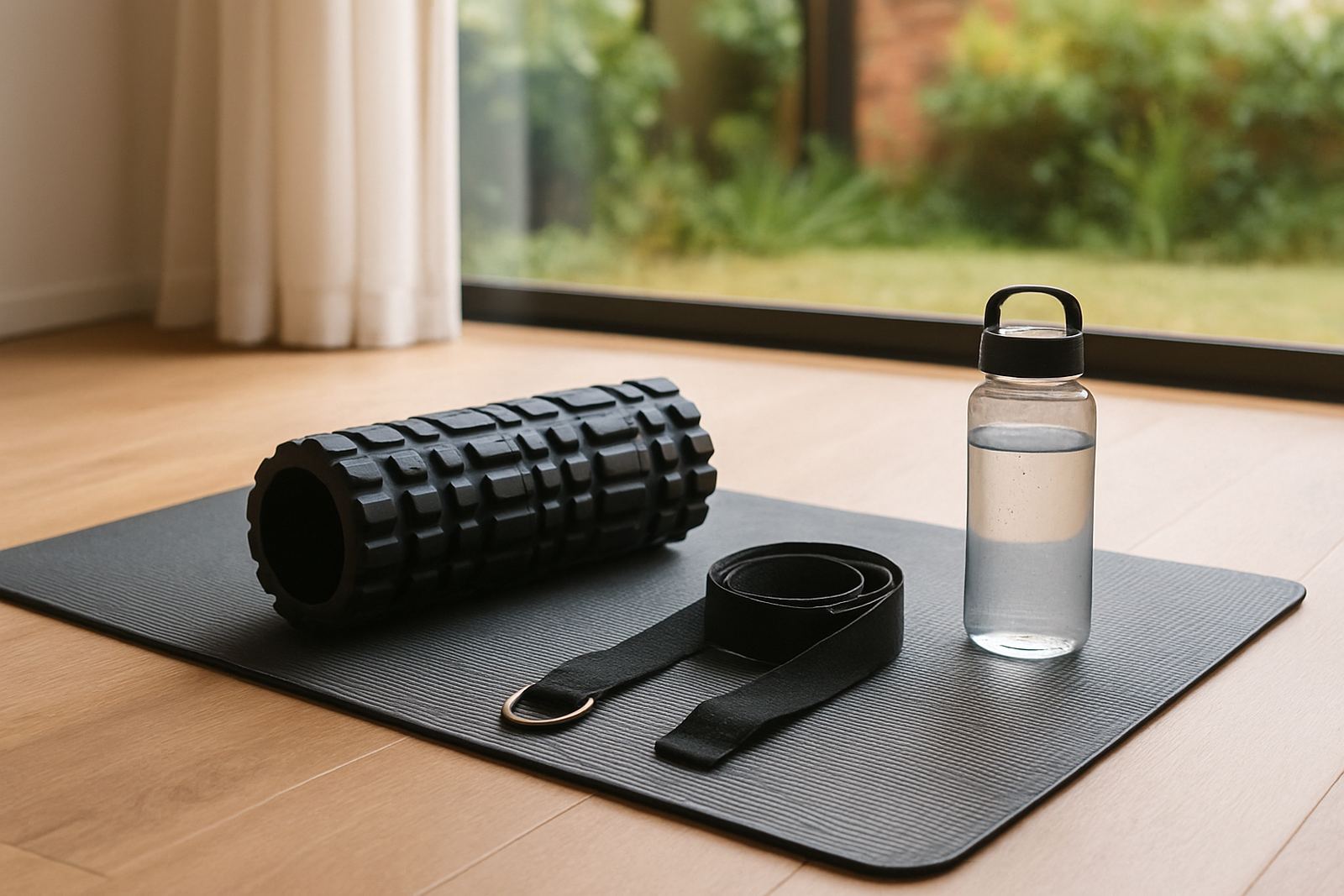
In areas like Roodepoort or Pretoria East, where many households train at home before or after the commute, it helps to keep a few easy options ready. A mat, a resistance band and a light set of hand weights are enough for a proper recovery session. On humid coastal weeks or very hot Gauteng afternoons, train earlier in the day and drink water through the morning, not just during the workout.
- If your legs are sore: walk, cycle lightly and do hip mobility.
- If your back feels tight: add cat-cow stretches and thoracic rotations.
- If you feel mentally tired: do a 15 minute walk and stop there.
- If you are coming back from a hard week: focus on sleep, food and hydration first.
How to eat on a recovery day without overthinking it
Recovery day does not mean eating less for the sake of it. It means eating with purpose so your body can repair itself. Keep protein steady, include vegetables and fruit, and do not skip carbohydrate completely if you are training again within 24 to 48 hours. If you cut carbs too hard, the next session often feels flat and your mood can dip too.
A practical South African example is a breakfast of eggs and oats, lunch with chicken, beans and mixed veg, then supper with fish or lean meat, sweet potato and salad. If you train early before school drop-off in Fourways, a banana and plain yoghurt can be enough before a recovery walk. After training, water and a proper meal matter more than fancy supplements. The basics work if you keep them steady.
Using recovery days to support long-term goals
Recovery is not only about soreness. It is also where you protect consistency. That is why many home-training plans include lighter days for family fitness, weight loss coaching or mobility work. A shorter session can still keep your routine intact, and that matters when work gets busy or the kids need to be dropped at sport practice.
At FitSmart, we often suggest using recovery day to review your week. Check your step count, workout time, sleep and hydration. If your numbers dipped, ask why. Was it a late night in Randburg, a power cut in Midrand, or a day of poor eating? Once you see the pattern, you can adjust before the week gets away from you.
- Keep one recovery day after every hard lower-body session.
- Use two lighter days if you are new to training or returning after a break.
- Combine family movement with easy walks, stretching or low-impact cycling.
- Track recovery habits the same way you track workouts.
A local Fourways example you can copy this week
Take a home-training household in Fourways with two adults and one teenager. Monday is strength, Tuesday is cardio, Wednesday becomes recovery day. They start with a 20 minute walk around the estate or a quiet street loop, then do 10 minutes of mobility in the lounge and finish with water, fruit and a light meal. No one is chasing a burn, but everyone stays active and the week keeps moving.
That same approach works in Sandton apartments, Midrand cluster homes or family houses in Pretoria East. The point is not to do more. The point is to do enough to keep momentum without digging a bigger hole. If you are unsure how to shape your week, a simple home gym plan, tracker setup help and virtual check-ins can make recovery days easier to manage and less likely to be skipped.