Why recovery tools matter after home training
When you train at home, recovery can be easy to ignore. You finish a session, wipe down the mat, and get on with the day. The problem is that stiff calves, tight hips, sore shoulders and a tired lower back tend to build up if you do not give them attention.
Recovery tools are not magic. They work best when you use them regularly and pair them with enough sleep, water and sensible training loads. For many households in Johannesburg, that means fitting a few minutes of recovery into the evening routine, especially after a workout done after work or during load-shedding when the timing gets pushed around.
- Use recovery tools after training, not only when you feel sore
- Keep sessions short, usually 5 to 15 minutes
- Focus on the areas you use most, like legs, back and shoulders
- Back off if pain is sharp, swelling appears, or movement gets worse
Foam rollers and massage balls for tight muscles
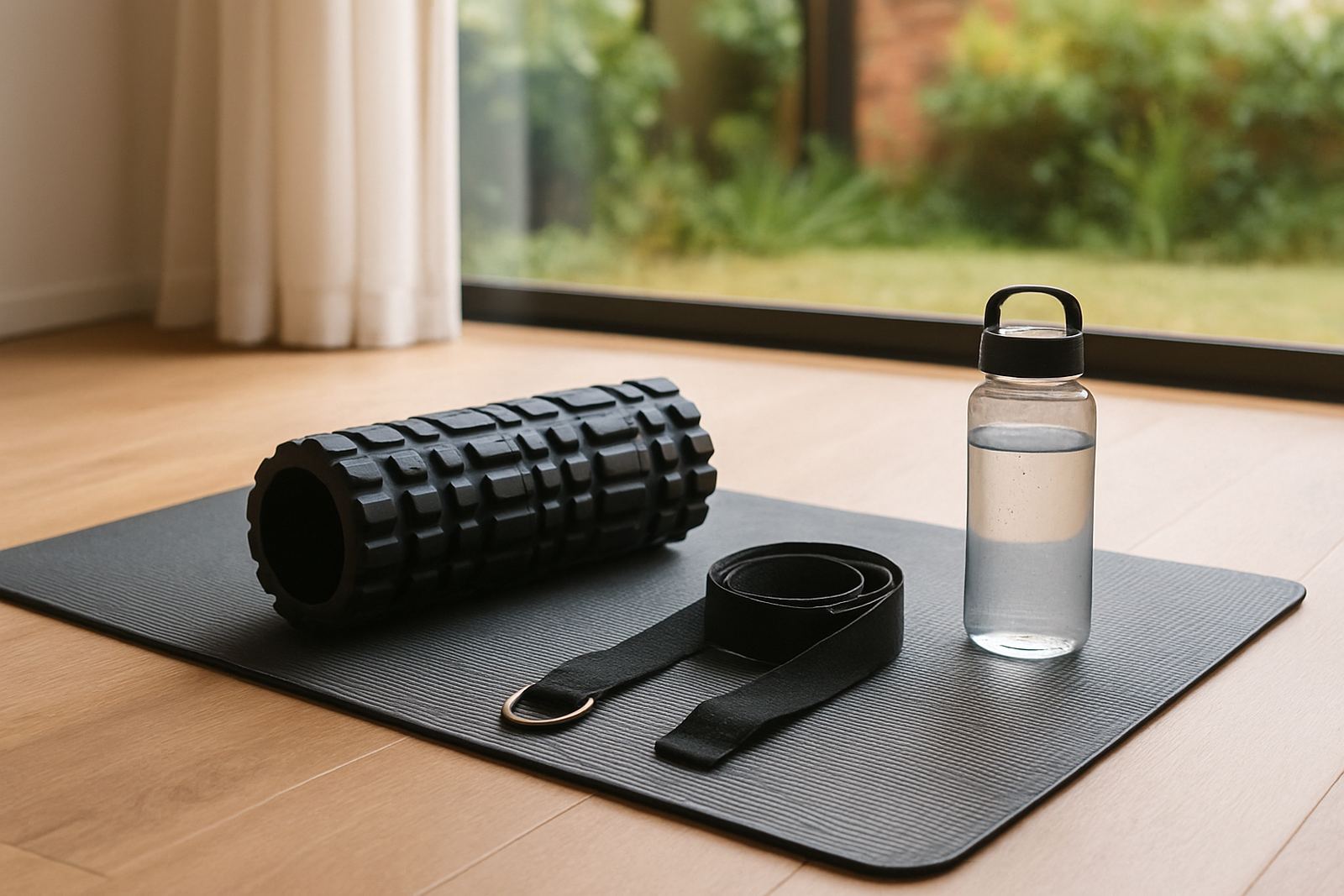
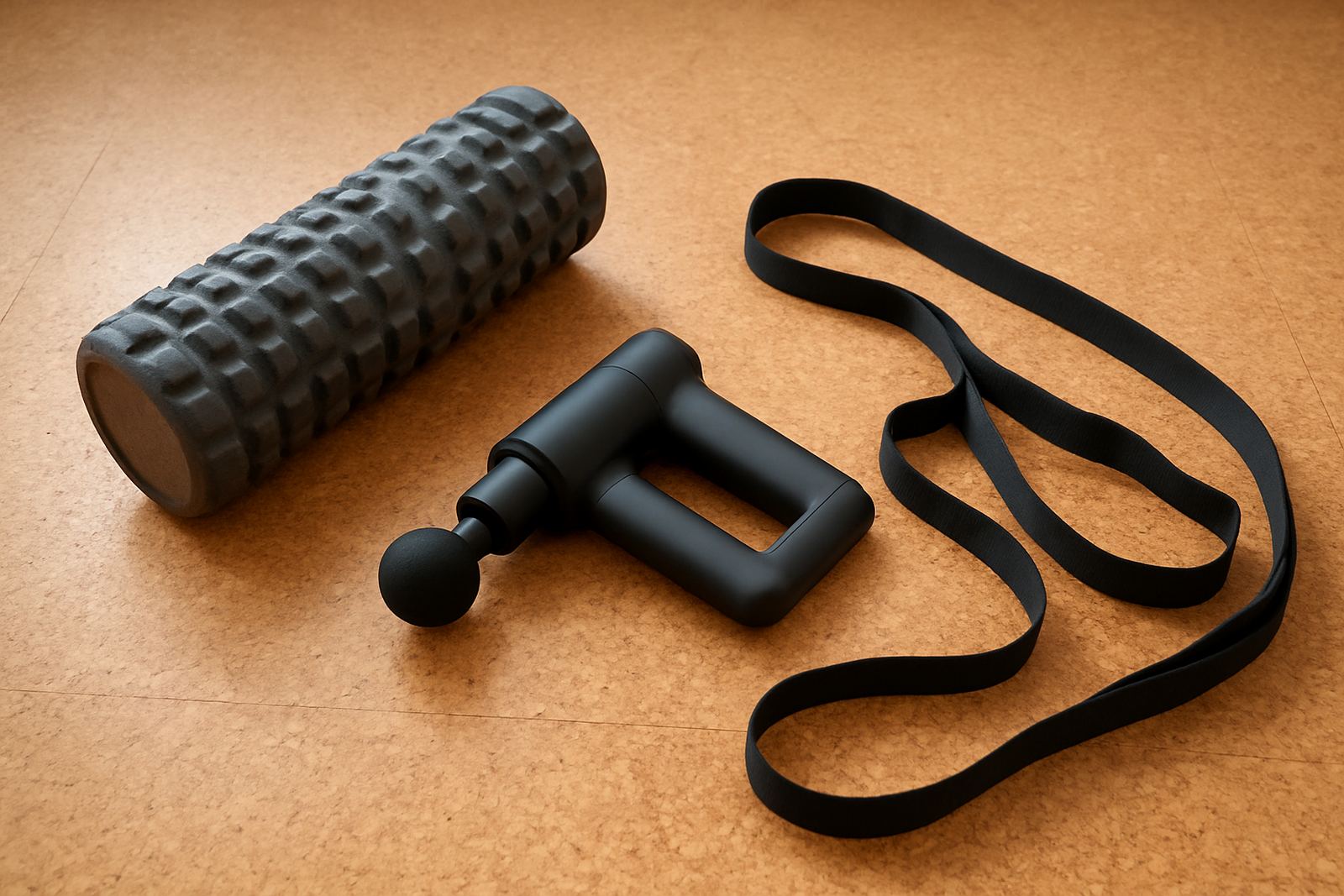
A foam roller is one of the simplest recovery tools for home use. It helps you apply steady pressure to large muscle groups such as the thighs, glutes, calves and upper back. A massage ball does the same job in smaller areas like the foot arch, shoulder blade area or hip side.
The key is not to rush. Roll slowly and pause on tender spots for 20 to 30 seconds. You should feel pressure, maybe a little discomfort, but not pain that makes you tense up. If you are rolling your lower back directly, be careful. Most people do better by working on the muscles around it, not the spine itself.
- Use a firmer roller for larger leg muscles and a softer one if you are new to it
- Place the ball under the glutes, chest wall or foot for targeted release
- Do not hold your breath while rolling
- For humid coastal areas, store the roller in a dry place so the surface stays clean
Resistance bands for mobility and gentle activation
Resistance bands are useful for more than strength work. They can help you warm up joints, activate muscles before training, and support mobility work on rest days. For example, a light band can wake up the glutes before squats or help open up the shoulders after a long day at a computer.
They are also handy if you are easing back into exercise after time off. A controlled band movement can be easier on the joints than a heavy session, while still keeping the body moving. In a family home, they take up almost no space, which makes them practical for apartments in Randburg or smaller rooms in Pretoria East.
- Choose lighter bands for mobility and heavier bands for strength work
- Check for cracks or thinning before each use
- Anchor the band safely, away from sharp edges and fans
- Use slow, controlled reps instead of jerky pulls
For shoulder work, simple pulls and rotations can help. For hips and legs, band walks and glute bridges are often enough to make a difference if you do them consistently.
Massage guns and when to use them carefully
Massage guns can be useful for short bouts of muscle relief, especially after hard leg sessions or long runs. They are popular because they are quick, but they should be used with care. The goal is to relax muscle tissue, not hammer sore joints or bony areas.
Keep the device moving, use light pressure and work on one muscle group at a time. If you have bruising, nerve pain, recent injury, or a medical condition that affects circulation, it is better to check with a professional before using one. A lot of people overdo it because they think more pressure means better recovey, but that is usually not the case.
- Use for 30 to 60 seconds per muscle area at first
- Avoid the front of the neck, joints and the spine
- Best used after training or in the evening, not as a substitute for warm-up
- Charge it regularly if you train during load-shedding windows
Yoga mats, cushions and bodyweight recovery work
A good mat is one of the most underrated recovery tools. It gives you a clean, stable space for stretching, breathing, mobility drills and floor-based exercises. Add a cushion, block or folded towel and you can support knees, hips or tight ankles during slower work.
This matters if you train on tiled floors or cold concrete at home. A mat also gives you a defined space for family routines, which helps when everyone has different training goals. One person may be doing a mobility flow, another may be stretching hamstrings after a strength session, and a child may simply need a safe surface for movement.
- Choose enough thickness for your floors, especially on tile
- Wipe it down after sweaty sessions to prevent odours
- Use breathing drills and long holds, not just quick stretches
- Pair stretching with gentle walking around the house for better circulation
How to build a simple recovery routine that actually gets used
The best recovery routine is the one you will repeat. Keep it simple and match it to your training style. If you do cardio three times a week, focus on calves, hips and feet. If you lift weights, spend more time on shoulders, glutes and thoracic mobility. If you are a busy parent in Fourways or Midrand, ten minutes may be enough as long as you do it often.
A practical routine could start with two minutes of breathing on the mat, followed by rolling the thighs and calves, then a few band exercises for the hips and shoulders. End with a slow stretch and water. That is usually enough to make recovery feel manageable rather than another chore.
- Pick 2 or 3 tools, not every tool available
- Keep them in one basket or corner so they are easy to grab
- Review what helps after two weeks and remove what you never use
- If pain keeps returning, get proper advice instead of pushing through it
For many homes in Johannesburg and surrounding areas, the challenge is not access to equipment. It is making recovery part of the week in a way that fits work, school runs and electricity cuts. A short routine done regularly will usually beat a long one done once.