Why resistance bands suit home training in Johannesburg
For many homes in Fourways, Sandton and Midrand, space matters just as much as effort. Resistance bands are light, easy to store and useful for a quick session in the lounge, garage or patio. They also suit flats and townhouse living where noise and heavy equipment can be a problem.
Unlike fixed weights, bands give tension through a movement, which makes them useful for controlled work on the chest, back, shoulders, hips and legs. They are also kinder on joints than some high-impact routines, so they suit beginners, older adults and anyone building strength with lower-impact training.
If you train early before traffic or late after work, bands help you do something useful in 20 to 30 minutes. That is often the difference between staying active and skipping a session because the day got away from you.
Best resistance band exercises for full body strength
A good band session should cover push, pull, squat and hinge patterns. That way you work the main movement groups without needing complicated gear. Start with medium resistance and focus on smooth form, not speed.
- Band squat - Stand on the band and hold the ends at shoulder height. Sit back, keep your chest lifted and drive through your heels.
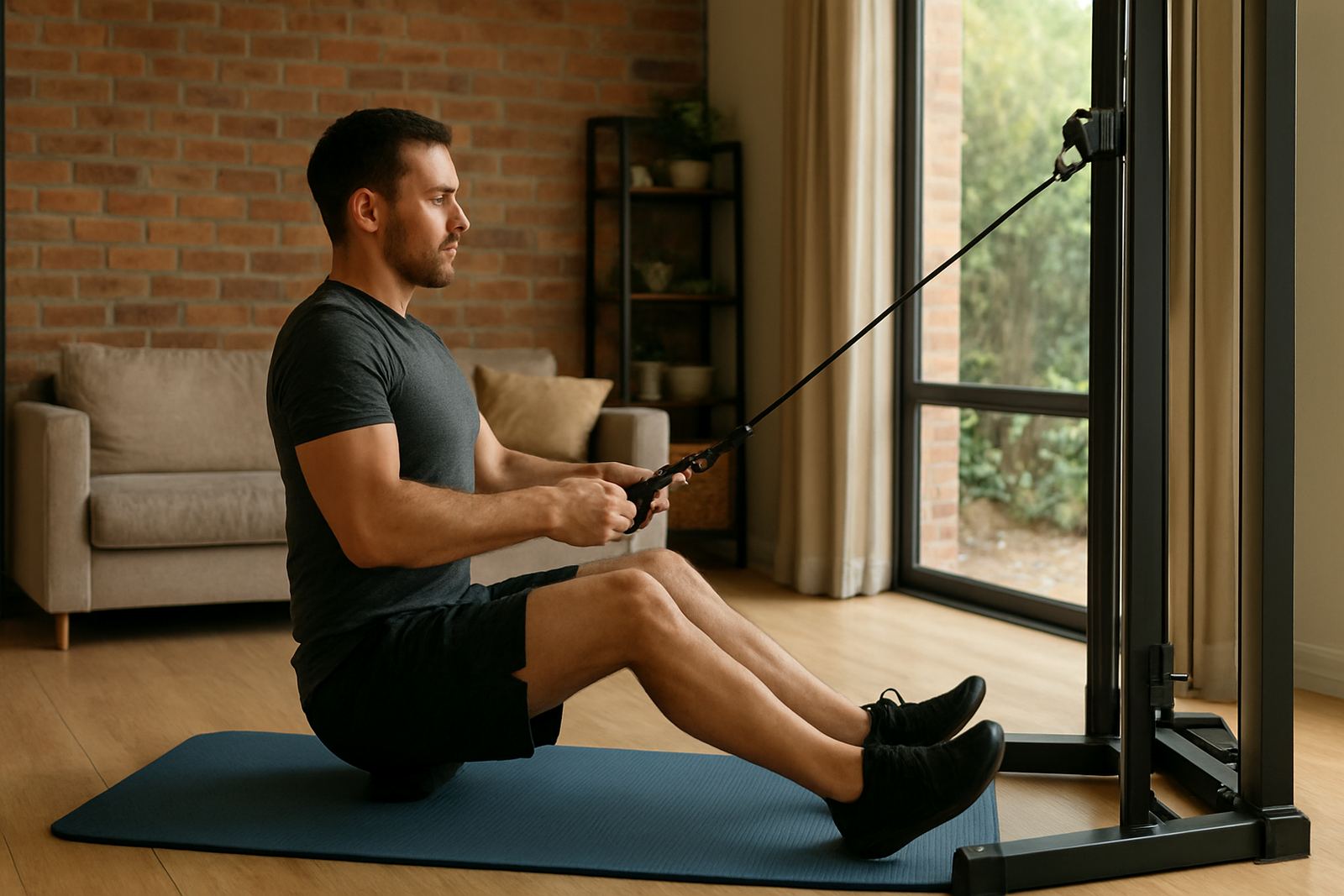
- Standing row - Anchor the band safely, then pull elbows back to your sides. This helps posture and upper back strength.
- Chest press - Anchor behind you, press forward and control the return. Keep ribs down so you do not arch your back.
- Overhead press - Stand on the band and press above your head with control. Keep the movement steady and do not lock out hard.
- Glute bridge with band - Place the band above the knees and press knees out as you lift your hips. This is a solid option for glutes and core stability.
- Band deadlift - Stand on the band, hinge at the hips and return to standing. It teaches good hip movement for daily lifting.
Do 2 to 4 sets of 8 to 15 reps depending on your level. If the last few reps feel too easy, step farther onto the band or choose a heavier one. If your form starts slipping, the band is too strong for that exercise.
Warmups that wake up the body before training
Many people use bands only for hard sets, but they are excellent for warmups too. A short band warmup can prepare the shoulders, hips and ankles before strength work, cycling, walking or a home cardio session. That matters when your body is stiff from sitting at a computer or driving around Gauteng traffic.
Try these movement prep drills before a session:
- Band pull-aparts - Hold the band at chest height and open the arms out. This switches on the upper back.
- Lateral walks - Place a loop band above the knees or around the ankles and take side steps. Keep tension in the band the whole time.
- Shoulder external rotations - Keep elbows tucked and rotate the forearms out. Useful before pressing or overhead work.
- Marching with band resistance - Use a loop band for a controlled marching pattern to wake up the hips and core.
A 5 to 8 minute warmup is usually enough. In winter, when mornings in Pretoria East or Randburg are colder, bands help joints feel ready before you go harder. They are also a good choice if you are training during load-shedding and need a quick session before power comes back on.
Low impact conditioning without rattling the house
Resistance bands are not only for building strength. They can be used for low impact conditioning, which is handy when you want a faster heart rate without jumping around or making too much noise. This is practical in apartments and family homes where someone else may be studying, sleeping or working from home.
A simple conditioning circuit could include squats, rows, presses and reverse lunges done back to back. Keep your rest short, around 20 to 40 seconds, and move with purpose. If you want more of a challenge, use a stronger band or slow the lowering phase so the muscles stay under tension longer.
For people managing weight loss, band circuits can support a steady weekly routine without the strain of heavy impact. They are not magic, but they do make it easier to stay consistent when life is busy and the weather turns bad.
How to choose the right band and set it up safely
Band quality matters because worn or cheap bands can snap, especially in heat or coastal humidity. Store them out of direct sun and check for cracks before each session. If you live near the coast and bring gear back and forth, wipe the bands down after use and let them dry fully before packing away.
Choose a mix of strengths so you can change the load for different exercises. A lighter band may be enough for shoulder work, while legs and back usually need more tension. Loop bands, tube bands and long flat bands each have their place, so it helps to keep more than one type at home.
Safety also comes down to anchoring. Make sure doors, posts or rails are secure before attaching a band. If something gives way, the band can snap back quickly. That is especially important when children are around or when you are training in a smaller room.
- Check the band before each session for wear or tears.
- Keep anchors stable and at the right height for the movement.
- Start with controlled tempo before adding speed or volume.
- Store bands away from sharp edges, heat and direct sun.
A simple starter routine for four times a week
If you want a practical plan, start with short sessions and repeat them regularly. For many people, 20 to 25 minutes is enough to build the habit. You do not need to train every day to get value from bands, but you do need consistency.
Here is a simple weekly structure:
- Day 1 - Lower body and glutes: squats, glute bridge, deadlift, lateral walks.
- Day 2 - Upper body: rows, chest press, pull-aparts, overhead press.
- Day 3 - Mobility and core: marching, shoulder rotations, anti-rotation holds, light stretching.
- Day 4 - Full body circuit: squat, row, press, lunge and a short finisher.
A family in Roodepoort might use this setup after school and after work, with one parent doing strength work while the children follow a lighter version. That kind of routine works because it is simple, repeatable and does not need much floor space. If you can keep a mat, a couple of bands and a water bottle nearby, you have enough to get started.
Resistance bands reward patience. Use them properly and they can support strength, movement and conditioning in a way that fits real South African homes, not just a perfect gym setup.